
Choosing artwork for a home is rarely just about finding something you like. It’s about finding something that belongs, in a specific room, at a specific scale, alongside everything else that’s already there. That’s a different, more layered problem, and it’s the one this guide is built to solve.
This is the complete Aesthetic Haven Co guide to choosing, sizing, styling and living with wall art. Rather than repeating everything in detail, it draws together our full library of in-depth guides so you can go deeper on any part of the process.
Start With a Feeling, Not a Style
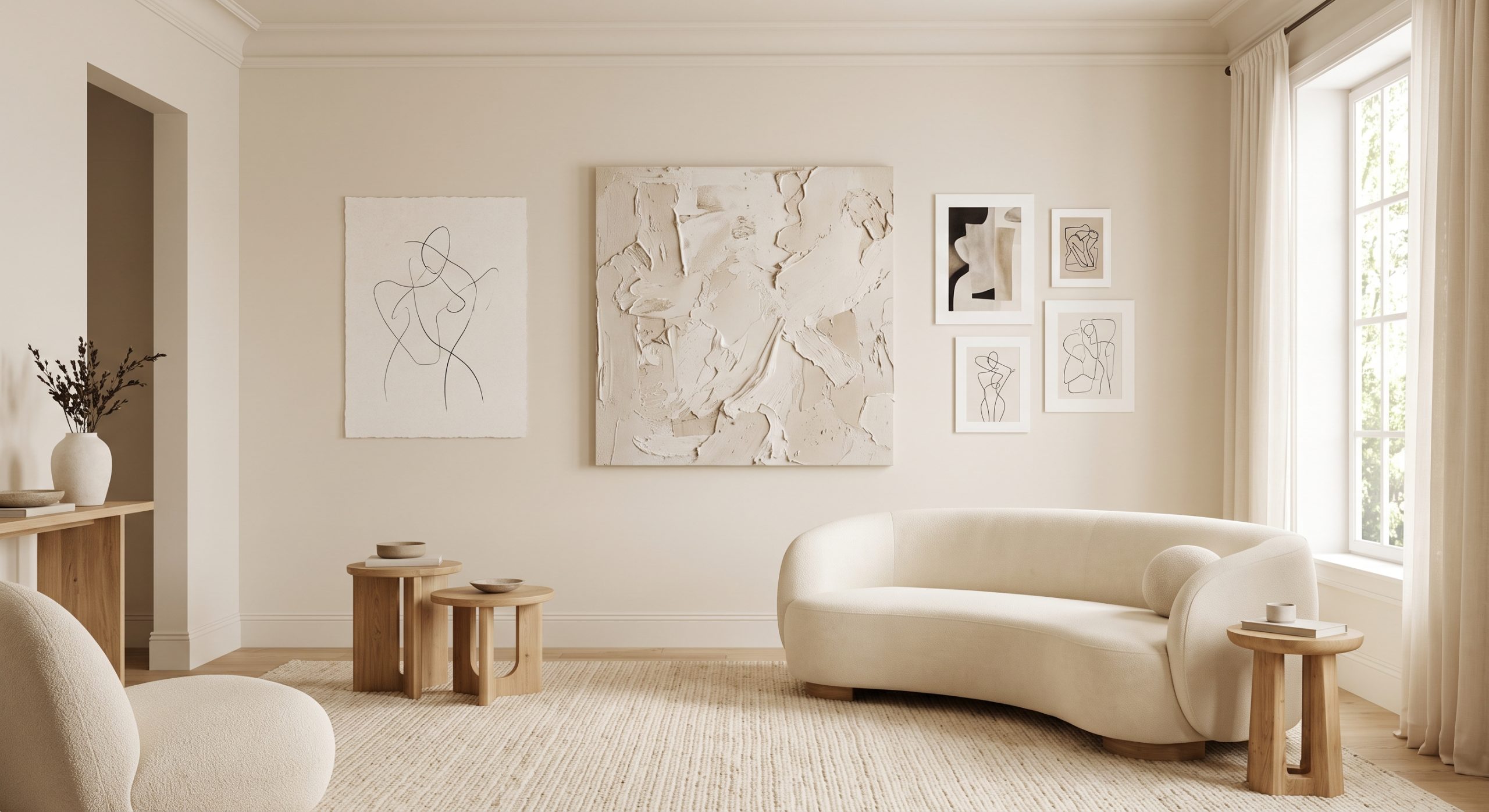
Before browsing anything, decide what you want a room to feel like. Calm and restful? Confident and bold? Warm and grounded? That decision filters everything that follows, from palette to composition to scale, and it’s a more reliable starting point than searching for a specific “style” first.
Understanding the Main Styles
Most contemporary wall art falls into a handful of overlapping families. Each has its own guide if you want to go deeper.
- Abstract art, the broad family of non-representational work, from textured and organic to minimalist and geometric. Start with what abstract art is.
- Minimalist and line art, built on restraint and a confident, economical mark. See what minimalist art is and minimalist line art.
- Japandi and wabi-sabi, blending Japanese and Scandinavian influences, or leaning into natural imperfection. See what Japandi art is and wabi-sabi art.
- Neutral and warm-toned work, defined by palette rather than subject. See what neutral wall art is.
- Textured, plaster and relief work, where the physical surface is part of the composition. See what is textured wall art and plaster art.
- Organic modern, which pairs clean modern design with natural forms and materials. See organic modern art explained.
Colour, Scale and Composition
Three qualities do most of the work in how an artwork actually feels in a room.
- Colour sets the emotional temperature, from calming neutrals to a single bold accent. See how colour changes the feeling of abstract art and how colour theory applies to interior artwork.
- Scale shifts a piece from intimate to commanding without changing anything else about it. See how scale changes the feeling of artwork.
- Composition, meaning balance and negative space, decides whether a piece feels resolved or restless. See understanding balance in abstract art and negative space in abstract art.
A Practical Choosing Process
- Decide the mood you want the room to hold.
- Read the room’s existing language, its materials, colours and lines, and decide whether to echo or contrast it.
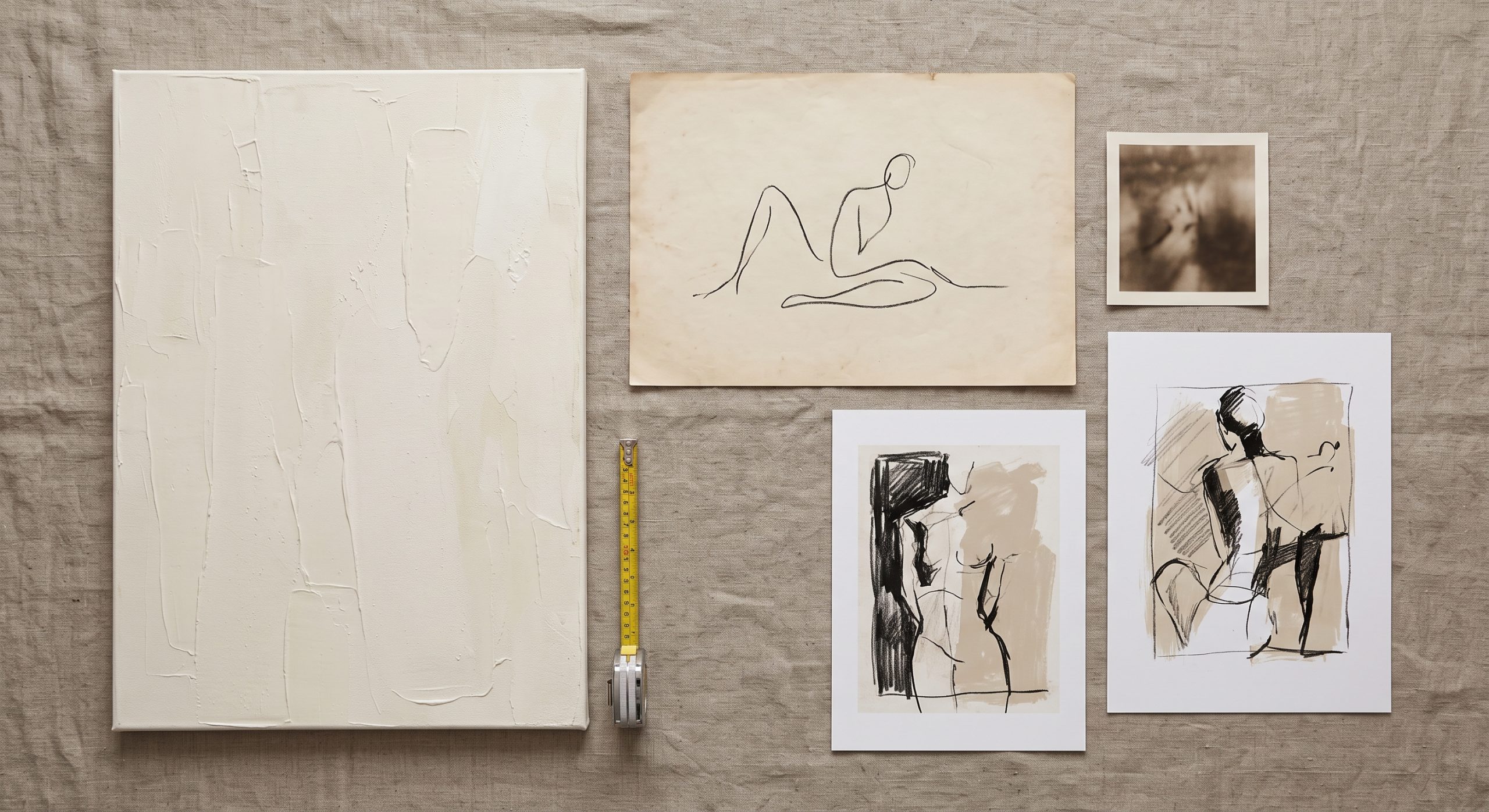
- Measure before you shop. Know your wall or furniture width so you’re not guessing at scale later.
- Choose a palette, and check its undertone against your room in real light.
- Decide flat or textured, based on how much visual activity the room already has.
- Check the composition holds your attention without feeling unsettled.
For the full version of this process, see how to choose abstract art for your home.
Getting the Size and Height Right
Undersized art is the single most common styling mistake. As a starting point, art above furniture should span roughly two-thirds to three-quarters of that furniture’s width, and its centre should generally sit around eye level. See how big should wall art be and how high should you hang wall art for the full guidelines, including how they shift for different rooms.
Choosing Room by Room
- Living room: a confident statement piece or a considered gallery wall. See how to choose wall art for your living room.
- Bedroom: soft, low-contrast work that supports rest. See how to choose wall art for your bedroom.
- Small spaces: fewer, larger pieces generally beat many small ones. See minimalist artwork for small spaces.
One Piece, or a Gallery Wall?
Both work. A single piece is calmer and easier to get right; a gallery wall carries more personality and can hold a larger, more complex space. If you’re drawn to the second option, our full cluster on the subject covers choosing art for a gallery wall, how many pieces to include, planning the layout, and choosing a colour scheme.
Creating a Focal Point
Whichever approach you choose, a room generally benefits from one clear place for the eye to land first. See how to create a focal point with wall art for how to build one deliberately.
Printable Art, Prints and Framing
Once you’ve chosen a piece, format decisions still matter. See what is printable wall art, common art print sizes, matte vs glossy paper, and how to frame printable wall art for the practical side of getting a piece onto your wall well.
Bringing It Together
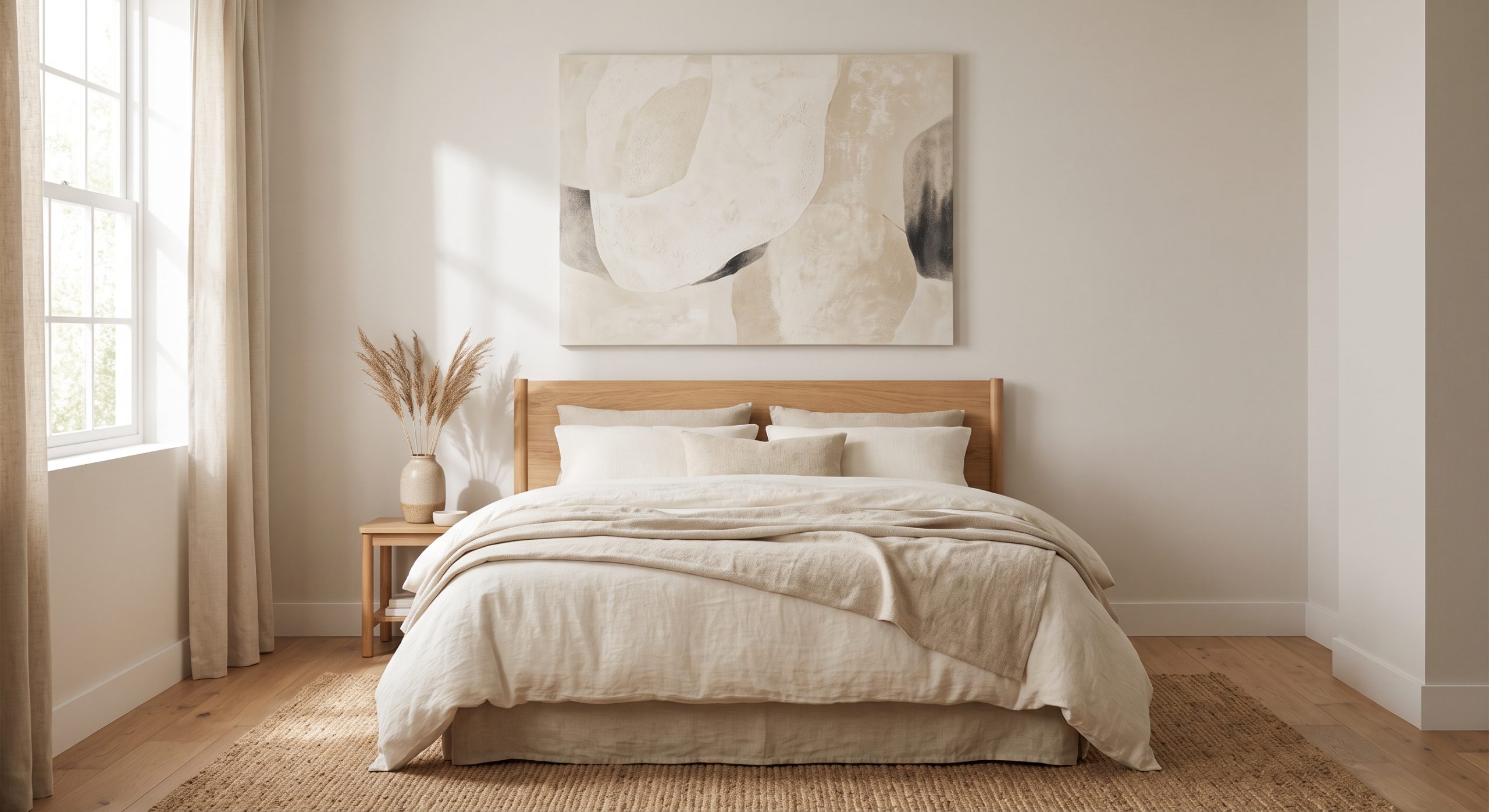
None of these decisions, style, colour, scale, composition, placement, matter in isolation. A beautifully chosen piece at the wrong size will still look wrong. A perfectly scaled piece in a clashing undertone will still feel off. The rooms that work are the ones where every one of these small decisions was made on purpose, even if the result looks effortless.
A Final Checklist
- What feeling do I want this room to hold?
- Have I measured the wall or furniture before choosing a size?
- Does the palette’s undertone suit the room in real light?
- Is the composition resolved, with enough negative space to breathe?
- Is there one clear focal point, or has everything been given equal weight?
- Have I chosen the right format, print, original or textured, for the wall it’s going on?
Final Thoughts
Choosing artwork for a home rewards patience more than instinct alone. Take the process one decision at a time, mood, style, colour, scale, placement, and a room that once felt unfinished will start to feel exactly right. Explore any of the guides linked above whenever you want to go deeper on a single part of that process.