How to Create a Focal Point With Wall Art
Walk into a room with no clear focal point, and your eye doesn’t know where to settle. It drifts from one thing to another, never quite landing, and the room ends up feeling unresolved even if every individual piece in it is perfectly nice. A focal point fixes that, and art is one of the most direct ways to create one.
This guide explains what makes something function as a focal point, and how to use art to build one deliberately. For scale specifically, see how scale changes the feeling of artwork.
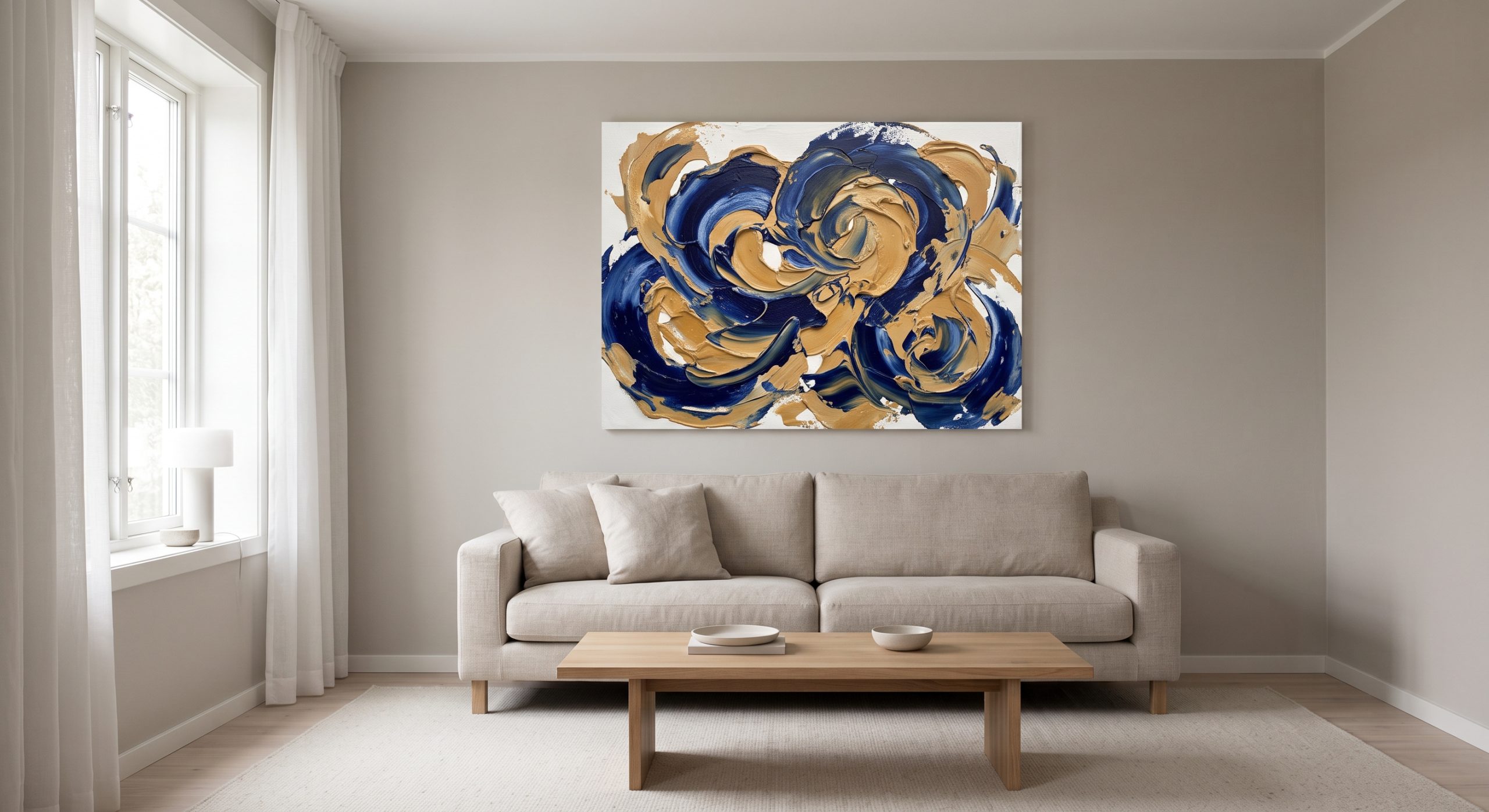
What a Focal Point Actually Does
A focal point is whatever your eye is drawn to first when you enter a room. It doesn’t eliminate everything else in the space; it organises it, giving the eye a starting point before it moves on to take in the rest.
Rooms without one don’t necessarily look bad in isolation, but they tend to feel restless, since there’s no obvious place to rest attention. This is the same principle explored in understanding balance in abstract art, applied to a whole room rather than a single composition.
Why Art Makes Such a Good Focal Point
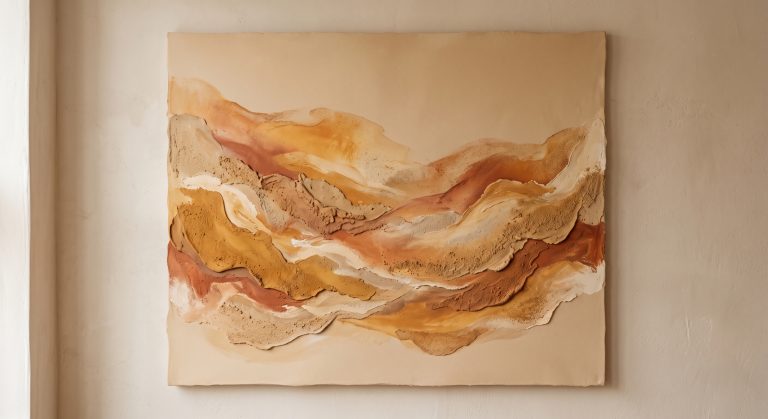
Furniture and architecture are fixed and often neutral in tone. Art is flexible, easy to change, and can carry colour, contrast and scale in a way few other elements in a room can. A single confident piece can do more to organise a room’s attention than almost any other single change.
What Makes an Artwork Work as a Focal Point
- Sufficient scale. A focal piece needs enough presence to be seen clearly from across the room. See how big should wall art be.
- Contrast with its surroundings. Whether through colour, value or texture, a focal piece needs to stand apart from the wall and furnishings behind it.
- Placement at eye level, in the sightline from the room’s entrance. The first thing you see when you walk in has an advantage in becoming the focal point.
- Restraint everywhere else. A focal point only works if the rest of the room supports it rather than competing with it.
When a Room Has No Clear Focal Point
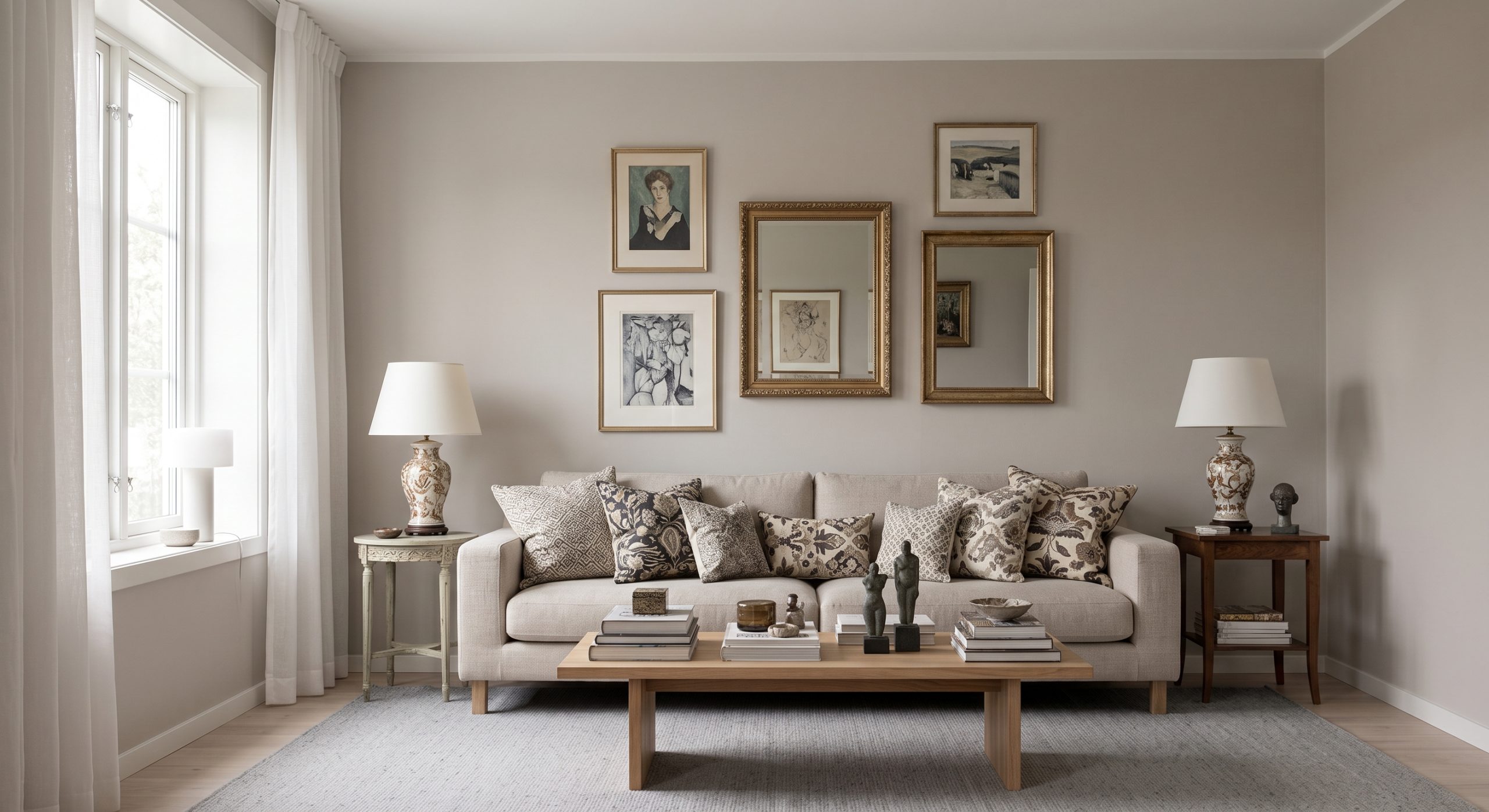
This usually happens when several elements of similar visual weight compete for attention: two accent walls, several medium-sized pieces of art scattered without hierarchy, or furniture and decor all pulling focus equally. The fix is rarely to add more. It’s to choose one element and let it lead.
Creating One
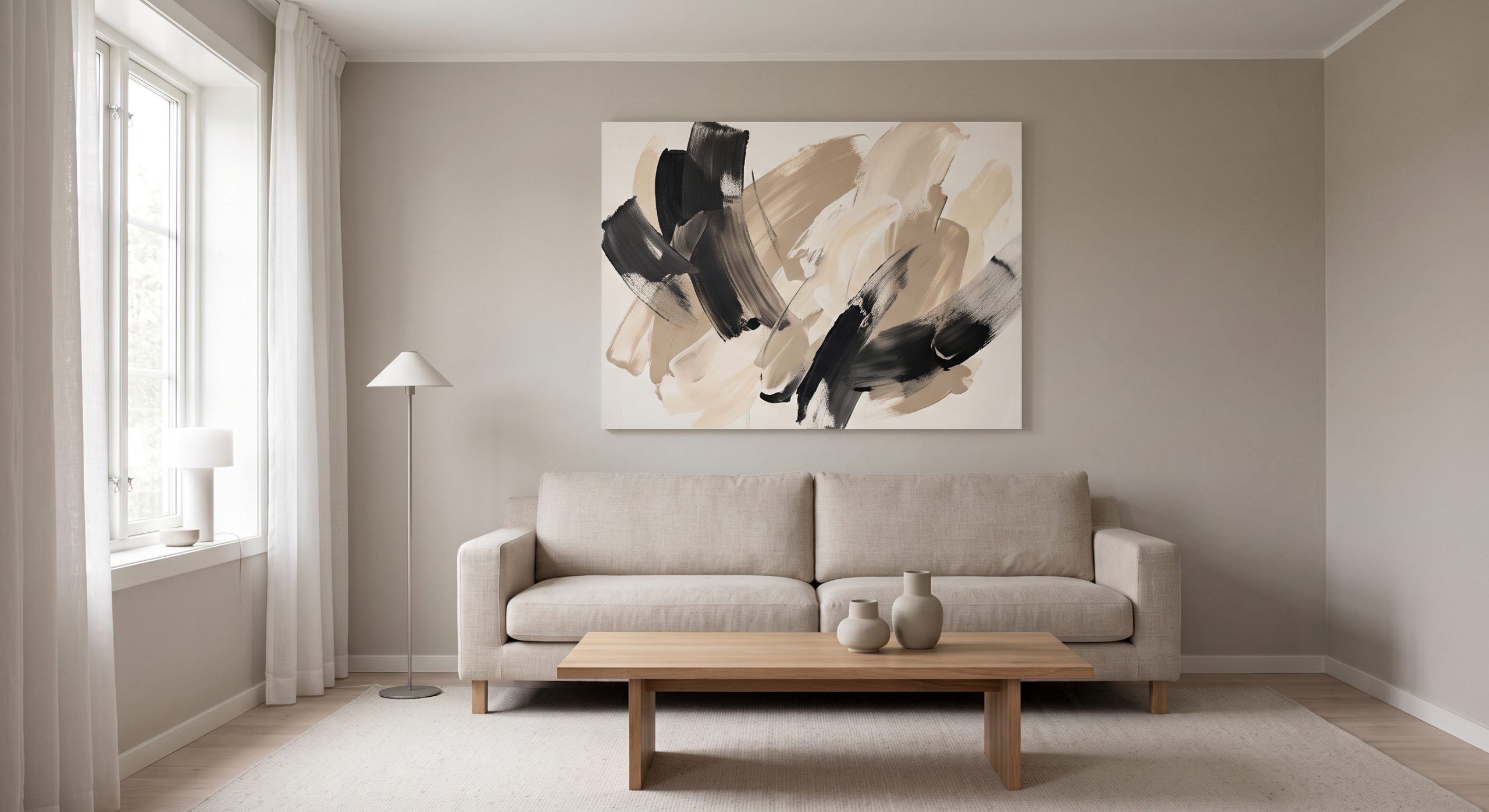
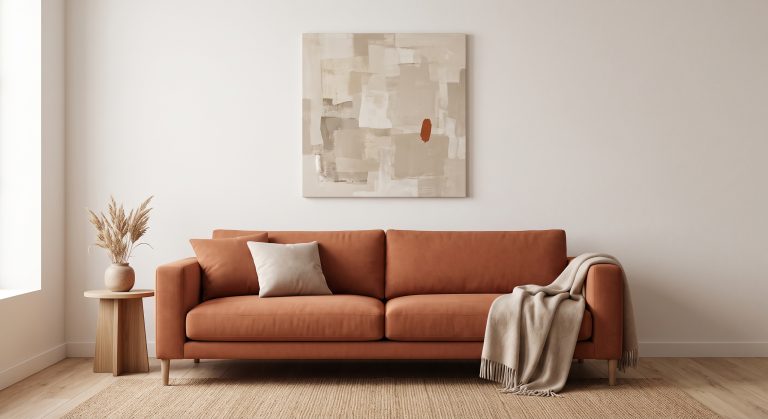
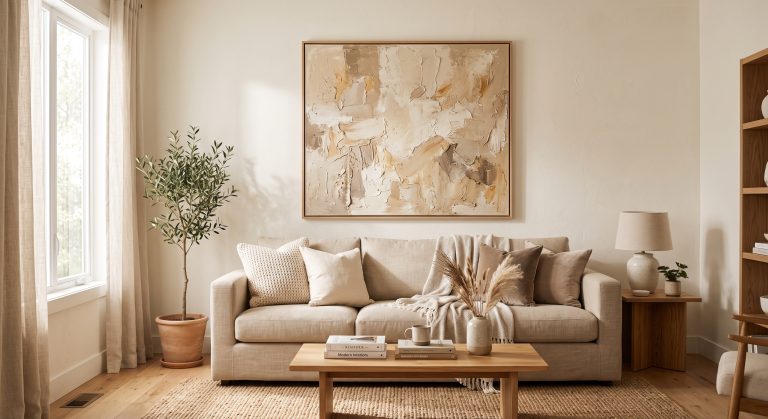
- Choose the wall that’s naturally seen first, often opposite the entrance or above the main seating.
- Select one confident piece, scaled generously rather than modestly, following the guidance in how to choose abstract art for your home.
- Quiet everything nearby. Reduce competing colour, pattern or clutter around the chosen wall.
- Check from the doorway. Stand where you’d naturally enter the room and confirm the piece is the first thing your eye finds.
Focal Points in Different Rooms
- Living room: usually the wall above the sofa or opposite the main door
- Bedroom: almost always the wall above the bed
- Dining room: the wall the table faces, or above a sideboard
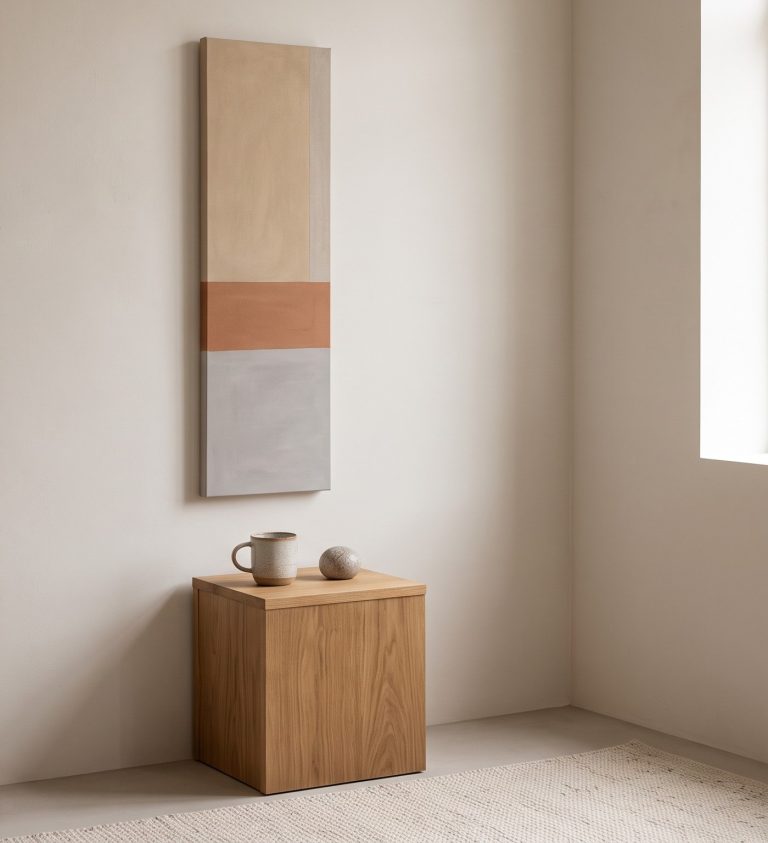
- Hallway: the wall directly ahead as you enter, which sets the tone for the whole home (see wall art for narrow hallways)
You Can Have More Than One, Carefully
A single home can have several focal points, one per room, without conflict, since each room is experienced somewhat independently. Within one room, though, a single clear focal point almost always works better than two competing for the same attention.
Final Thoughts
A focal point is less about decoration and more about giving a room a clear structure for the eye to follow. Choose one confident piece, give it scale and contrast, quiet its surroundings, and a room that once felt scattered will suddenly feel resolved.