How High Should You Hang Wall Art?
More art gets hung too high than too low. It is an easy mistake: most of us hang instinctively at a height that feels comfortable while standing right up against the wall, hammer in hand, and that is usually higher than it should be.
The short answer to how high to hang wall art: centre it at roughly eye level, about 57 inches (145 cm) from the floor. Above furniture, leave a gap of around 6 to 10 inches (15 to 25 cm) between the top of the sofa, bed or console and the bottom of the frame instead. This guide explains both guidelines, how they change in hallways and on gallery walls, and a simple way to check your own wall before you commit to a nail hole. For scale, see how big should wall art be.
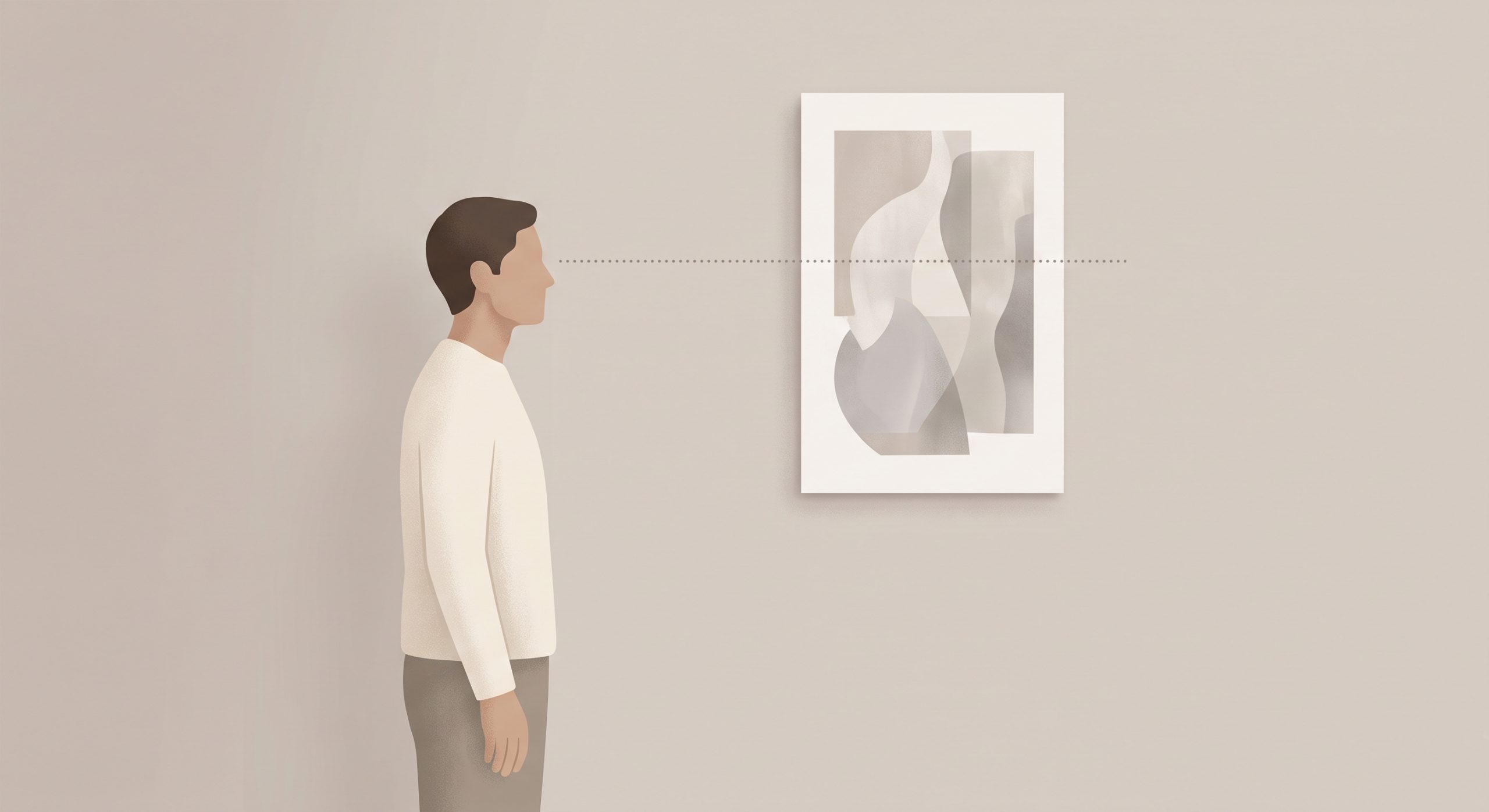
The Standard Guideline: Centre at Eye Level
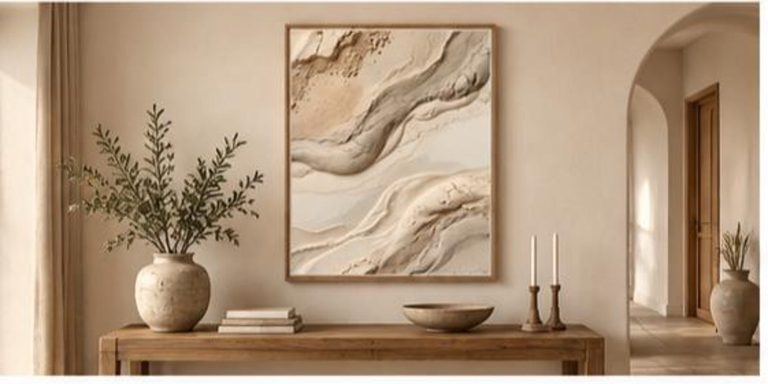
For a piece on an empty wall with no furniture beneath it, a commonly used guideline is to centre the artwork at roughly 57 inches (about 145 cm) from the floor to the centre of the piece. This figure is often used as a museum-standard reference point, based on an approximate average adult eye level, and it works well as a defensible default.
It is a guideline, not a law. Ceiling height, the size of the piece and who uses the room most can all reasonably shift it a little.
Art Above Furniture
When art hangs above a sofa, console, bed or sideboard, the furniture becomes a more important reference point than the floor-to-centre measurement.
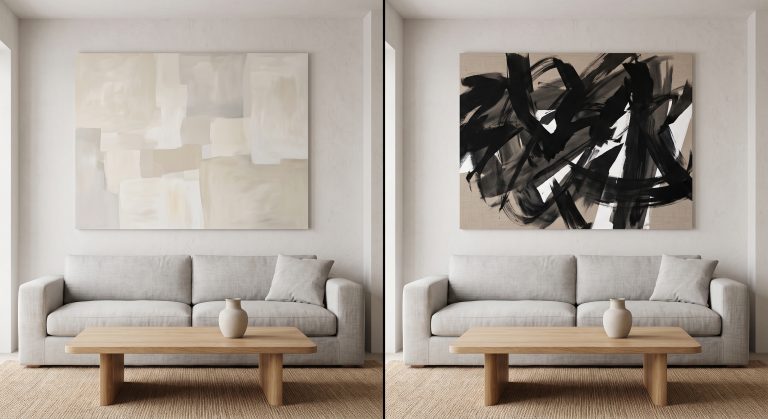
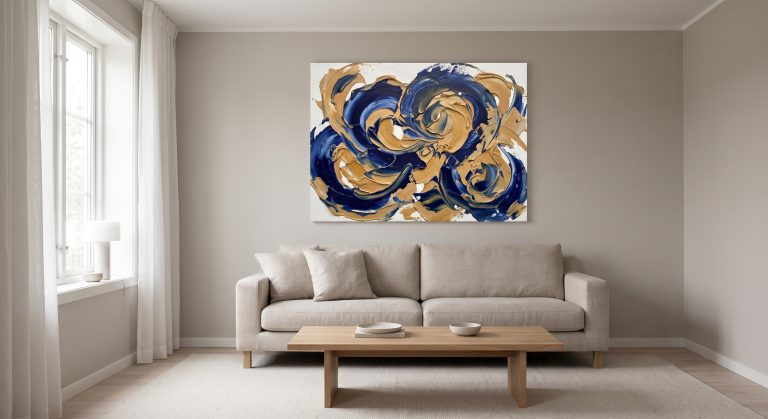
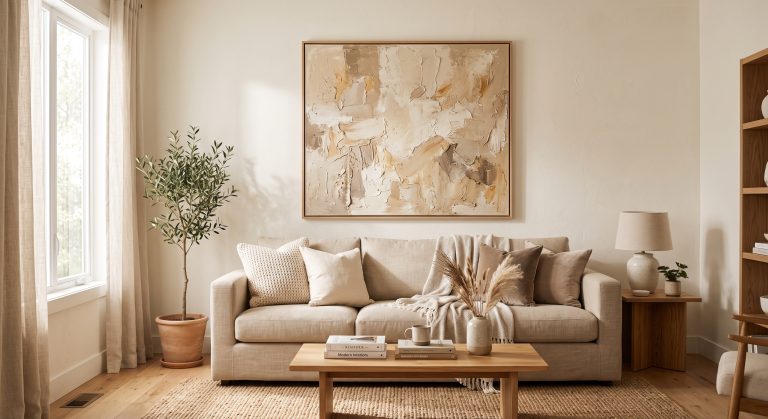
A widely used rule of thumb is to leave a gap of roughly 6 to 10 inches (about 15 to 25 cm) between the top of the furniture and the bottom of the artwork. That gap visually connects the piece to the furniture, so the two read as one composition rather than the art floating independently on the wall.
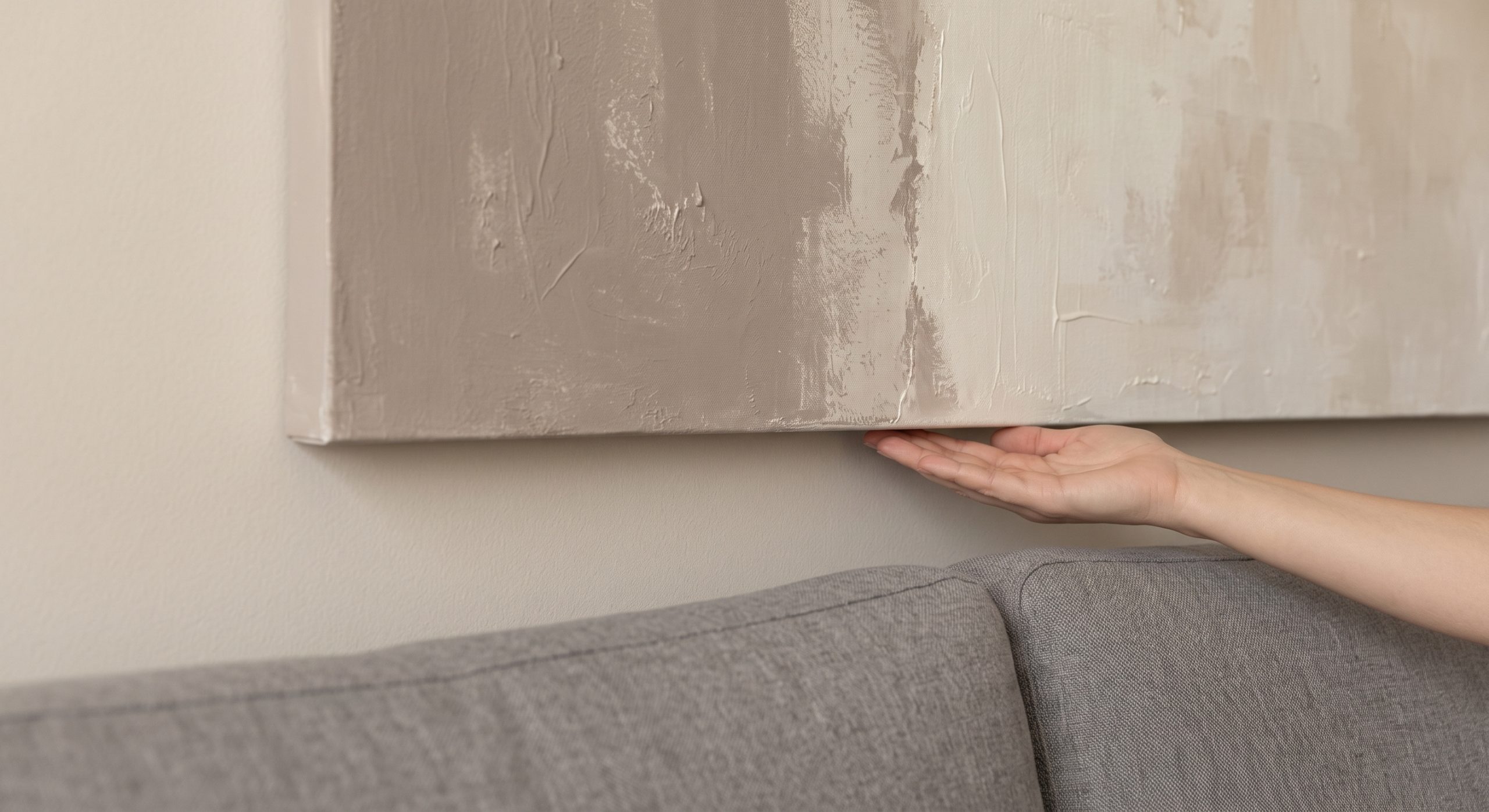
For the living room in particular, see how to choose wall art for your living room.
Bedrooms
Because beds and headboards sit lower than sofas, art above a bed is often hung with a similarly small gap above the headboard, following the same principle: close enough to read as connected, not so close it feels cramped. See how to choose wall art for your bedroom for scale and style.
Art above a bed hangs directly over where you sleep, so fix it securely. Use wall fixings rated well above the frame’s weight and suited to your wall (plasterboard and masonry need different plugs), hang from two points or use security hangers so the frame cannot slide or lift off, and consider a lighter frame with acrylic rather than glass glazing for larger pieces.
Hallways and Corridors
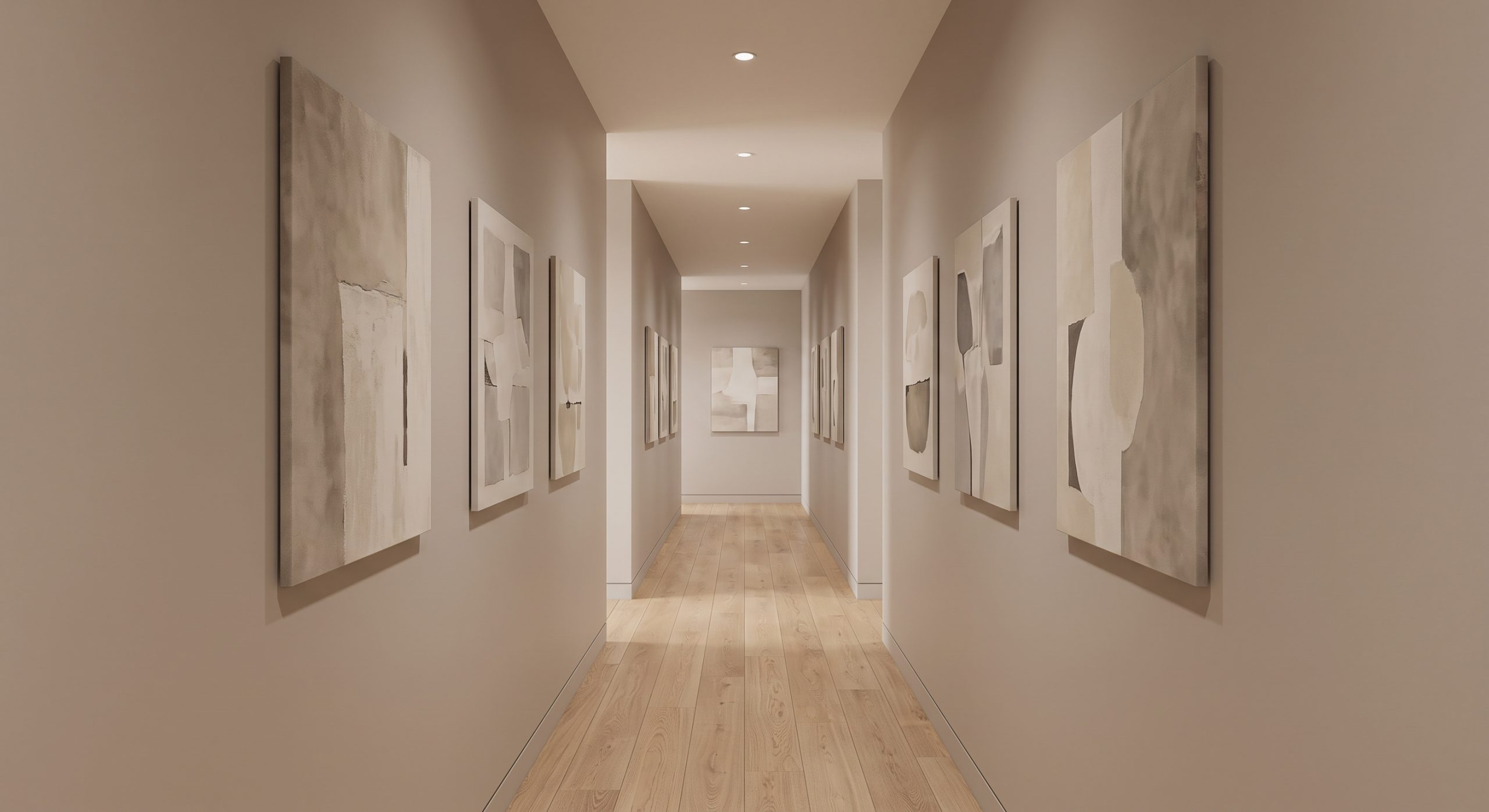
In a hallway, several pieces are usually seen at a glance while walking past, so consistency across the run matters more than the exact number. Keep every piece’s centre at the same height along the whole hallway, using the standard eye-level guideline as your baseline. Our guide to wall art for narrow hallways covers size and spacing too.
Gallery Walls
For a group of pieces, treat the whole arrangement as one visual object and centre that combined shape at eye level, rather than centring each piece individually. See how to plan a gallery wall layout for the full process.
Adjusting for Ceiling Height and Room Use
- Very high ceilings can support a slightly higher hang without feeling wrong, since the extra space overhead needs to be balanced.
- Rooms used mostly seated, such as around a dining table, can hang slightly lower than the standing eye-level guideline.
- Children’s rooms may call for a lower height, closer to a child’s sightline, depending on who the room is really for.
How to Check Before You Commit
- Mark the intended centre height on a piece of painter’s tape.
- Stand back and view it from typical viewing distance, not right up close.
- Check it against nearby furniture, doorframes and light switches for visual balance.
- If in doubt, err very slightly lower rather than higher. A piece hung a little low is rarely noticed; one hung too high tends to look disconnected from the room.
Common Mistakes
- Hanging at a height that feels comfortable while standing close to the wall, which is usually too high
- Ignoring the furniture beneath the piece and using only the eye-level rule
- Inconsistent heights along a hallway or gallery wall
- Not accounting for unusually high or low ceilings
Final Thoughts
Height is one of the few art decisions with a genuinely reliable default: eye level, adjusted for whatever furniture sits beneath the piece. Use it as your starting point, check it against the room in person, and adjust only when there’s a clear reason to.
Planning to add a picture light once the piece is up? Hang the art first, then see what size picture light you need.