What Are the Most Common Art Print Sizes?
Print sizes look like a small, practical detail until you order the wrong one. A beautiful file, printed at the wrong size for its wall, either disappears or overwhelms, and the size is usually the easiest part of the whole process to get right in advance.
This guide covers the standard sizes you’ll encounter when buying or printing wall art, how they relate to common frame sizes, and how to choose the right one for your space. For the broader scale principles, see how big should wall art be.
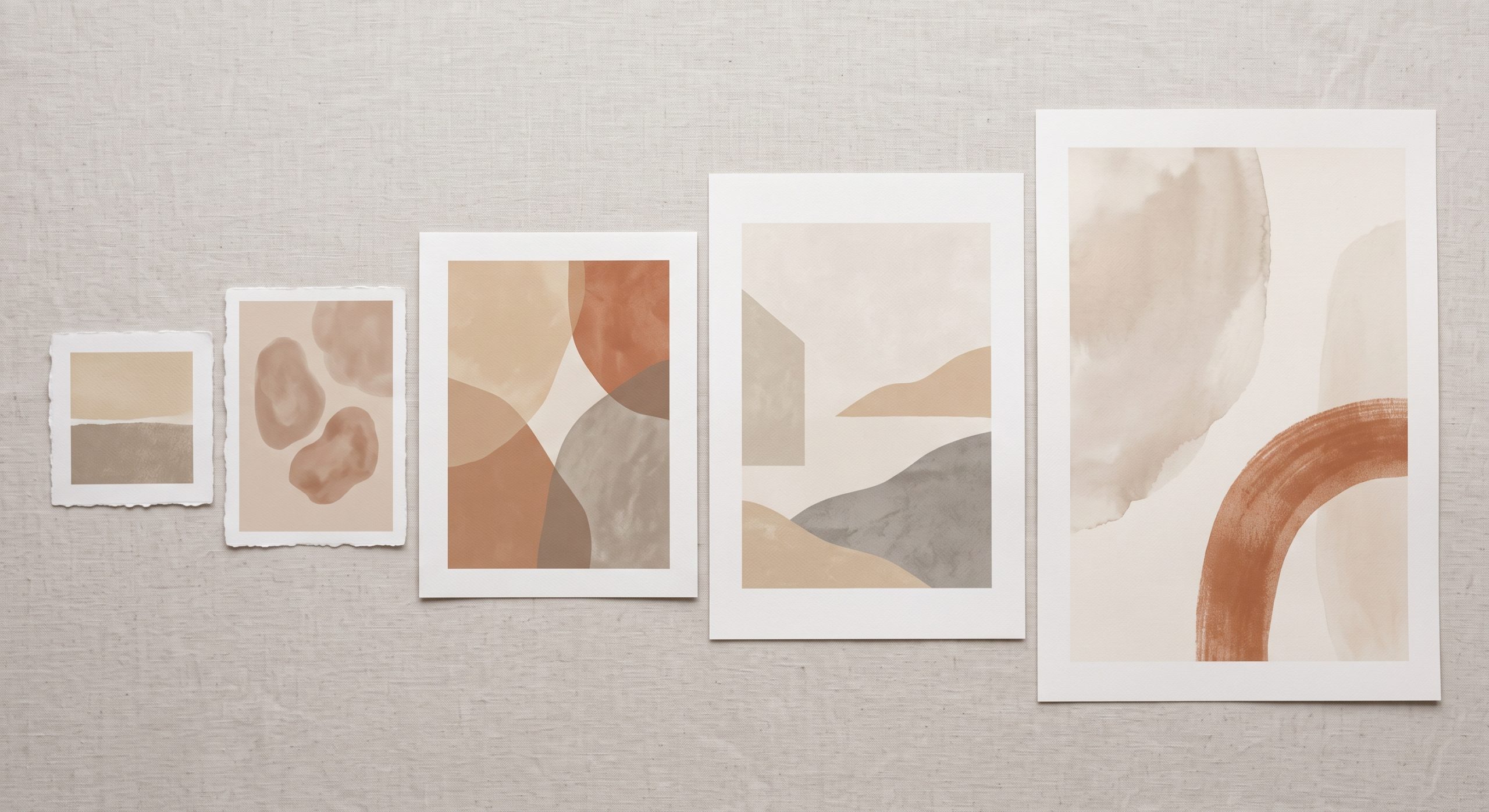
Common Print Sizes: Inches
In countries using imperial measurements, a handful of sizes account for most wall art sold and printed.
- 5×7 in and 8×10 in: small, suited to shelves, desks or as part of a gallery wall
- 11×14 in: a common mid-size, often the smallest size that works well as a standalone piece on a wall
- 16×20 in: a popular medium size for bedrooms and smaller living-room walls
- 18×24 in and 24×36 in: larger sizes suited to living rooms, above sofas and beds
- Poster size, roughly 24×36 in: a common large format for a genuine statement piece
Common Print Sizes: Metric (ISO A-Series)
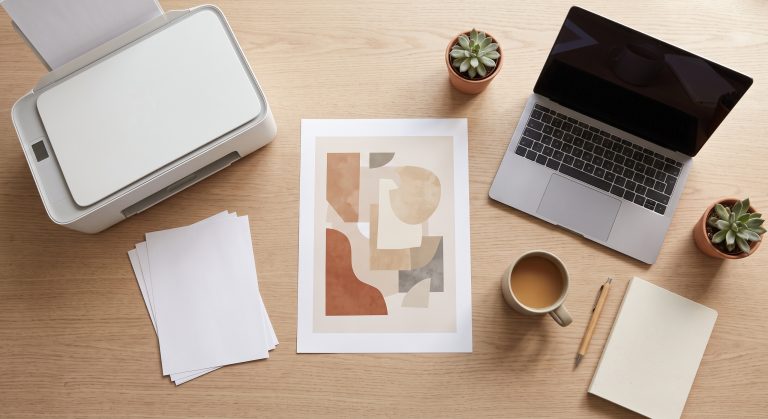
Many countries outside North America use the ISO 216 A-series paper sizes for art prints, which are also common for printable downloads because they match standard printer settings.
- A5 (148 × 210 mm): small, similar in scale to 5×7 in
- A4 (210 × 297 mm): a common default size, similar to 8×10 in but not identical
- A3 (297 × 420 mm): a popular mid-size for a single statement print
- A2 (420 × 594 mm): large, suited to a genuine focal piece
- A1 (594 × 841 mm): very large, typically needs a print shop rather than a home printer
Each A-size is exactly half the size of the one above it, which makes the series easy to scale up or down while keeping the same proportions.
Matching Sizes to Frames
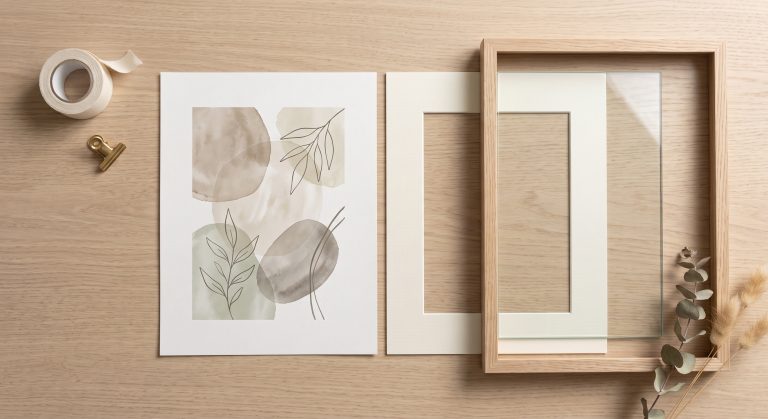
Standard print sizes exist largely because standard frame sizes exist to match them. Buying a print at a common size, rather than a custom one, makes off-the-shelf framing far easier and cheaper. If a print doesn’t match a standard frame size exactly, a mat board can bridge the gap. For printable files supplied in several ratios, our printable wall art size guide shows which file matches which frame. See how to frame printable wall art.
Choosing a Size for Your Wall
- Measure the wall or furniture the print will hang above or beside.
- Apply the two-thirds to three-quarters rule for art above furniture, covered in how big should wall art be.
- Round to the nearest standard size, rather than ordering an unusual custom dimension.
- Check the file’s native resolution before ordering a large print, to avoid a soft or pixelated result.
Resolution and Size: Why They’re Linked
A digital file has a fixed number of pixels. Printed small, those pixels are packed tightly and look sharp. Printed very large, the same pixels are stretched further apart and can start to look soft or blurred. As a rough guide, aim for at least 150 pixels per inch at the final print size for a result that holds up close up, and at least 100 pixels per inch for something viewed from a greater distance, such as a very large piece above a high sofa. For a full size chart, see how big you can print a 300 DPI image.
When to Go Large
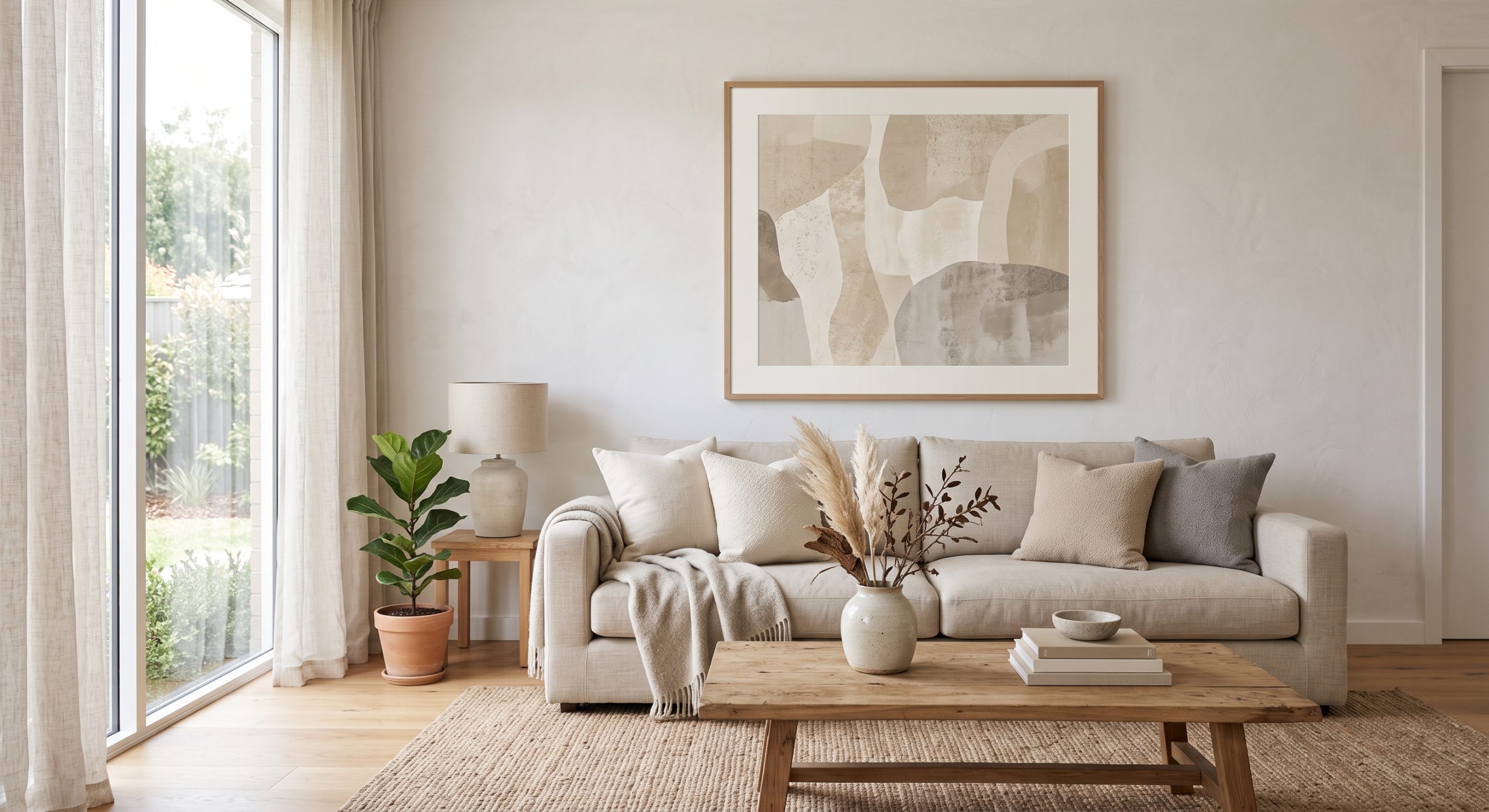
Large prints work particularly well as a single statement piece above a sofa or bed, in an open-plan living space, or on a stairwell wall. They generally need to come from a print shop or specialist online service rather than a standard home printer, since most home printers cap out well below poster size.
Common Mistakes
- Ordering a size based on the wall alone, without checking the file supports it at that resolution
- Choosing an unusual custom size that then requires expensive custom framing
- Assuming metric and imperial standard sizes convert exactly (they are close, but not identical)
- Underestimating how much larger a “large” print needs to be to read from typical viewing distance
Final Thoughts
Standard sizes exist for a reason: they make framing simpler, ordering more predictable, and scaling art to a wall far less guesswork. Measure first, choose the nearest standard size, and check the file can support it before you print.