Where to Print Digital Art From Etsy: UK & US Guide
You have bought a piece of digital art on Etsy, the files are sitting in your downloads folder, and now you need to turn them into something you can hang. The short answer: small prints can be done at home or at a high-street photo counter, but anything larger than about A4 or 8×10 in is best sent to an online photo lab or a fine art (giclée) printer. In the UK that means services such as Boots Photo, Photobox or theprintspace; in the US, Walgreens, Mpix, Printique or a fine art lab such as Bay Photo.
Which one is right depends on the size you want, the paper you prefer and how much the colour matters to you. This guide walks through each option, shows you which file to upload, and covers the questions worth asking before you pay for a print. If you are new to the format, what printable wall art is and how it works explains the basics first.
What You Actually Receive When You Buy Digital Art on Etsy
An Etsy digital download is a set of image files, not a print. Etsy allows a seller to attach up to five files to a listing, each up to 20MB, so most wall art shops supply a handful of high-resolution JPGs, sometimes bundled into a ZIP file or delivered as a PDF of download links.
Two practical details catch people out:
- Download in a browser, not the app. Etsy’s app does not let you download digital purchases. Open Etsy in a web browser, go to Purchases, and select Download files. Guest buyers receive an emailed link instead.
- Each file is usually a different shape, not a different size. Sellers tend to supply one file per aspect ratio (the proportion of width to height), and you scale that file to whichever size in the ratio you need.
A worked example: Quiet Dunes
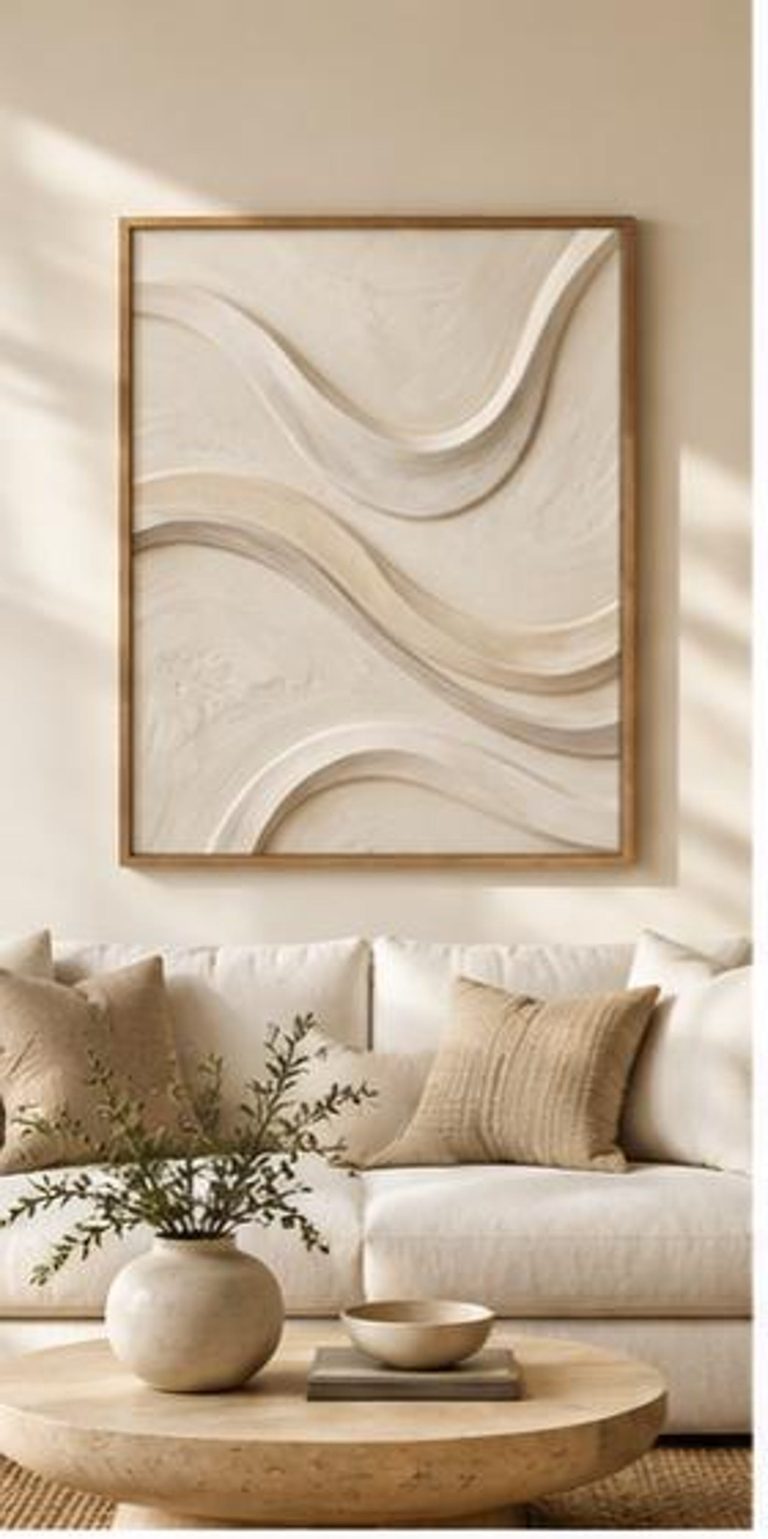
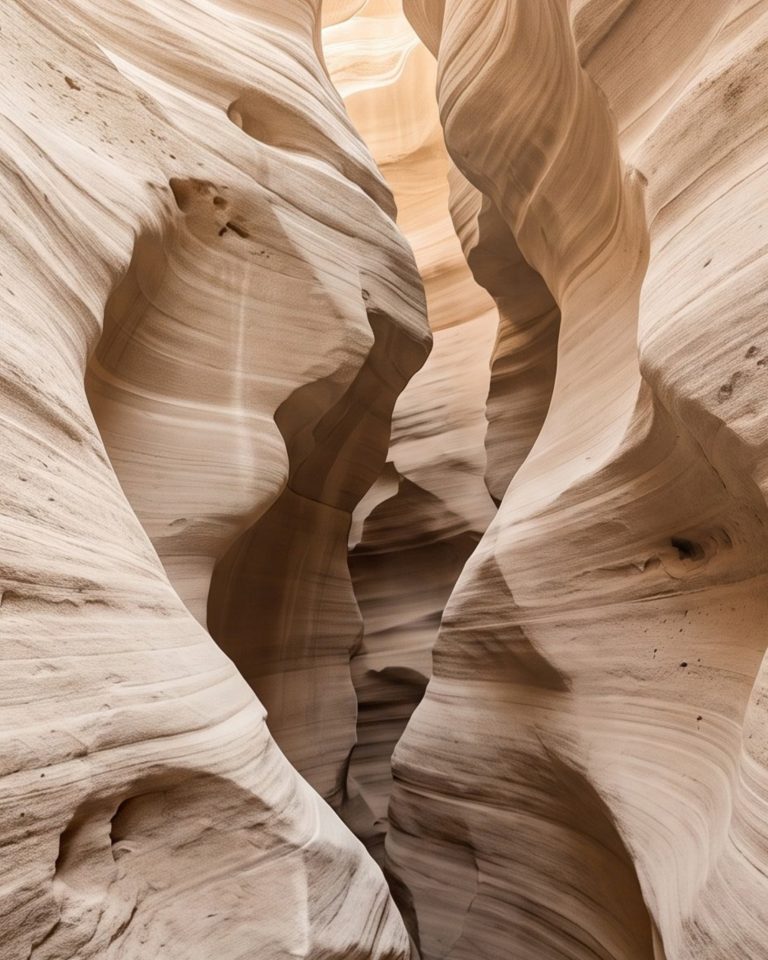
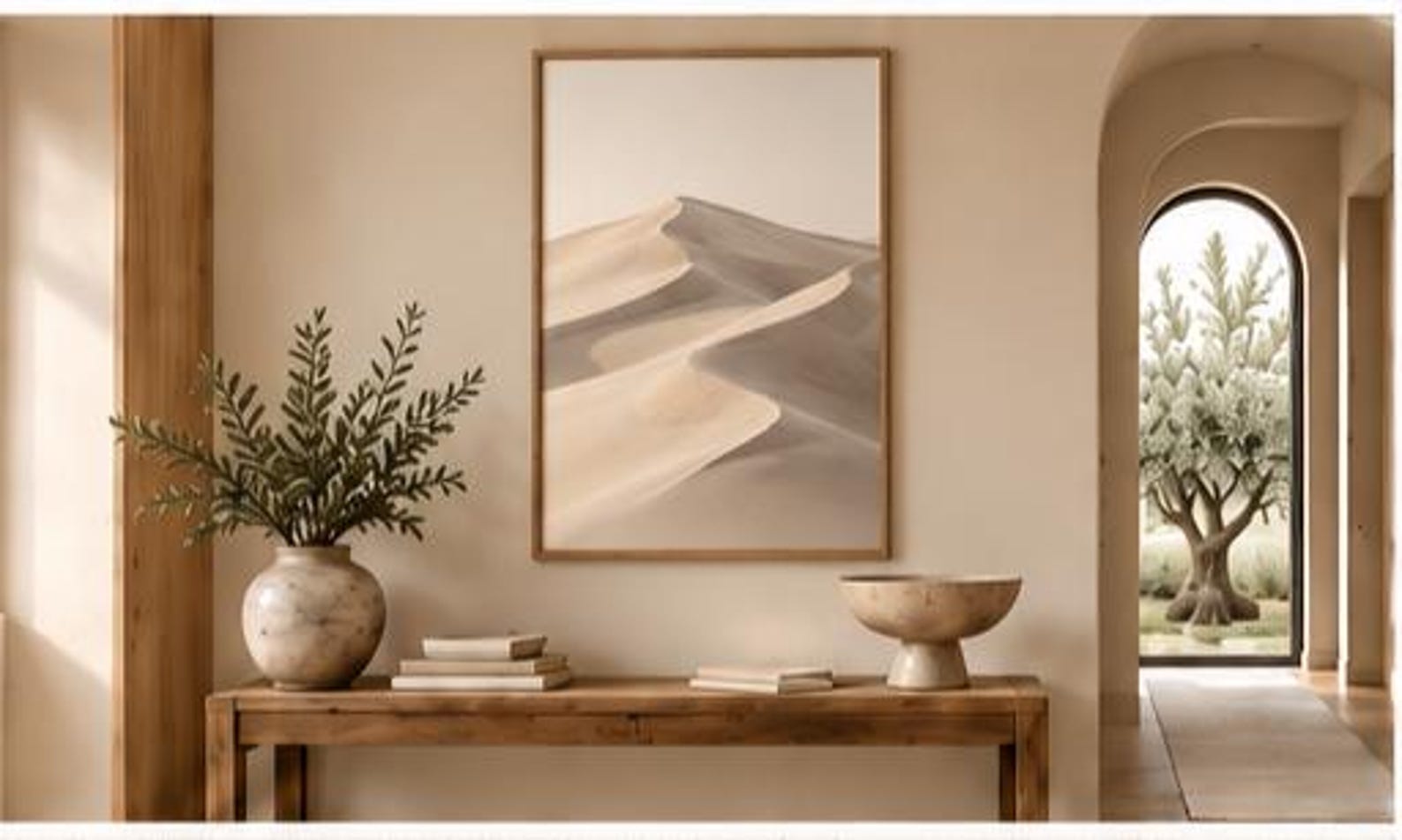
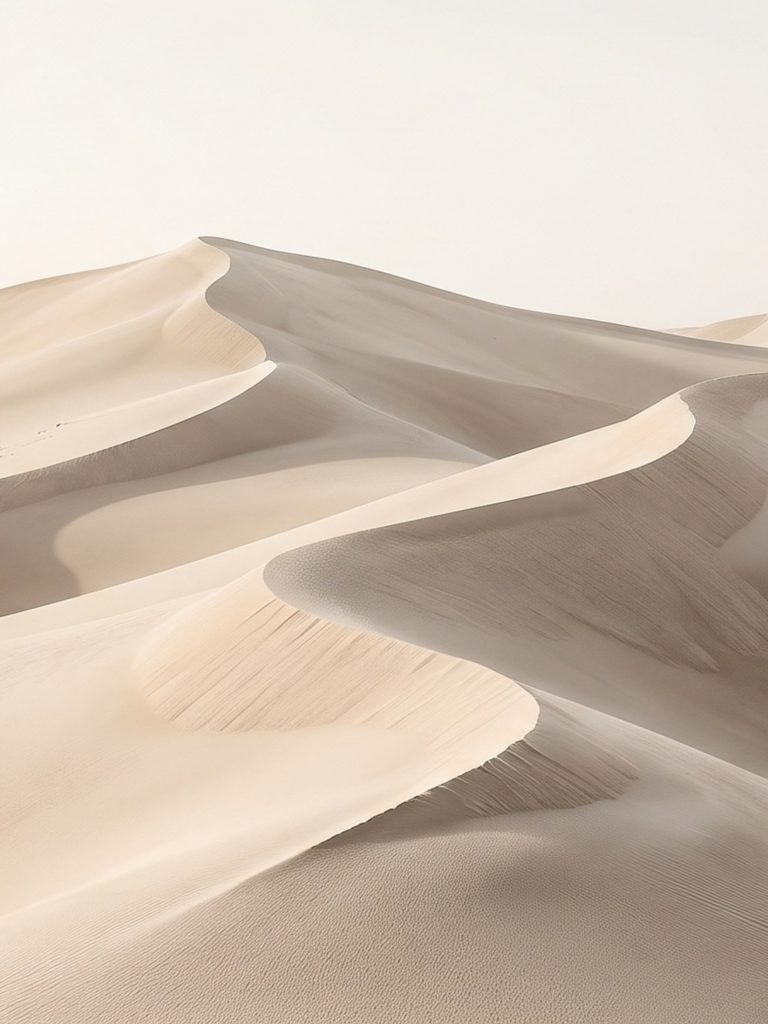
Our own Quiet Dunes print is a typical package. It arrives as five JPG files prepared at 300 DPI, one for each of these ratios:
- 2:3 for sizes such as 8×12, 12×18, 16×24, 20×30 and 24×36 in
- 3:4 for 6×8, 9×12, 12×16 and 18×24 in
- 4:5 for 8×10 and 16×20 in
- 11:14 for 11×14 in
- International A-series for A5, A4, A3, A2 and A1
Because each ratio is cropped slightly differently, the position of the dunes within the frame shifts a little between files. That is normal, and it is why you should always choose the file that matches your frame rather than resizing another one. The rest of this guide uses this file set as its example.
Four Places to Print Your Etsy Art
There are really only four routes, and they suit different jobs.
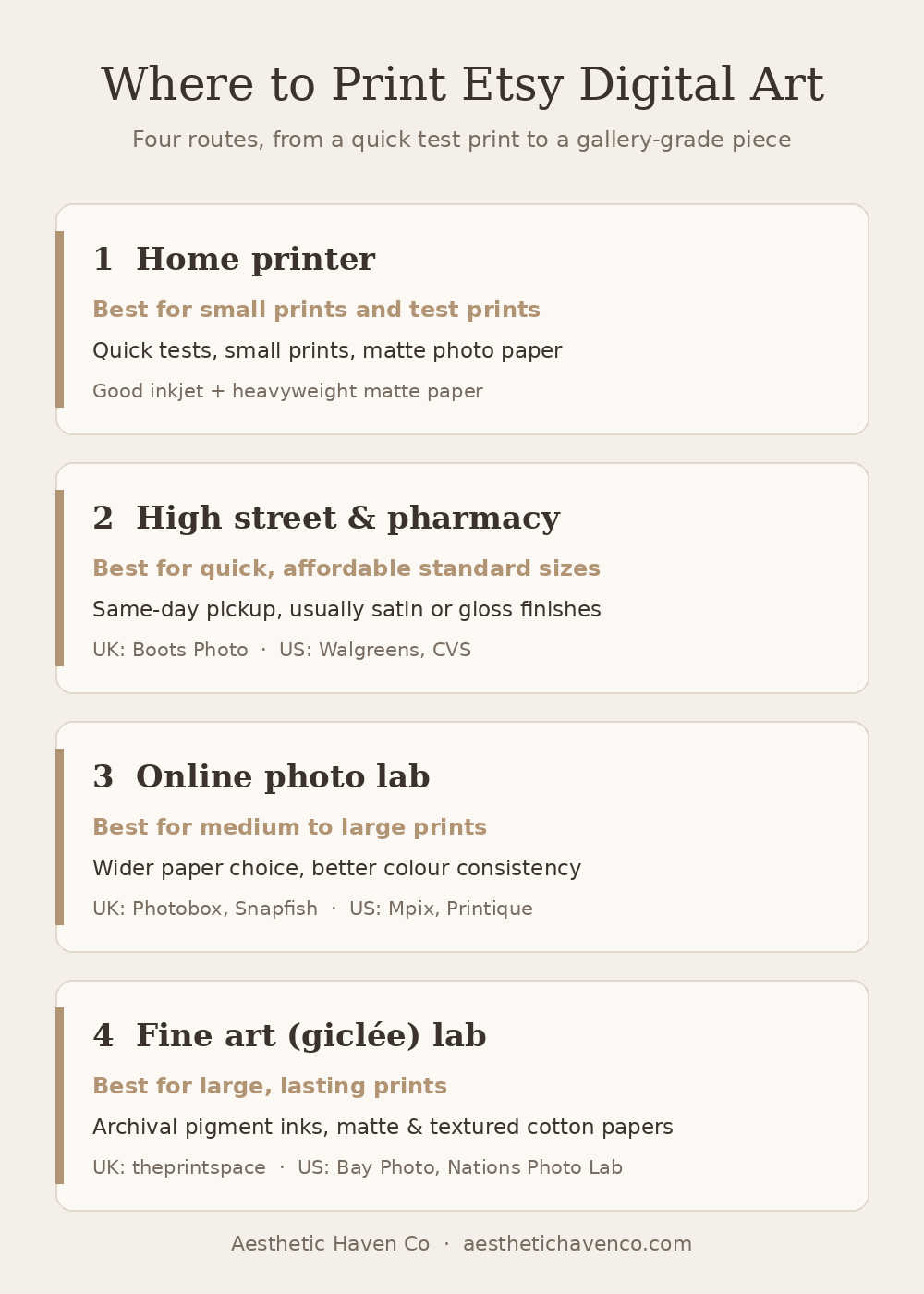
1. Home printer
Best for small prints and test prints.
Needs a good inkjet and heavyweight matte photo paper. Most home printers stop at A4 or US Letter.
2. High street and pharmacy
Best for quick, affordable standard sizes.
Often same-day collection. Paper choice is usually limited to gloss, satin or lustre.
3. Online photo lab
Best for medium to large prints.
Wider choice of sizes and papers, more consistent colour, delivered by post.
4. Fine art (giclée) lab
Best for large, lasting prints.
Archival pigment inks on matte and textured cotton papers. Costs more, looks closest to a gallery print.
Printing at home
Home printing makes sense for small pieces, for a gallery wall of A5 or 5×7 in prints, and above all for test prints. Printing a small version first tells you how the colours and tones will look on paper before you commit to a large, expensive print. Use the best paper your printer supports; plain office paper will make any artwork look flat.
High-street photo counters and pharmacies
These are fast and inexpensive, and the results are perfectly fine for standard sizes viewed at a normal distance. The trade-offs are limited paper choice (usually glossy or satin photo paper) and automated systems that may crop or “enhance” your image unless you check the settings carefully.
Online photo labs
For most people buying Etsy wall art, an online lab is the sweet spot. You upload the file, choose a size and paper, and the print arrives flat or rolled in a tube. Colour tends to be more consistent than at a self-service kiosk, and many labs offer matte or fine art papers alongside photo finishes.
Fine art and giclée printers
Giclée (pronounced “zhee-clay”) simply means a high-quality inkjet print made with pigment inks, usually on archival fine art paper. It is the route to choose for a large statement print, for subtle neutral artwork where tone matters, or for anything you want to last for decades without fading.
Where to Print in the UK vs the US
The routes are the same on both sides of the Atlantic; the names change. The services below are well-established examples, not an exhaustive list, and sizes, papers and prices change regularly, so check each one’s current options before ordering.
| Route | UK examples | US examples |
|---|---|---|
| High street / pharmacy | Boots Photo, local independent photo shops | Walgreens Photo, CVS Photo, Walmart Photo |
| Online photo lab | Photobox, Snapfish UK | Mpix, Printique, Shutterfly |
| Fine art / giclée lab | theprintspace, local giclée printers and framers | Bay Photo, Nations Photo Lab, local fine art printers |
| Copy and print shops | Independent print shops (fine for posters, less so for art) | FedEx Office, Staples (fine for posters, less so for art) |
| Standard sizes | A-series (A4, A3, A2) is the norm | Inch sizes (8×10, 11×14, 16×20) are the norm |
Printing in the UK
UK printers work mainly in A-series sizes, so the A-series file in an Etsy download is usually the one to use, and off-the-shelf frames in A4, A3 and A2 are easy to find. If you want an inch size such as 8×10 or 16×20, choose the matching ratio file and check the printer offers that exact size; not all UK services do. For larger or more delicate artwork, a fine art lab such as theprintspace, or a local giclée printer, gives you proper cotton rag and textured papers.
Printing in the US
US printers and frames are built around inch sizes, so you will mostly use the 2:3, 3:4, 4:5 and 11:14 files. Pharmacy services such as Walgreens are convenient for quick posters but typically print on satin or glossy paper. Labs such as Mpix and Printique offer more paper choice, while fine art labs handle large archival prints.
Which File Should You Upload?
This is where most printing problems start. The rule is simple: decide on your frame size first, then upload the file whose ratio matches it.
| If your frame (or print) size is… | Upload the… |
|---|---|
| 8×10 in or 16×20 in | 4:5 file |
| 11×14 in | 11:14 file |
| 9×12, 12×16 or 18×24 in | 3:4 file |
| 8×12, 12×18, 16×24, 20×30 or 24×36 in | 2:3 file |
| A4, A3, A2 or A1 | A-series (ISO) file |
Upload the file as it is. Most print services will scale it to the size you order, and because the ratio already matches, nothing gets cut off. If the ordering screen shows a crop box, check that it covers the whole image. If the preview shows white bands or part of the artwork missing, you have picked the wrong ratio for that size. For unusual frame sizes, see how to resize printable wall art.
For a worked example: to print Quiet Dunes for a 16×20 in frame, you would upload the 4:5 file and order a 16×20 print. For an A3 frame bought in the UK, you would upload the A-series file and order A3. Our printable wall art size guide has the full chart of sizes and pixel dimensions for every ratio, and the most common art print sizes covers standard frames in more detail.
Choosing Paper
Paper changes the look of a print as much as the printer does. For most contemporary wall art, and especially for soft, neutral pieces, a matte or fine art paper looks more like a painting or drawing and avoids glare under room lights. Glossy and satin papers suit photography and saturated colour, but can make quiet, low-contrast artwork look harsh or reflective.
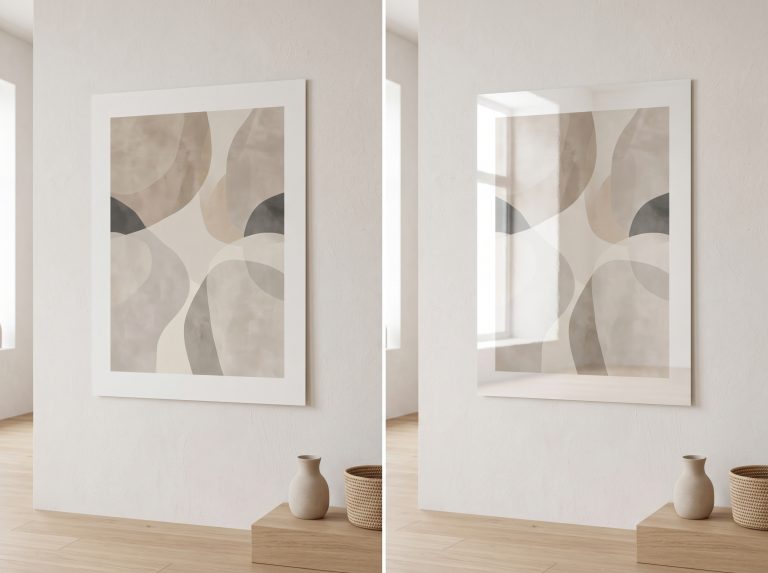
If you are framing behind glass, matte paper is usually the safer choice, since the glass already adds its own sheen. Our guide to the best paper for printable wall art compares every option, from satin to cotton rag, and our comparison of matte vs glossy paper for art prints focuses on those two finishes.
Getting the Colour Right
Your screen glows; paper does not. A print will almost always look a little darker and less luminous than the image on your phone or laptop, particularly in the paler tones. A few habits help:
- Turn off auto-enhance or auto-correct in the ordering system. These settings are designed for holiday snaps and can push neutral artwork towards orange, grey or green.
- Do not edit the file to “brighten” it unless a test print has shown it is needed.
- Order a small test print on the same paper before ordering a large one.
- Look at prints in daylight, not under a warm bulb, before judging the colour.
Neutral and beige artwork is especially sensitive. A colour shift that would go unnoticed in a bright abstract can turn a warm sand tone slightly pink or grey. If the colour is critical, a fine art lab that manages colour carefully is worth the extra cost.
Printing Large
Large prints are where the choice of printer matters most. Before ordering anything above roughly 16×20 in or A2, check two things.
First, check the file can support the size. A file prepared at 300 DPI for an 8×10 print contains far fewer pixels than one prepared for 24×36. Most print services warn you if a file is too small for the size you choose; take that warning seriously. Large prints viewed from across a room can tolerate a lower resolution than a small print viewed close up, but there is a limit. Our guide to how big you can print a 300 DPI image explains how to check.
Second, choose a printer that ships large prints properly. Online labs and fine art printers usually roll large prints in a sturdy tube or send them flat with board backing. High-street counters can print posters, but paper choice at large sizes is often limited.
For scale itself, how big wall art should be explains how to size a print to the wall and the furniture beneath it.
What It Costs
Prices vary too much between services, sizes and promotions to quote reliably, but the order of cost is consistent:
- Home printing is cheapest per print once you own the printer, though good paper and ink are not free.
- Pharmacy and high-street prints are inexpensive, especially during the frequent discount promotions.
- Online photo labs cost a little more, plus postage.
- Fine art giclée prints cost the most, particularly on cotton rag paper at large sizes.
The paper type and the size drive most of the price. A sensible approach is to spend modestly on small and medium prints, and save fine art printing for the one or two pieces that anchor a room.
What to Ask the Printer
If you are using a local printer, or an online lab with a help desk, these questions save a lot of disappointment:
- Do you print the file exactly as supplied, or apply automatic colour correction? Can it be switched off?
- Which papers do you offer, and is there a matte or fine art option?
- Will the print be trimmed to the exact size, or does it have a white border?
- Do you print with pigment inks, and are the papers archival?
- How are large prints packaged and shipped?
- Can I order a small test print or proof first?
Common Mistakes
- Uploading the wrong ratio, so the printer crops off the edges of the artwork or adds white bands.
- Using a phone screenshot or the Etsy preview image instead of the downloaded file. Previews are low resolution and will print blurry. See why printable art looks blurry for more causes and fixes.
- Leaving auto-enhance switched on, which shifts subtle neutral tones.
- Choosing glossy paper for soft, quiet artwork, then fighting reflections once it is framed.
- Ordering a large print without a test, then discovering the colour is not what you expected.
- Buying the frame after the print, rather than choosing the frame size first and printing to fit it.
Final Thoughts
The best place to print Etsy digital art is the one matched to the job: a home printer or photo counter for small and test prints, an online lab for everyday wall sizes, and a fine art printer for the statement piece you want to live with for years. Choose your frame size first, upload the file with the matching ratio, pick a matte or fine art paper for quiet artwork, and switch off any automatic enhancement.
Once your print arrives, how to frame printable wall art covers mounts, frames and glazing. And if you would like to see the file set described here in practice, every piece in our Neutral Abstract Printable Wall Art Collection comes in the same five ratios.