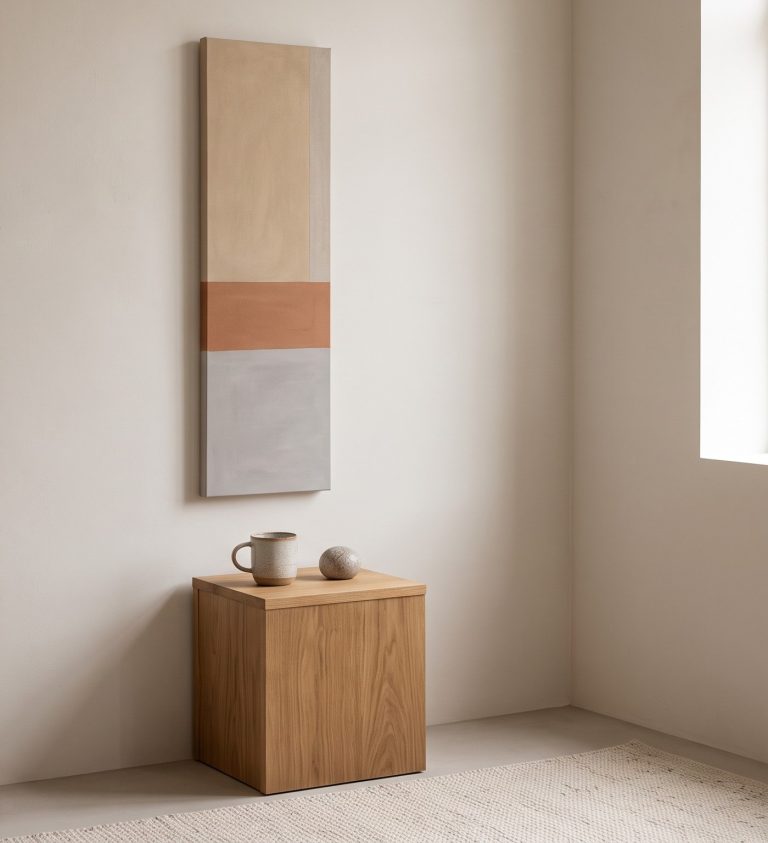
How Scale Changes the Feeling of Artwork
Take a single artwork, and shrink it or enlarge it without changing anything else, and the feeling it creates in a room can shift almost entirely. Scale is one of the most powerful tools in choosing art, and one of the least often discussed, usually overshadowed by conversations about colour and style.
This guide explains how scale changes the emotional effect of artwork, beyond the practical sizing rules covered in how big should wall art be.
Scale Is a Feeling, Not Just a Measurement
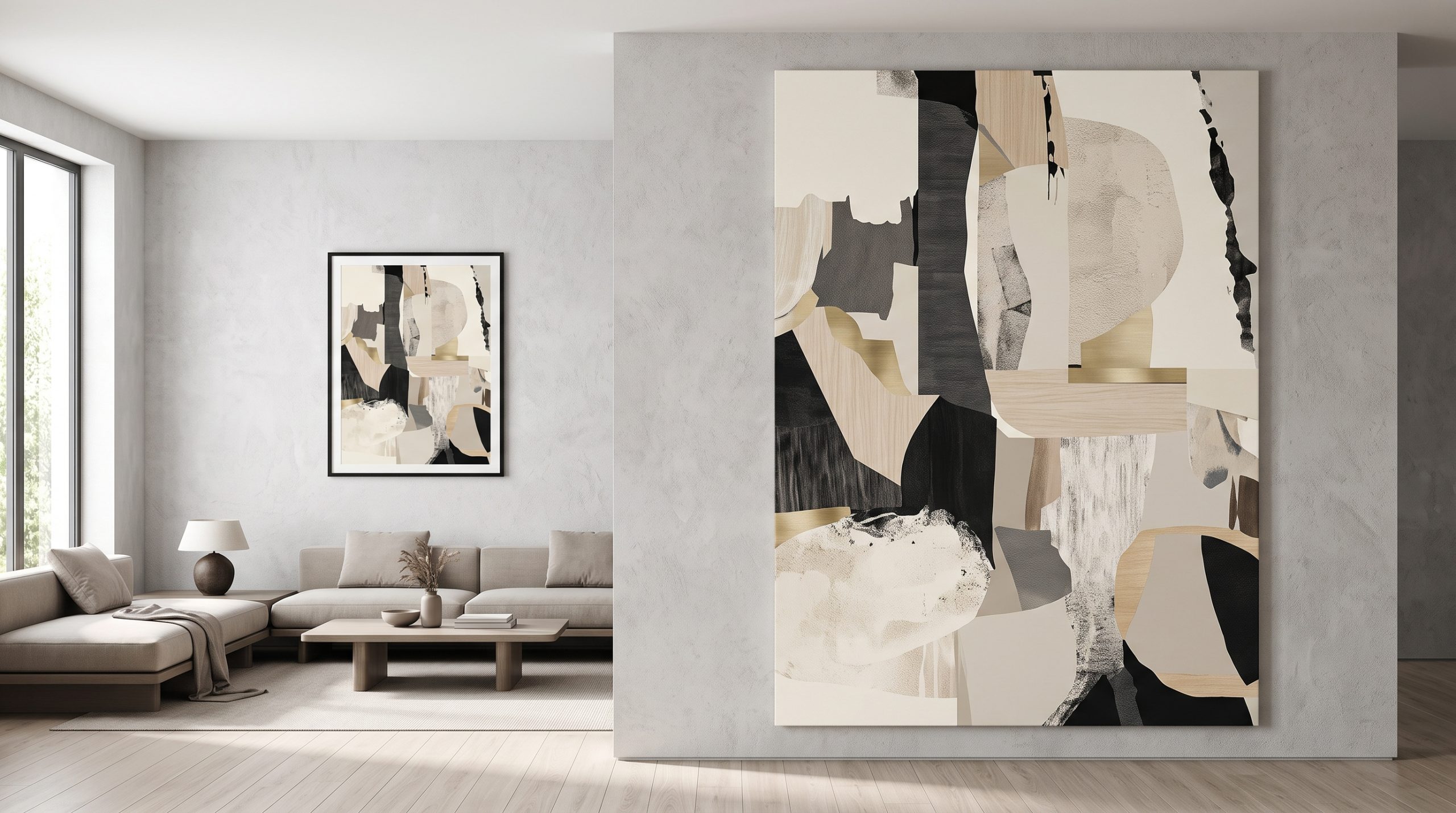
Sizing guidelines exist to help a piece fit its wall correctly, but scale also does something less practical and more emotional. A small piece and a large piece of the same artwork don’t just look different; they create different relationships with the person standing in the room.
Small Scale: Intimacy and Quiet
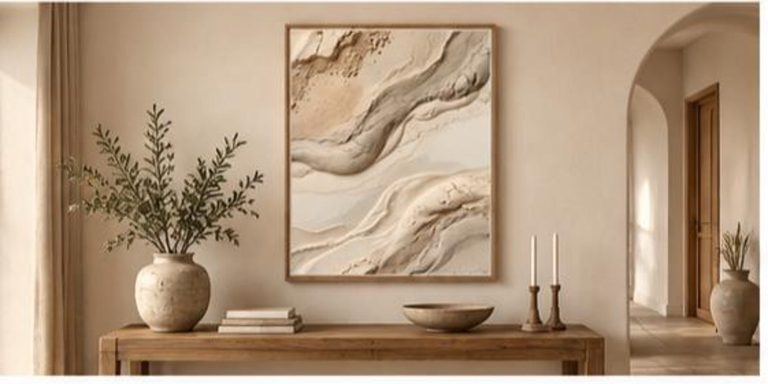
A small artwork asks you to come closer. It creates a private, contained moment, more like a conversation than a statement. Small pieces suit spaces meant for pausing rather than passing through: a reading corner, a bedside wall, a shelf.
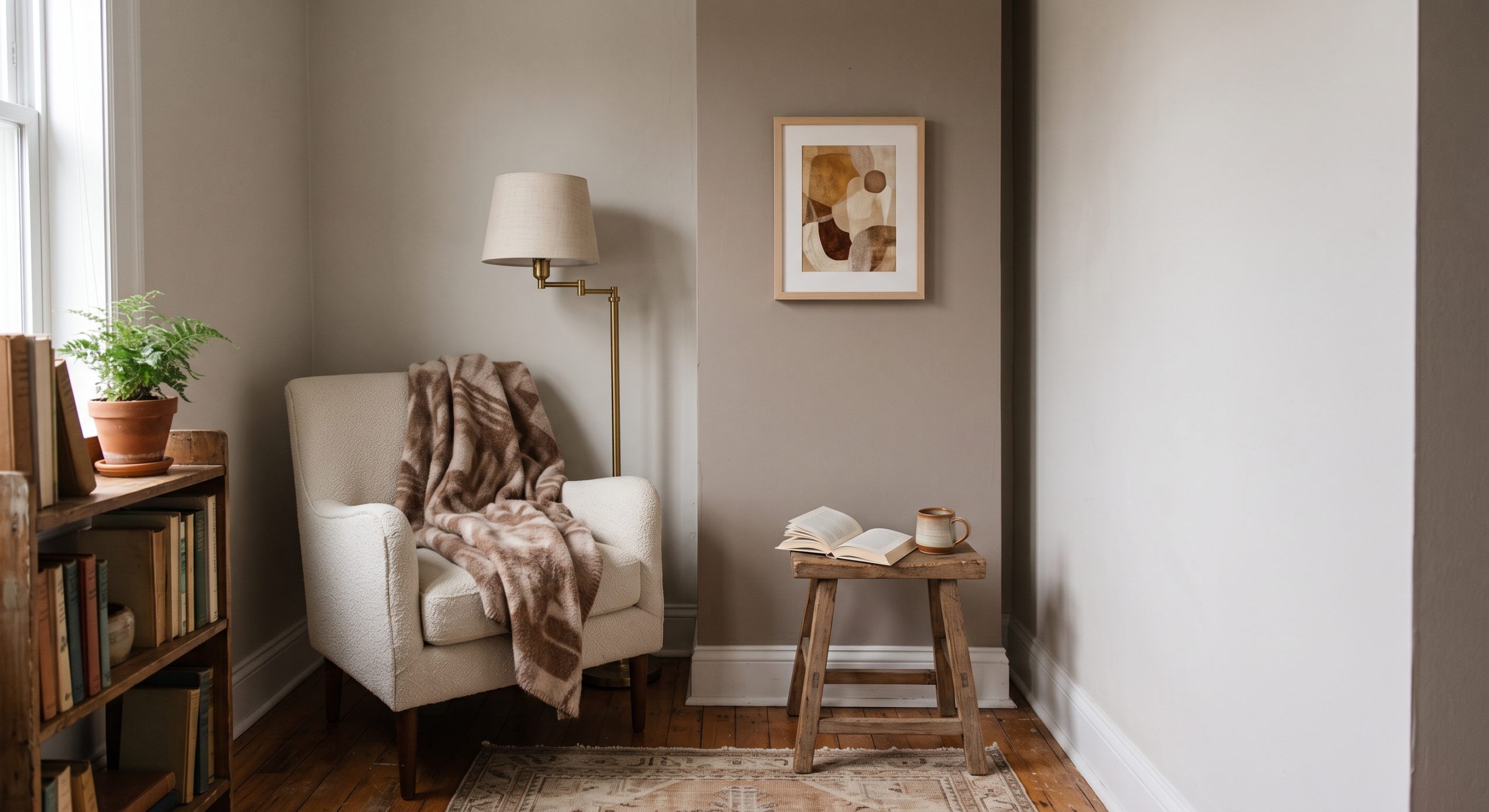
Grouped together, several small pieces can create a different, more collected feeling, explored in how many pieces should be in a gallery wall.
Large Scale: Confidence and Presence
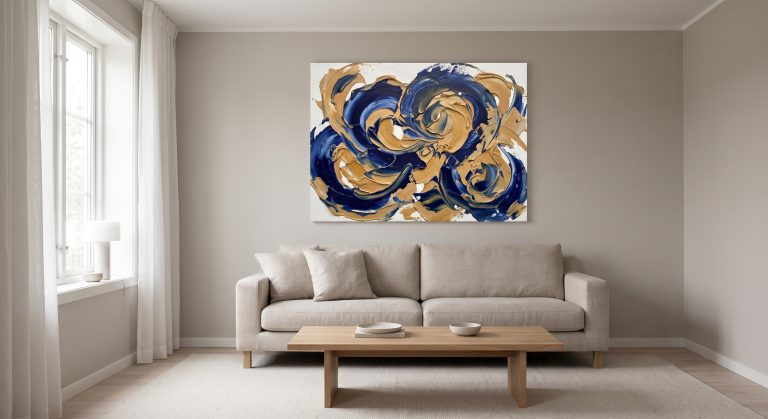
A large artwork does the opposite. It’s visible from across the room, sets the tone before you’ve had time to notice anything else, and reads as a deliberate, confident statement rather than a quiet detail.
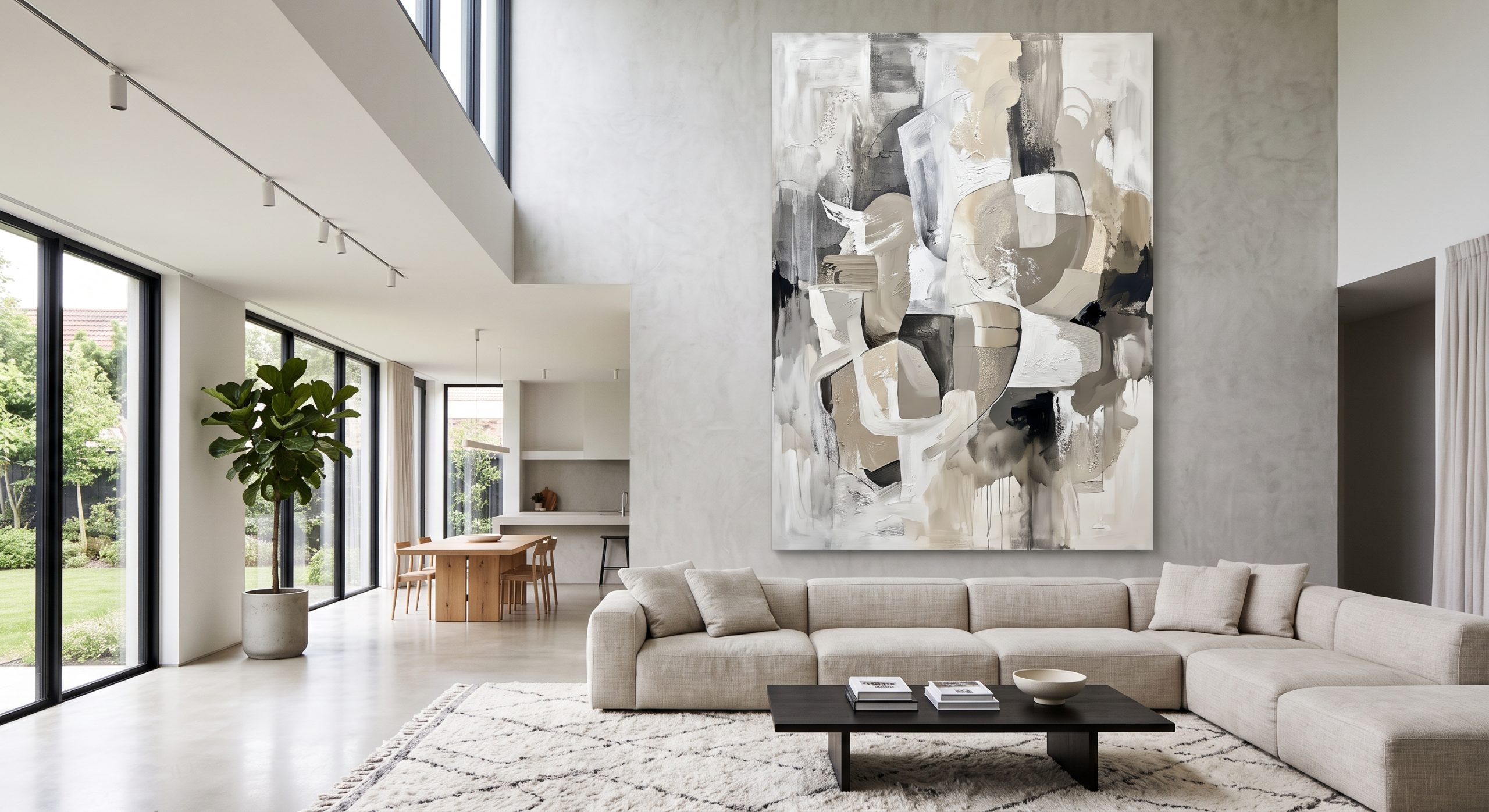
Large scale suits rooms with correspondingly generous proportions, and works especially well as a single statement piece rather than one of several competing elements. See how to create a focal point with wall art for how scale supports that role.
Why the Same Image Feels Different at Different Sizes
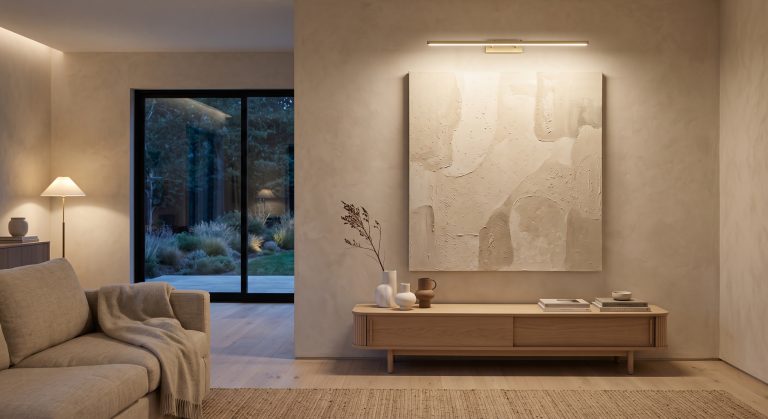
Part of the effect is simply visual dominance, a large piece occupies more of your field of view. But scale also changes how detail reads. A textured or gestural mark that feels intimate and delicate at a small size can feel bold and sweeping enlarged, even though nothing about the composition itself has changed. See textured abstract art for how surface detail interacts with size.
Matching Scale to Purpose
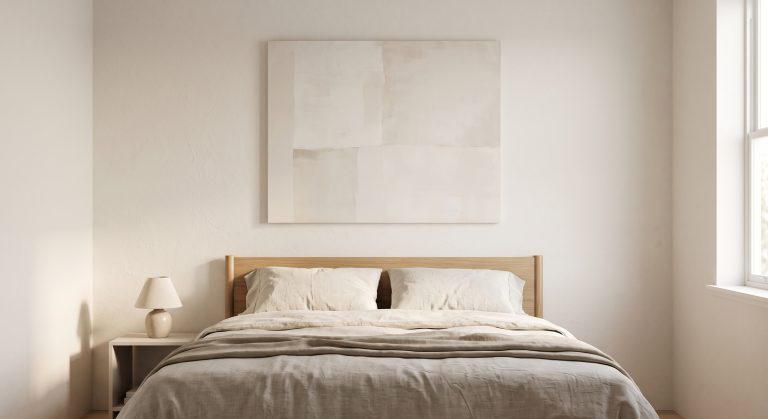
- Want a room to feel calm and understated? Favour a smaller, more modest scale, or a piece with generous negative space even at a larger size.
- Want a clear focal point? Go larger than feels comfortable at first. Undersized art is a far more common mistake than oversized art.
- Want intimacy in a small space? A small piece, correctly scaled to its wall, will feel more considered than an oversized one crammed into a tight corner.
Scale and Room Proportions
Ceiling height, wall width and the size of nearby furniture all affect how a given scale reads. The same artwork can look confidently large in a compact room and surprisingly modest in a double-height space. Always judge scale against the actual wall and furniture, not against an abstract sense of “big” or “small”.
Final Thoughts
Scale is not simply a technical decision about what fits. It’s a decision about how a room should feel: private or confident, quiet or commanding. Once you start choosing scale on purpose, rather than defaulting to whatever size happened to be available, art becomes a much more deliberate tool for shaping a room’s mood.