How to Light Artwork Without Wiring: 7 Easy Ideas for Paintings and Wall Art
You have found the perfect artwork and hung it exactly where you want it, and then evening arrives. The painting that glowed in daylight slips back into the shadows of the wall.
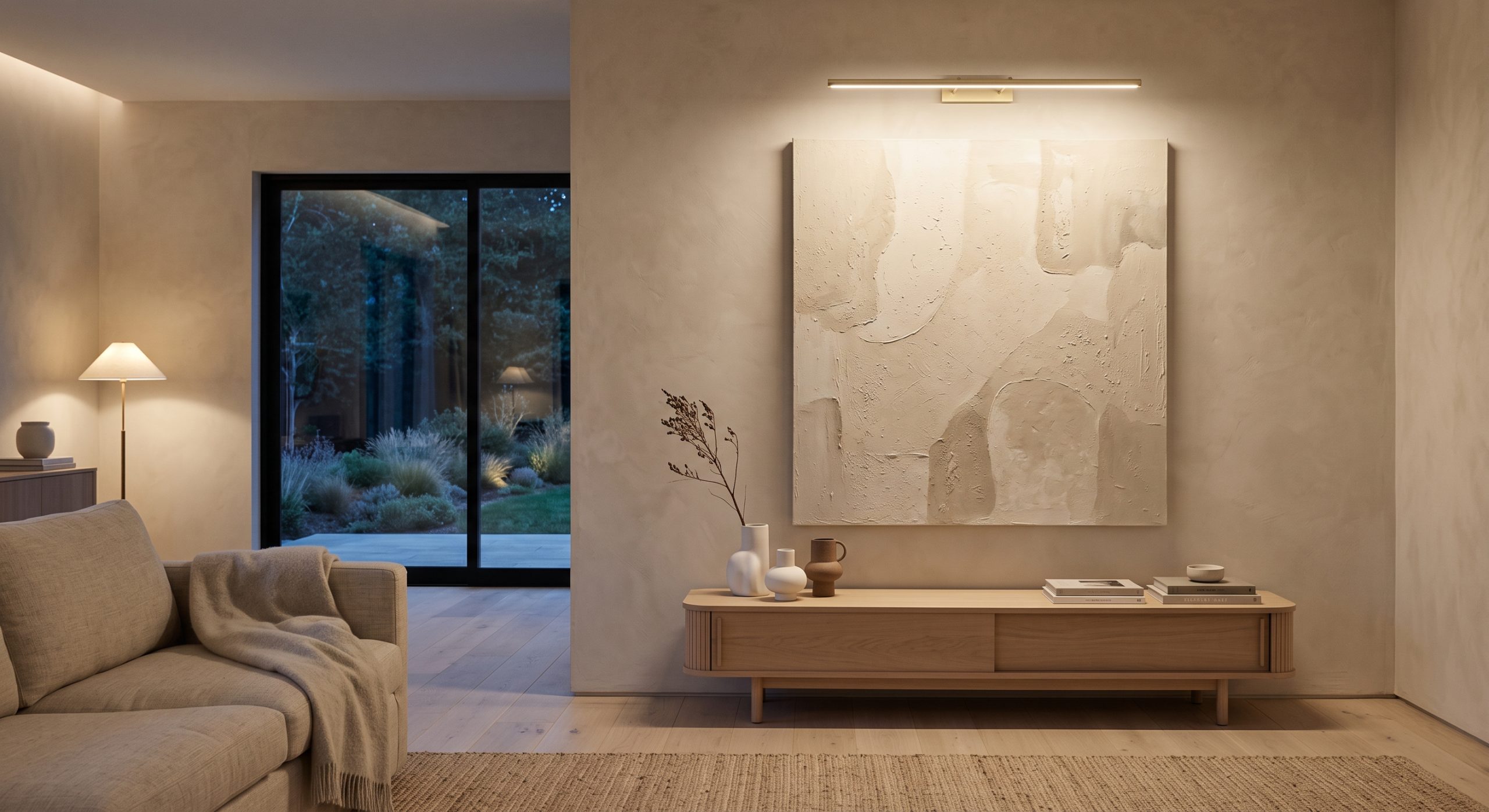
You can light artwork without wiring: no cutting into walls, and no cable running down to a socket. The simplest answer is a rechargeable picture light, which sits above the frame like a traditional gallery light but runs on its own battery. The alternatives are rechargeable wall sconces on either side of the piece, several small matching lights for a gallery wall, a floor uplighter that washes the wall, a battery-powered spotlight for a concentrated beam, or a nearby lamp for softer ambient light.
Whether you are decorating a rented home, lighting a gallery wall or simply want an easier alternative to electrical work, this guide explains each option, plus colour temperature, glare and charging.
Can You Light Artwork Without Electrical Wiring?
Yes. The simplest solution is a rechargeable LED light.
Modern rechargeable picture lights contain their own battery, so they can run without a permanent connection to household wiring. Depending on the design, they may attach using:
- Screws
- Mounting plates
- Magnetic brackets
- Adhesive mounting systems
Some lamps can also be lifted off a magnetic bracket for charging. That makes cordless lighting especially useful anywhere new electrical wiring would be inconvenient.
1. Use a Rechargeable Picture Light
For most framed paintings and individual artworks, this is the first solution we would consider.
A rechargeable picture light sits above the artwork in much the same position as a traditional wired gallery light. The difference is that it contains its own rechargeable battery. That means:
- No cable running down the wall
- No nearby socket required
- No electrician needed just to get power to the light
Many rechargeable models also include:
- Remote controls
- Dimming
- Adjustable colour temperature
- Timers
- Magnetic removal for charging
- Adjustable lamp angles
The result can look surprisingly close to a traditional wired picture light: a soft pool of light spilling down the canvas, with nothing to give away that there is no cable behind it.
When Rechargeable Picture Lights Work Best
They are particularly suitable for:
- One large painting
- Statement wall art
- Framed photography
- Canvas art
- Artwork above a console table
- Hallway artwork
- Bedroom art
If you want product recommendations rather than installation ideas, see our guide to the best wireless picture lights for artwork.
2. Use Rechargeable Wall Sconces Beside the Artwork
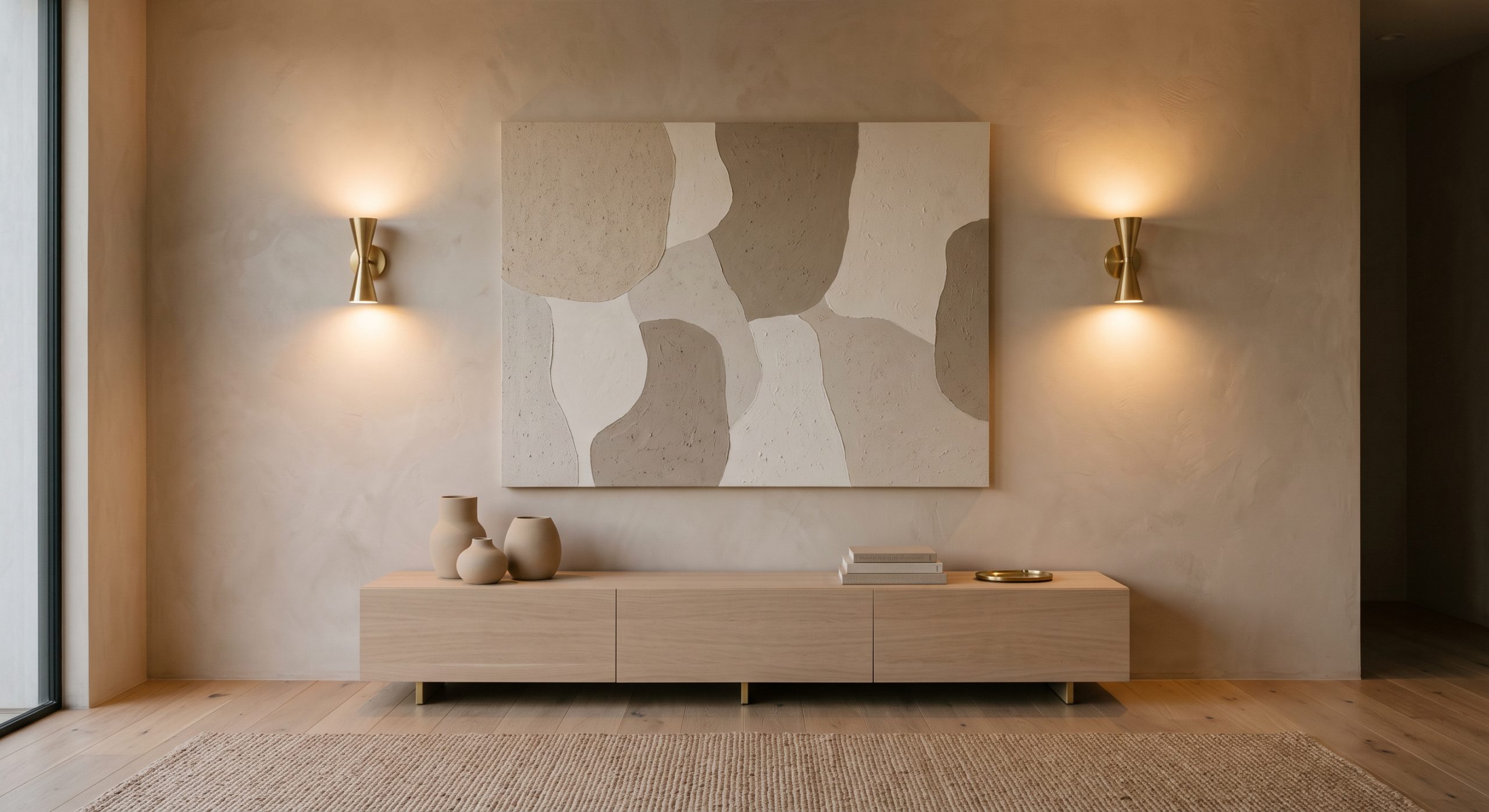
You do not have to light artwork from directly above. Placing wall sconces on either side of a painting creates an elegant alternative.
This works particularly well with one large artwork positioned above:
- A sideboard
- A console table
- A fireplace
- A bed
- A dining-room cabinet
The symmetry makes the whole arrangement feel deliberate, and rechargeable sconces give you the look without running power behind each fixture.
It is also a useful approach when the artwork is very tall and a traditional picture light would sit awkwardly above it.
Create Balance Rather Than Excess Light
The aim is not necessarily to point both lamps straight at the painting. Instead, let the light wash the wider wall and form a soft frame around the artwork. This often produces a gentler, more atmospheric effect.
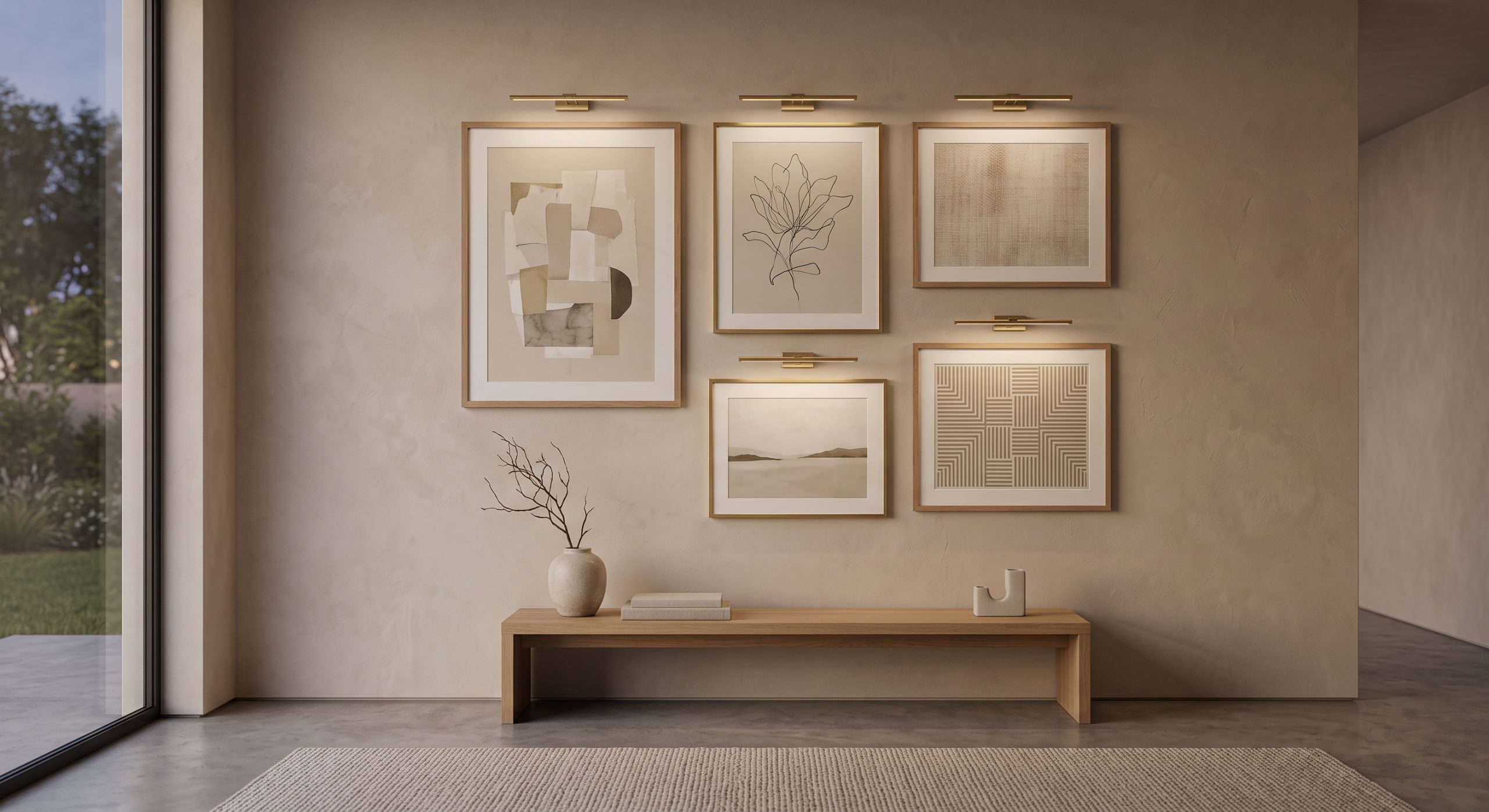
3. Use Small Rechargeable Lights for a Gallery Wall
Gallery walls create a different lighting challenge. One light in the centre may brightly illuminate one or two frames while leaving the rest comparatively dark.
Several smaller lights give more even coverage. A three-piece arrangement, for example, could use three matching rechargeable lights. Alternatively, place lights above only the largest pieces to establish a visual hierarchy.
Whichever you choose, keep the fixtures consistent. Several different lamp styles can make an already detailed wall feel unnecessarily busy.
If you are still working out the arrangement itself, our guide on how to plan a gallery wall layout walks through measuring, spacing and choosing an anchor piece.
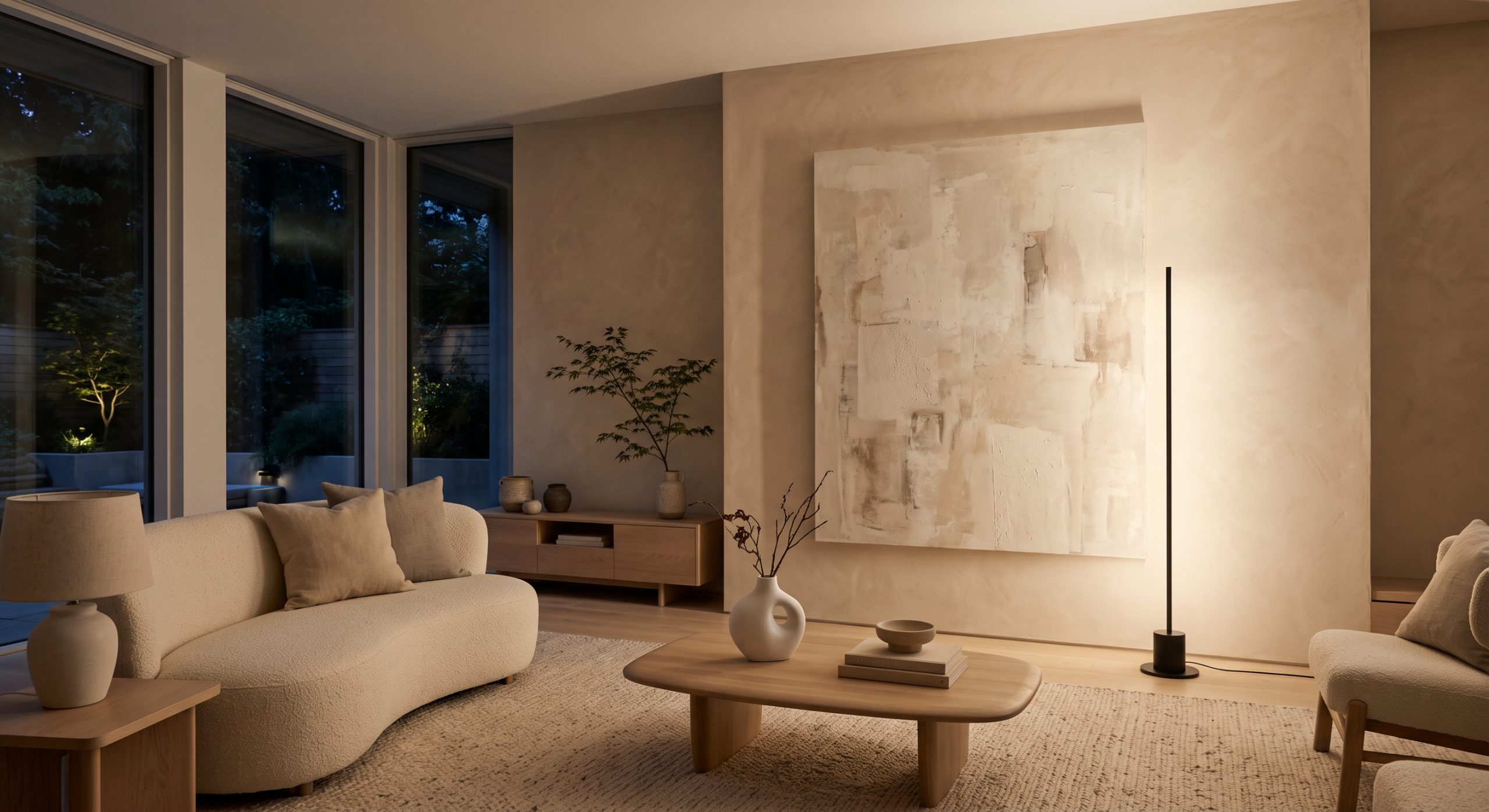
4. Use an Uplighter to Illuminate the Wall Instead
Not every artwork needs to be spotlit. Sometimes lighting the wall around it creates a more attractive result.
A small floor uplighter positioned near the wall sends light upwards. Instead of a concentrated beam on the canvas, it produces a wider glow around the artwork. This works particularly well with:
- Oversized art
- Contemporary interiors
- Textured plaster walls
- Dark feature walls
- Corners
- Minimalist living rooms
It can make both the artwork and the architecture of the room feel more dramatic, with light climbing the plaster and fading softly towards the ceiling.
Why Indirect Lighting Works
Our eyes are naturally drawn to brighter areas. If the wall behind a painting is softly lit while the rest of the room is dimmer, the artwork becomes more prominent even though the light is not pointed directly at it.
5. Use Battery-Powered Spotlights
Small cordless spotlights are useful when a traditional bar-style picture light does not suit the artwork. A spotlight creates a more concentrated beam, which works particularly well with:
- Sculptural artwork
- Small canvases
- Display shelves
- Niches
- Decorative objects
- Dramatic contemporary artwork
Be careful with the angle. A strong beam aimed straight at framed artwork behind glass can create distracting reflections. Moving the light slightly to one side often reduces the glare.
6. Use Furniture Lighting to Illuminate Nearby Artwork
Sometimes the best artwork light is not attached to the wall at all.
A table lamp on a sideboard below a painting can light both the room and the artwork above it. Similarly, a floor lamp beside a large canvas can create beautiful directional evening light.
This approach suits relaxed interiors where you do not want the formal look of gallery lighting. Try:
- A table lamp below the artwork
- A floor lamp beside a canvas
- An uplighter behind furniture
- A directional reading lamp aimed towards the wall
The result is less precise than dedicated picture lighting, but it can feel softer and more natural. Bear in mind that many table and floor lamps still plug in, so this works best where a socket is already close by.
7. Use Magnetic Rechargeable Lighting
Magnetic fittings make cordless artwork lighting especially convenient. The mounting bracket stays on the wall while the light itself detaches.
That makes charging far easier. Instead of reaching up to plug a cable into a lamp fixed high on the wall, you lift the light off, charge it elsewhere and put it back.
It is worth looking for if you expect to use the light regularly.
What Is the Best Way to Light Artwork Without Wiring?
For most people, a rechargeable picture light is the simplest answer. It is designed specifically for artwork, sits where you would expect a traditional picture lamp to sit and creates a clear focal point.
In some situations, though, another method works better:
- Rechargeable picture light: you want a classic gallery look.
- Rechargeable sconces: you want the lighting to become part of the wider room design.
- Several smaller lights: you have a gallery wall.
- Uplighter: you want a soft atmospheric wash rather than direct light.
- Spotlight: you want a concentrated beam on one specific area.
- Nearby floor or table lamp: you prefer relaxed ambient lighting.
Best Rechargeable Picture Lights for Artwork
If you have decided a rechargeable picture light is the right solution, the next question is which one to choose. Features worth comparing include:
- Battery capacity
- Width of the light
- Dimming
- Adjustable angle
- Remote control
- Colour temperature
- Colour rendering (CRI)
- Charging method
- Mounting system
We have compared seven current options, based on their published specifications, in our guide to the best rechargeable picture lights for artwork, including picks for individual paintings, gallery walls, textured artwork and renter-friendly setups.
How High Should a Picture Light Sit Above Artwork?
There is no universal measurement, because frames and lights vary considerably. What matters is that the light:
- Feels visually connected to the artwork
- Does not sit so high that much of the beam misses the painting
- Does not obscure the top of the frame
- Gives reasonably even coverage
Before making permanent holes, hold the light in position and view the artwork from normal eye level. If possible, test it after dark too. A position that looks perfect in daylight can produce a very different beam pattern once the room is dark.
It also helps to get the artwork itself at the right height first. Our guide on how high to hang wall art covers that step.
What Colour Temperature Should You Use for Artwork?
Colour temperature changes the overall mood. Warm white creates a softer, more relaxed atmosphere. Neutral white tends to reveal colours more cleanly. Cooler white can feel crisp and contemporary but may look harsh in an otherwise warm room.
For neutral and earthy artwork, warmer settings often complement:
- Beige
- Cream
- Taupe
- Brown
- Ochre
- Terracotta
- Natural linen tones
For colourful artwork, compare several settings and choose the one that reproduces the colours most naturally. An adjustable lamp gives you far more flexibility than a single fixed colour temperature.
How to Light Textured Artwork Without Wiring
Textured artwork benefits enormously from directional light. Instead of pointing the lamp flat at the centre, try angling it slightly. The raised parts of the surface catch the light while recessed areas form tiny shadows. This can reveal:
- Brush strokes
- Plaster texture
- Sculptural ridges
- Linen surfaces
- Stone effects
- Layered paint
For understated neutral artwork, this can make an enormous difference. Texture that is almost invisible in flat daylight can become a significant part of the composition under directional evening light. Our guide to textured abstract art explains how that depth is built into a piece.
Can You Light Artwork in a Rental Home?
Rechargeable lighting is particularly attractive to renters because it avoids electrical alterations. However, “wireless” does not automatically mean “damage-free”. Some lamps still need screws; others offer adhesive installation.
Before using adhesives, consider:
- The wall finish
- The condition of the paint
- The weight of the fitting
- The manufacturer’s mounting instructions
- Your tenancy agreement
Never attach a heavy light with an unsuitable adhesive just to avoid making a hole. Secure mounting matters more.
How to Avoid Glare on Framed Artwork
Glass introduces another challenge. Light hitting it at the wrong angle can reflect straight back towards the viewer. If glare is a problem:
- Adjust the lamp angle slightly
- Reduce the brightness
- Move the light a little further from the artwork, if the design allows
- Light the piece from an angle rather than straight on
- Consider anti-reflective glazing when reframing valuable artwork
The goal is for the viewer to notice the art, not the reflection of the lamp. For more on glazing choices, see our guide on how to frame printable wall art.
How to Make Wall Art Look More Expensive With Lighting
You do not necessarily need more artwork. Sometimes the biggest improvement comes from presenting what you already own more intentionally. Try combining:
- One substantial piece of art
- Generous wall space around it
- A good-quality frame
- Soft directional lighting
- A restrained colour palette nearby
Lighting creates contrast. Contrast creates focus. And focus makes an artwork feel important, which is one reason galleries use controlled lighting rather than relying on general room light.
If you are choosing artwork as well as lighting, our complete guide to choosing artwork for your home covers proportion, colour and placement.
Do Rechargeable Picture Lights Need Charging Often?
It depends on:
- Battery size
- Brightness
- How long the light is on each evening
- Timer settings
- The age of the battery
Maximum brightness normally drains the battery faster than a low setting, which is why timers are useful. Rather than accidentally leaving a picture light on all night, you can run it only during the hours you are actually in the room.
Is Wireless Artwork Lighting Worth It?
For many homes, yes. Permanent wired picture lighting can look beautiful, but not every artwork or room justifies electrical work. Rechargeable lighting makes sense when:
- You are renting
- The artwork may move
- There is no nearby electrical supply
- You want to test the look first
- You want a fast installation
- You are lighting a gallery wall
- You only need the light for a few hours each evening
For artwork that will stay in the same position for years and needs lighting for long periods every day, wired lighting may still be worth considering. For flexibility, though, rechargeable lighting is hard to beat.
Final Thoughts
You do not need to open up a wall simply to make your artwork visible at night.
Rechargeable picture lights are now one of the simplest ways to create focused artwork lighting without permanent wiring. Cordless picture lights work beautifully over individual paintings. Rechargeable sconces can frame larger artwork. Several small lights can bring a gallery wall together, while uplighters and floor lamps create a softer pool of light around an entire feature wall.
The best approach depends on the effect you want. If the aim is a gallery-like focal point, start with a rechargeable picture light. If you want atmosphere rather than precision, light the wall instead.
Either way, thoughtful lighting can completely change the way artwork lives in a room.
Frequently Asked Questions
How can I light a painting without electricity?
Use a rechargeable or battery-operated picture light. These contain their own power source and do not need mains wiring while they are running.
Can you get picture lights without wires?
Yes. Rechargeable wireless picture lights are widely available and are designed to light artwork without a visible electrical cable.
What is the easiest way to light artwork in a rental?
A rechargeable picture light or rechargeable wall light is usually one of the simplest options, because it avoids installing new electrical wiring.
Can battery lights damage artwork?
Choose the light source carefully, particularly for valuable or sensitive artwork, and avoid excessive heat and prolonged exposure. Museums and valuable collections need far more controlled conservation lighting than ordinary household artwork.
How do you light a picture without a ceiling spotlight?
Install a rechargeable picture light above the artwork, use wall sconces beside it, or create indirect light with a floor uplighter.
Can a floor lamp light artwork?
Yes. A directional floor lamp or uplighter can light the artwork or the wall around it. The effect is softer than a dedicated picture light.
How do you hide wires when lighting artwork?
The simplest solution is to remove the wires entirely by choosing rechargeable lighting. If you are using mains-powered lighting, professionally concealed wiring generally gives the cleanest finish.