How Artwork Changes the Mood of a Room
Change the art on one wall, and a room can feel like a different place without a single piece of furniture moving. Mood is one of the fastest things art changes, and one of the least often planned for on purpose.
This guide explains the qualities that shift a room’s mood, so you can choose art deliberately for how you want a space to feel, not only how you want it to look. For the underlying composition principles, see how colour changes the feeling of abstract art and understanding balance in abstract art.
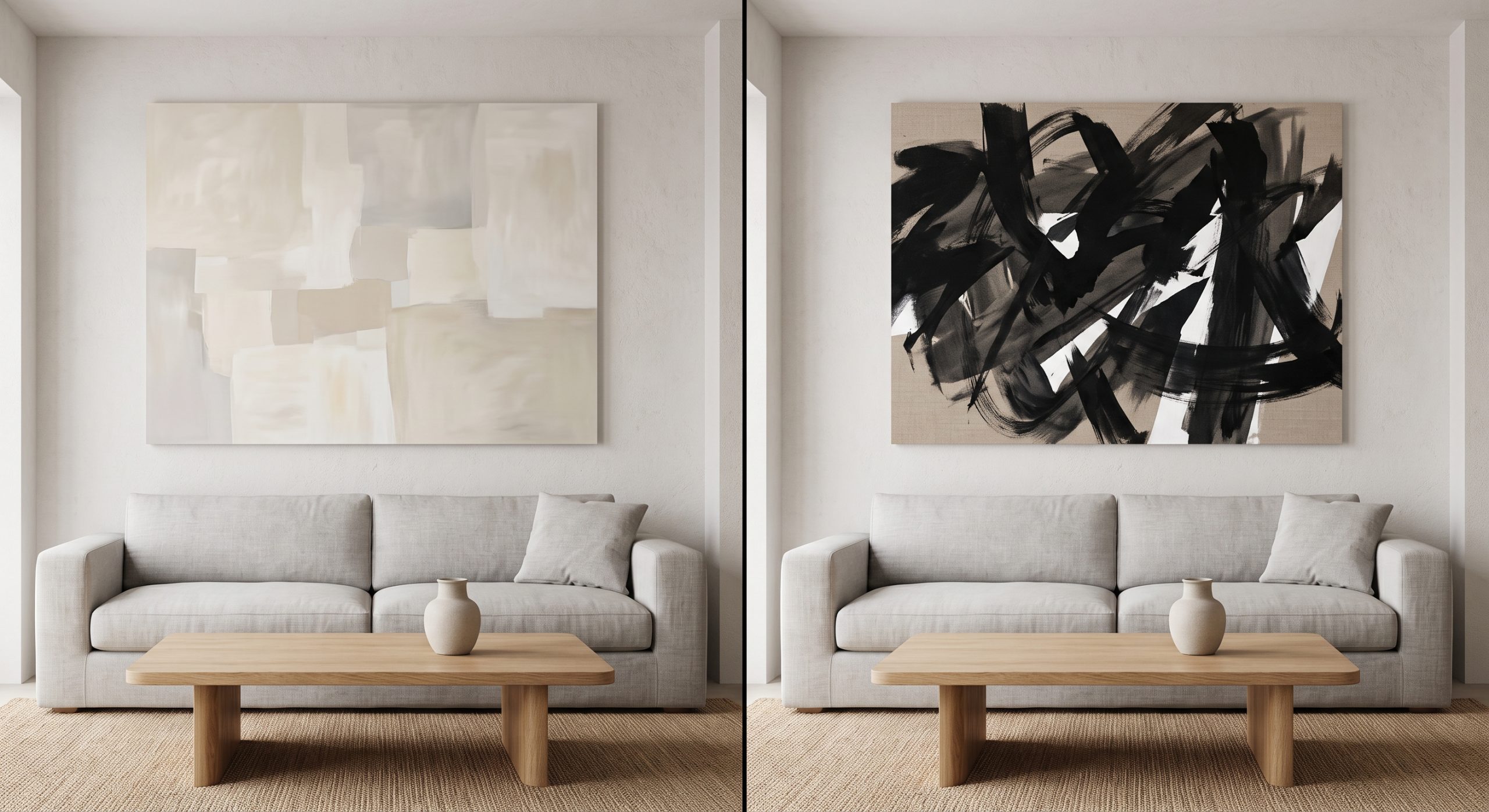
The Qualities That Shift Mood
Colour temperature
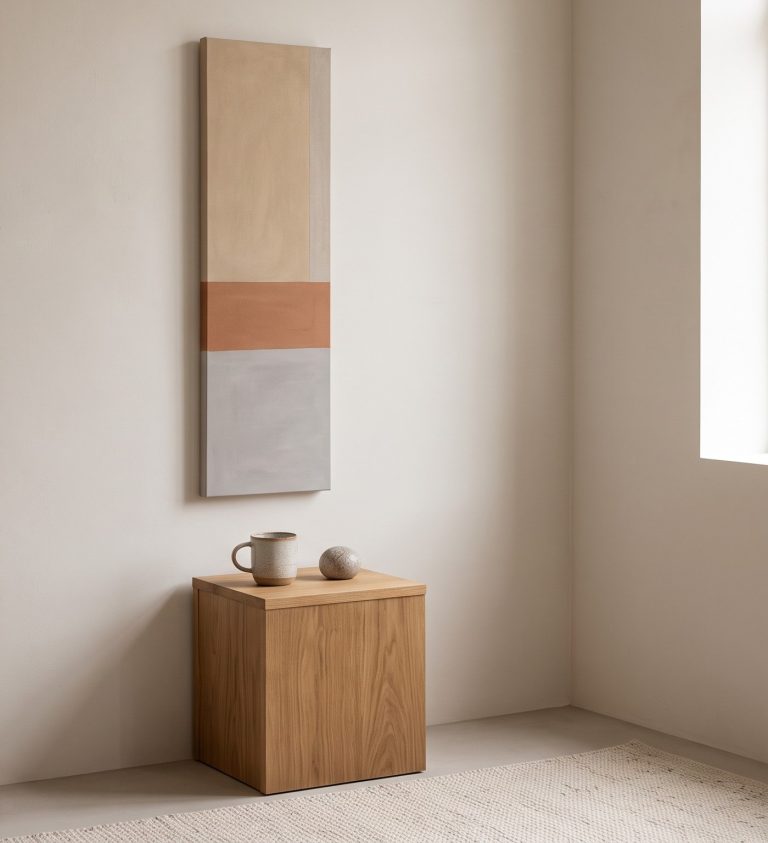
Warm tones (sand, clay, terracotta) tend to feel cosy and grounded. Cool tones (grey, blue, sage) tend to feel calmer and more composed. See warm neutral wall art for the warm end of that range.
Contrast
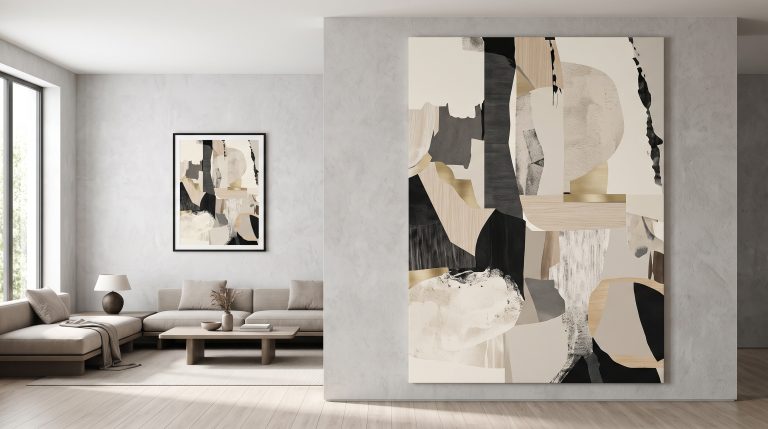
High contrast, especially strong black against white, energises a space and draws the eye quickly. Low contrast slows things down and feels more restful.
Line and shape
Sharp angles and straight lines create tension and structure. Curved, organic forms feel softer and calmer. See organic abstract art.
Density
Busy, detailed compositions feel stimulating. Sparse compositions with generous negative space feel restful. See negative space in abstract art.
Texture
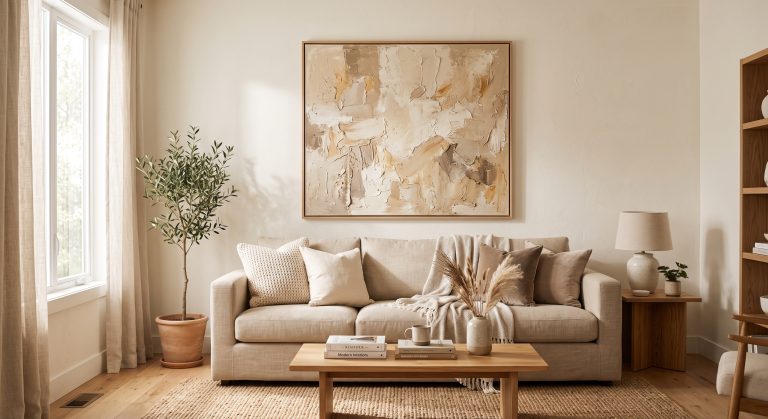
Rough, tactile surfaces add a sense of depth and groundedness. Smooth, flat surfaces feel calmer and more contained. See textured abstract art.
Scale
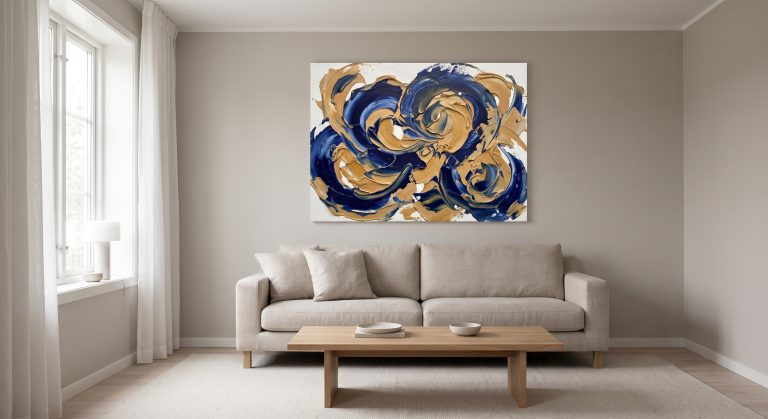
A large, dominant piece feels bold and confident. Smaller, quieter pieces feel more intimate and understated.
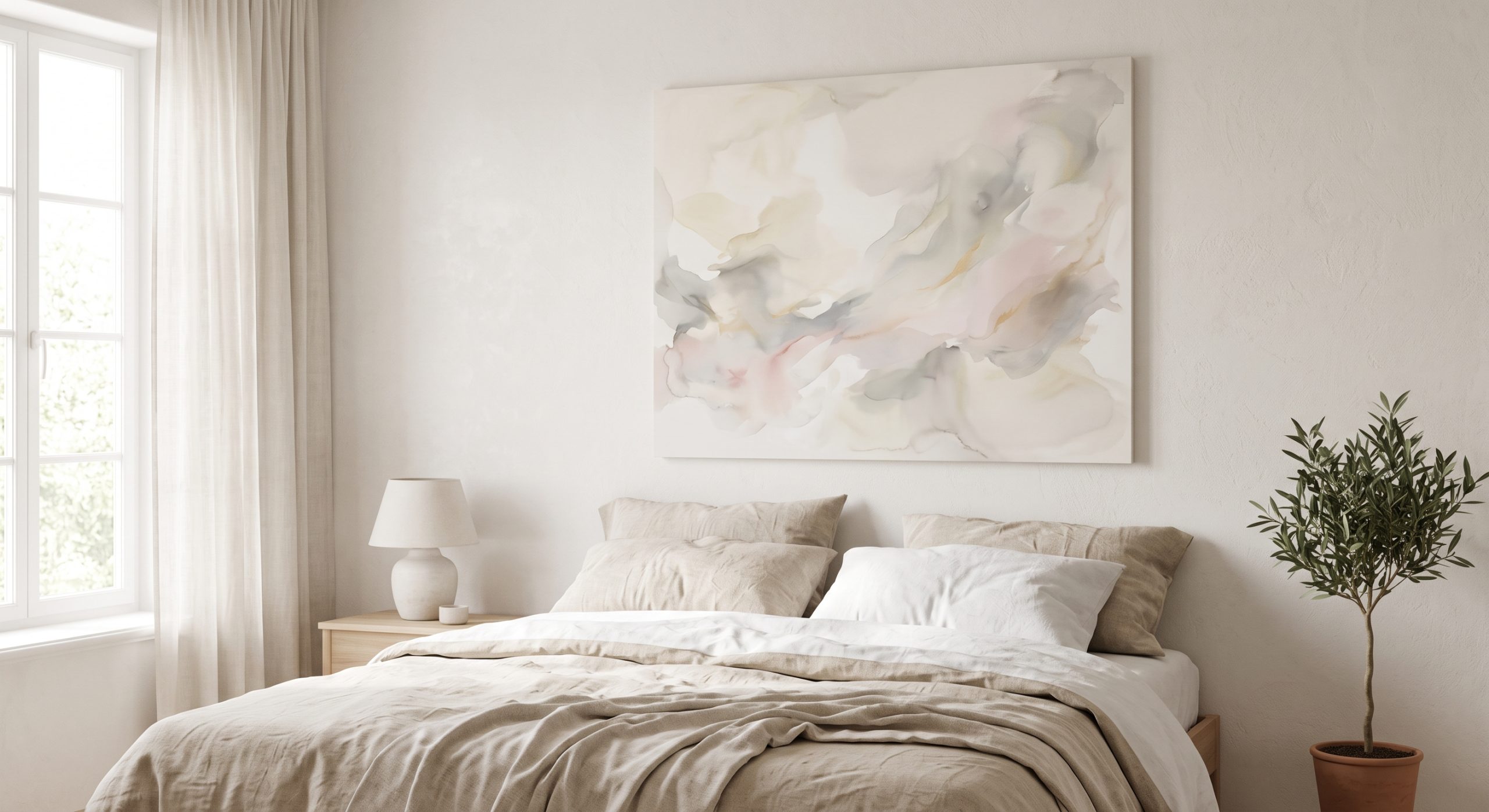
Calm and Restful
Low contrast, cool or muted warm tones, soft organic shapes, generous space, and a matte surface. This combination suits bedrooms and reading corners especially well. See calm artwork ideas for a peaceful home for more.
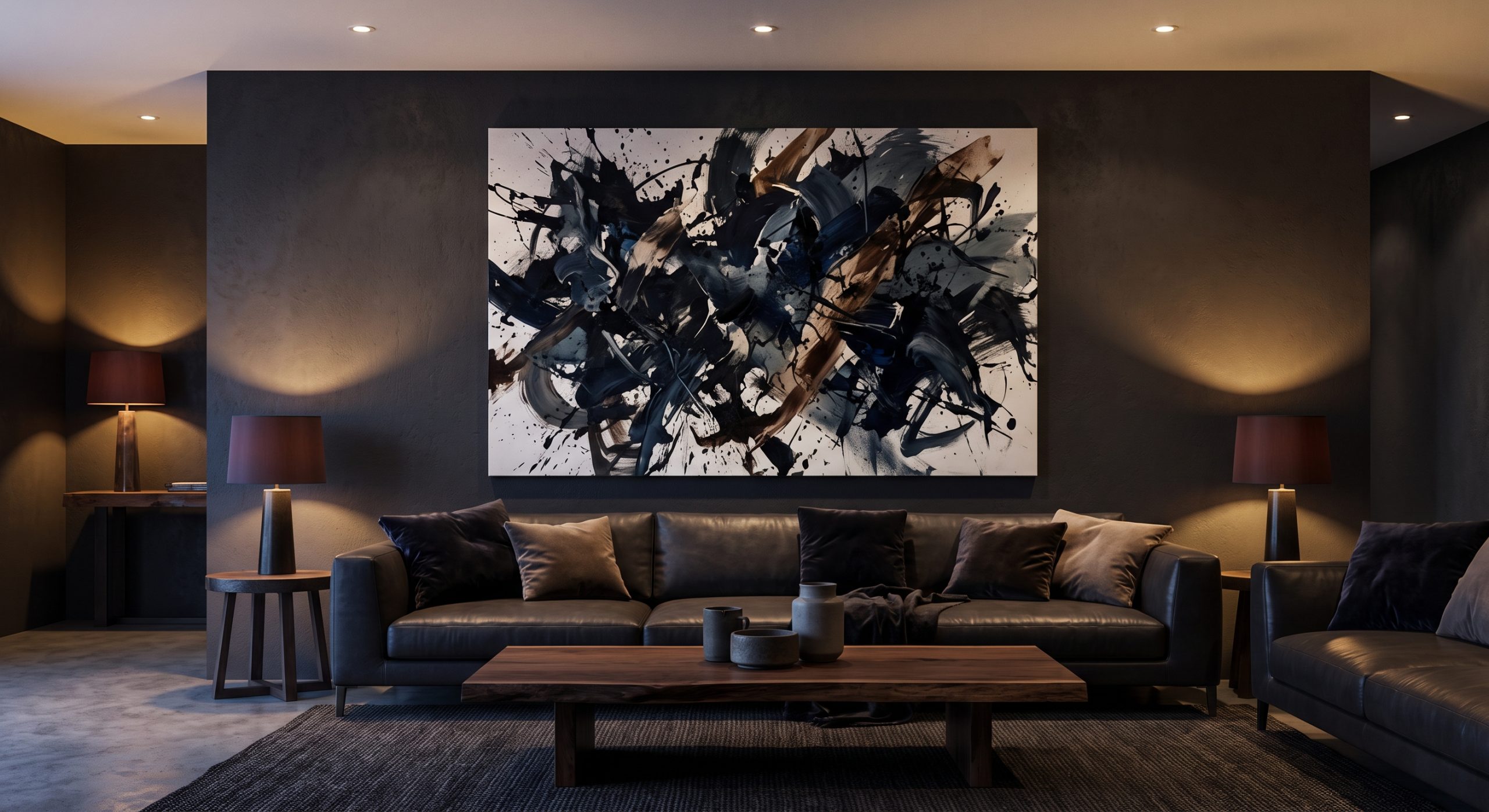
Energetic and Bold
High contrast, saturated or dark tones, sharper gestural marks, and denser composition. This combination suits living rooms, studios and spaces where you want energy rather than calm.
Warm and Grounded
Earthy, warm tones, natural texture, organic form. This is the register most associated with Japandi and wabi-sabi influenced rooms. See what Japandi art is and wabi-sabi art.
Cool and Composed
Cool neutrals, clean geometry, crisp contrast without excess density. This suits architectural, minimalist and Scandinavian-leaning rooms.
Choosing Mood Room by Room
- Bedroom: calm and restful, almost always
- Living room: depends on the household, from calm to genuinely bold
- Home office: calm enough to focus, structured enough not to feel sleepy
- Entryway: can carry more energy, since it’s passed through rather than lingered in
- Dining room: warm and inviting, to support conversation
Changing Mood Without Changing Furniture
Because art is usually the easiest thing in a room to change, it is also the fastest way to shift its mood without a full redecoration. Swapping a high-contrast piece for a soft, muted one, or the reverse, can noticeably change how a room feels within minutes.
Common Mistakes
- Choosing bold, energetic art for a room meant for rest
- Choosing overly calm, quiet art for a room that needs a focal point
- Ignoring how a piece looks under evening lighting, not just daylight
- Assuming mood is fixed once the furniture is chosen, rather than adjustable through art
Final Thoughts
Mood is not an accident of taste. It is built from specific, identifiable qualities: colour temperature, contrast, line, density, texture and scale. Once you can name them, you can choose art that creates the feeling you actually want in a room, rather than hoping a piece you liked in a shop happens to fit.