How to Choose Wall Art for Your Living Room
The living room usually has the biggest wall in the house and the most furniture competing for attention. It is where art can make its most confident statement, and where it most easily ends up slightly, naggingly wrong.
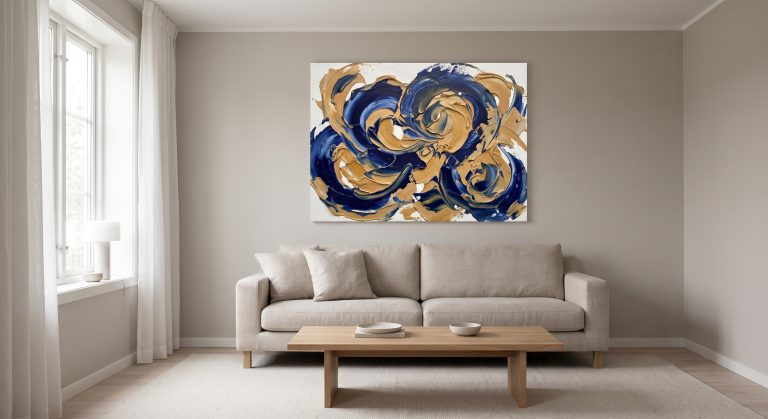
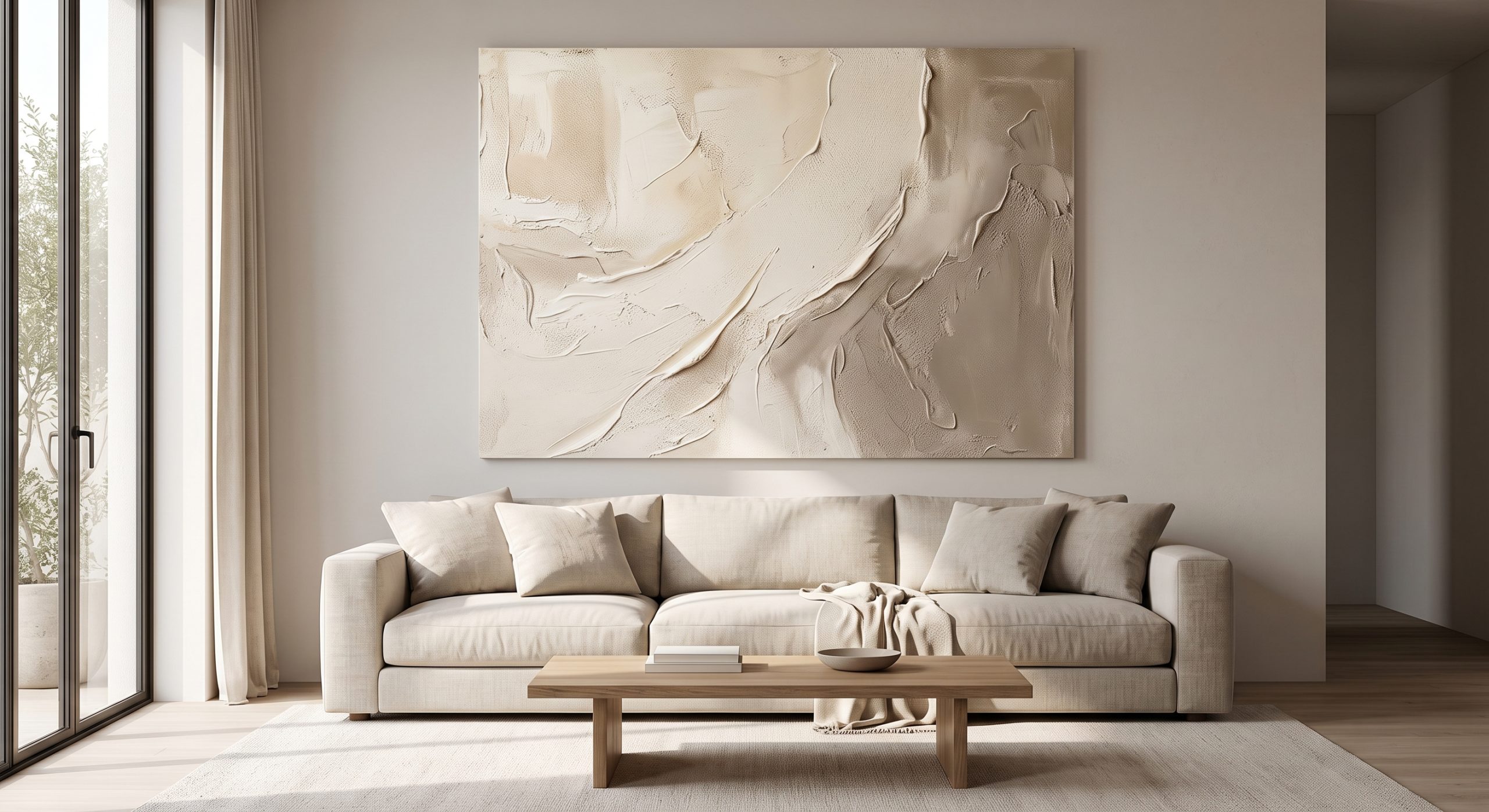
Start with the wall above the sofa. As a rule of thumb, choose art that spans roughly two-thirds to three-quarters of the sofa’s width, hang it low enough to feel connected to the furniture, and decide early whether you want one statement piece or a small gallery wall. Get those three things right and the art gives the room a centre of gravity: the place your eye rests when you walk in, quietly tying together the oak, the linen and the lamplight.
This guide covers each of those decisions in detail, then style, colour, and how to handle every other wall, from alcoves to the awkward space beside the television. For general principles, see how to choose abstract art for your home.
Start With the Wall Above the Sofa
This is usually the room’s main art wall, and the one worth solving first. Whatever you hang here sets the tone, colour and scale for everything else in the room.
Get the scale right
A widely used guideline is that art above a sofa should span roughly two-thirds to three-quarters of the sofa’s width. Too small and the piece floats like an afterthought, a postage stamp on a large envelope. Too large and it presses down on the furniture beneath it.
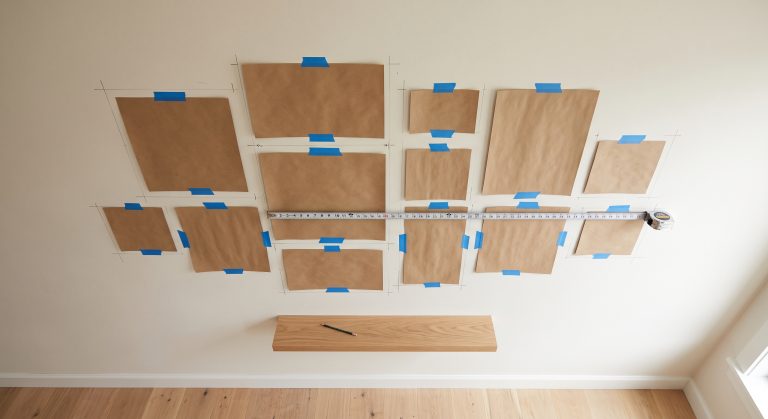
Before you buy, measure the sofa and multiply by those two fractions: that gives you your target range. If you can, cut a sheet of paper or card to that size and tape it to the wall for a day or two. It is the simplest way to see the proportions before committing to them.
One piece or several?
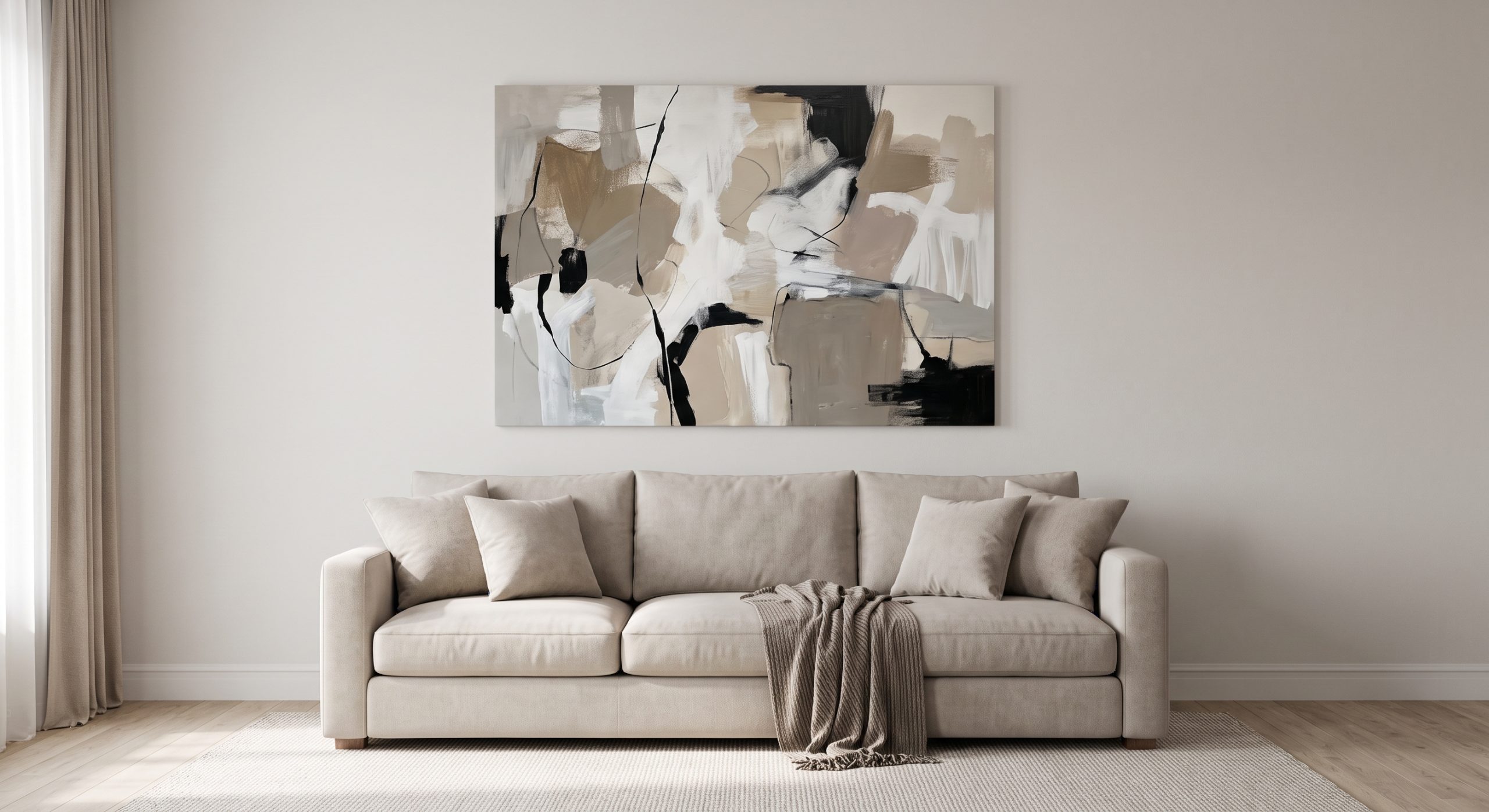
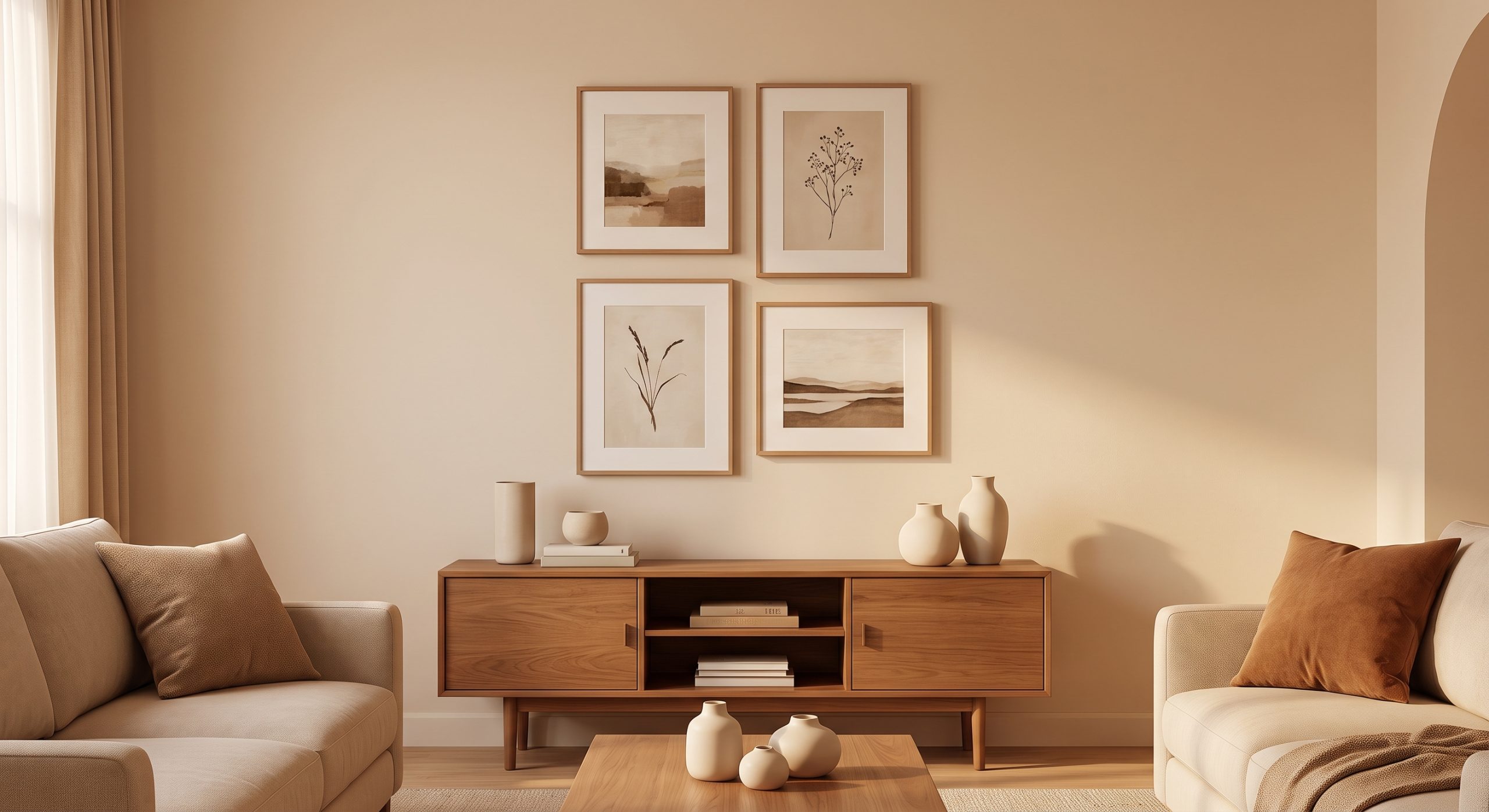
A single large piece reads as calm and assured. A small gallery wall reads as curated and personal, with more for the eye to wander through. Both work above a sofa. The deciding question is how much is already happening in the room: a busy room with pattern and colour usually wants one restrained piece, while a very spare room can carry the extra rhythm of a group. See gallery wall ideas for a modern home if you are drawn to the second option.
Choosing a Style That Suits a Living Room
Living rooms are seen by guests as well as the people who live there, and they are used from bright mornings to lamp-lit evenings. Art here often benefits from a little more presence than it would in a bedroom.
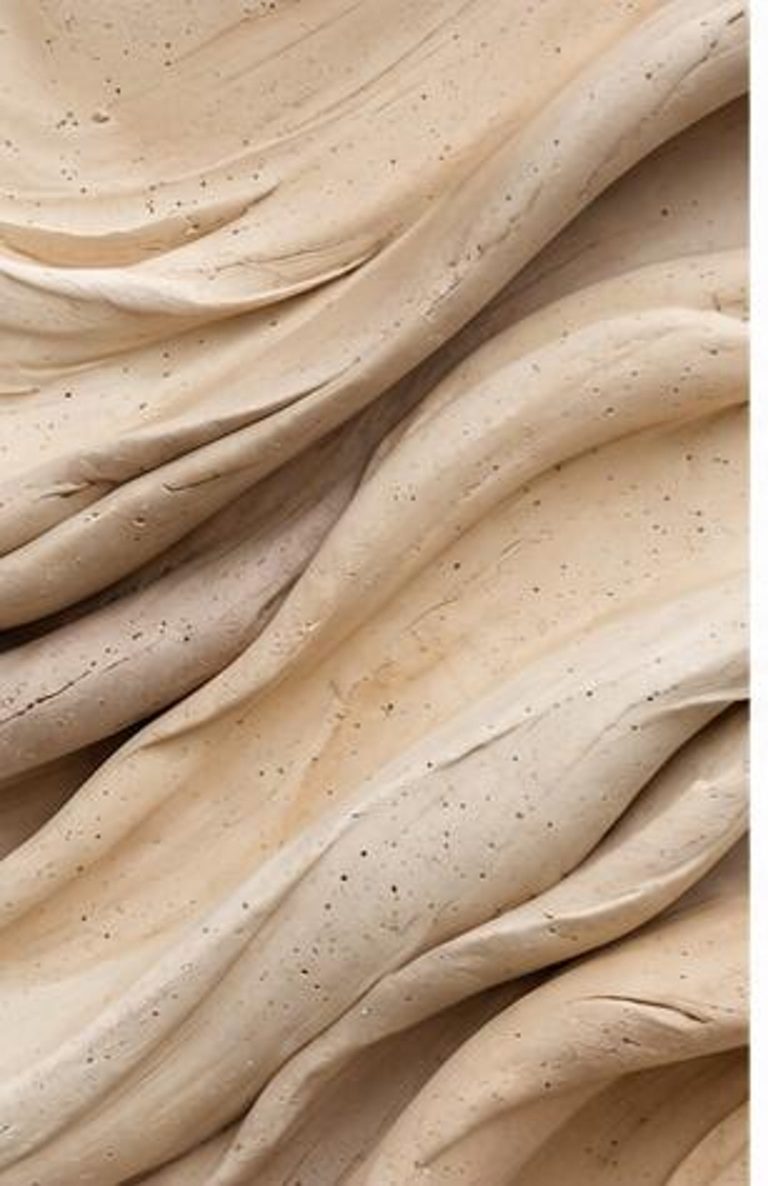
- Textured abstract work gives a large wall genuine depth. In raking afternoon light, raised surfaces throw tiny shadows and the piece seems to shift as the day goes on. See textured abstract art.
- Organic abstraction softens a room full of straight sofa arms, shelves and table tops with curves that feel unhurried. See organic abstract art.
- Bolder, higher-contrast pieces can become a true focal point in a room that is otherwise furnished in neutrals.
Matching the Room’s Colour Scheme
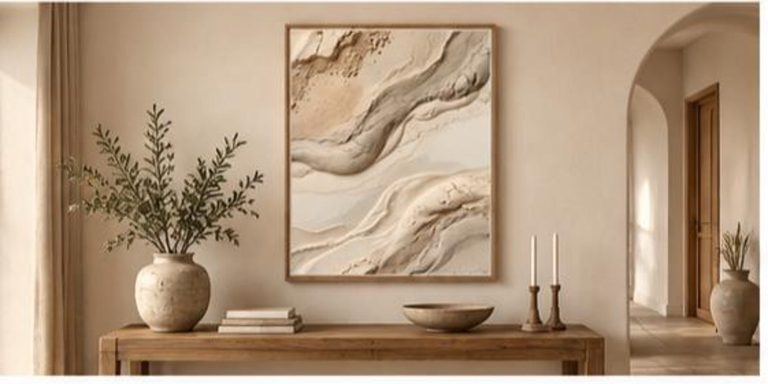
Art in a living room does not need to match the sofa. In fact, an exact match tends to make both look flat. Look instead for a relationship: a sandy tone that echoes the floorboards, a charcoal mark that answers a black lamp base, a soft clay that picks up a cushion on the armchair. See how to match artwork to your interior colour scheme for the full approach.
Other Walls in the Living Room
Beside or around a television
A television is a large dark rectangle that dominates whenever it is switched on, so art beside it should be smaller and more restrained rather than trying to compete. A vertical piece to one side often works better than something hung directly above the screen.
Alcoves and awkward corners
Narrow spaces suit tall, vertical pieces, or a slim stacked run of two or three smaller works. Used well, an alcove becomes a small framed moment of its own rather than a gap to fill.
Behind seating, away from the main wall
A secondary wall can carry a more restful piece. It will usually be seen from across the room rather than sat facing, so softer contrast and gentler forms suit it well.
Choosing for a Neutral, Minimalist or Japandi Living Room
If your living room leans towards a particular style, that helps narrow the choice further:
- Neutral rooms: layered tones and texture stop the art feeling flat, so look for several shades of cream, sand and stone within one piece. See what neutral wall art is.
- Minimalist rooms: a single restrained piece with generous space around it, where the empty wall is part of the composition. See what minimalist art is.
- Japandi rooms: soft organic forms and natural materials that sit easily beside pale timber and paper lantern light. See what Japandi art is.
Hanging Height
Getting the height right matters as much as getting the size right. Art above a sofa should feel part of the same arrangement as the sofa, rather than drifting up towards the ceiling. See how high should you hang wall art for the guidelines, including how they shift above furniture.
Think About the Evening
Most living rooms do their real work after dark, when the main light is off and lamps take over. A piece that glows in daylight can recede into shadow at night. Before you decide, look at your chosen wall in the evening light you actually live with. If the art disappears, a picture light or a well-placed lamp can bring it back; see how to light artwork without wiring.
Common Mistakes
- Choosing art before measuring the wall or the sofa
- Hanging art too high, disconnected from the furniture
- Matching the art’s colour to the sofa exactly, which can feel flat
- Choosing a piece too small for a large, open-plan living space
- Ignoring how the piece will look with the lights on in the evening
Final Thoughts
The living room can carry more scale and more presence than almost any other room, so the main piece deserves time. Start with the sofa wall, get the size and height right, and let the rest of the room’s art take its cue from that first decision. Done well, it becomes the piece that makes the room feel finished.
Working with a beige scheme? See neutral wall art for beige living rooms for how to keep a neutral living room from looking flat.