What Is Printable Wall Art?
Find a piece of art you love in the morning and it can be framed on your wall by evening, printed on paper you chose, at a size that suits both the wall and the file. That is the promise of printable wall art. A finished, framed piece is a lovely thing to buy too, but it usually means waiting for delivery or framing.
So, what is printable wall art? It is a digital art file that you download and print yourself, at home or through a print shop, instead of receiving a finished print in the post. You choose the paper and the frame, and the size too, within the limits of the file’s pixel dimensions and aspect ratio. This guide explains how it differs from a traditional art print, how the process works, what you need for a good result, and when it makes more sense than the alternatives. For choosing style and content once you understand the format, see how to choose abstract art for your home.
What Is Printable Wall Art?
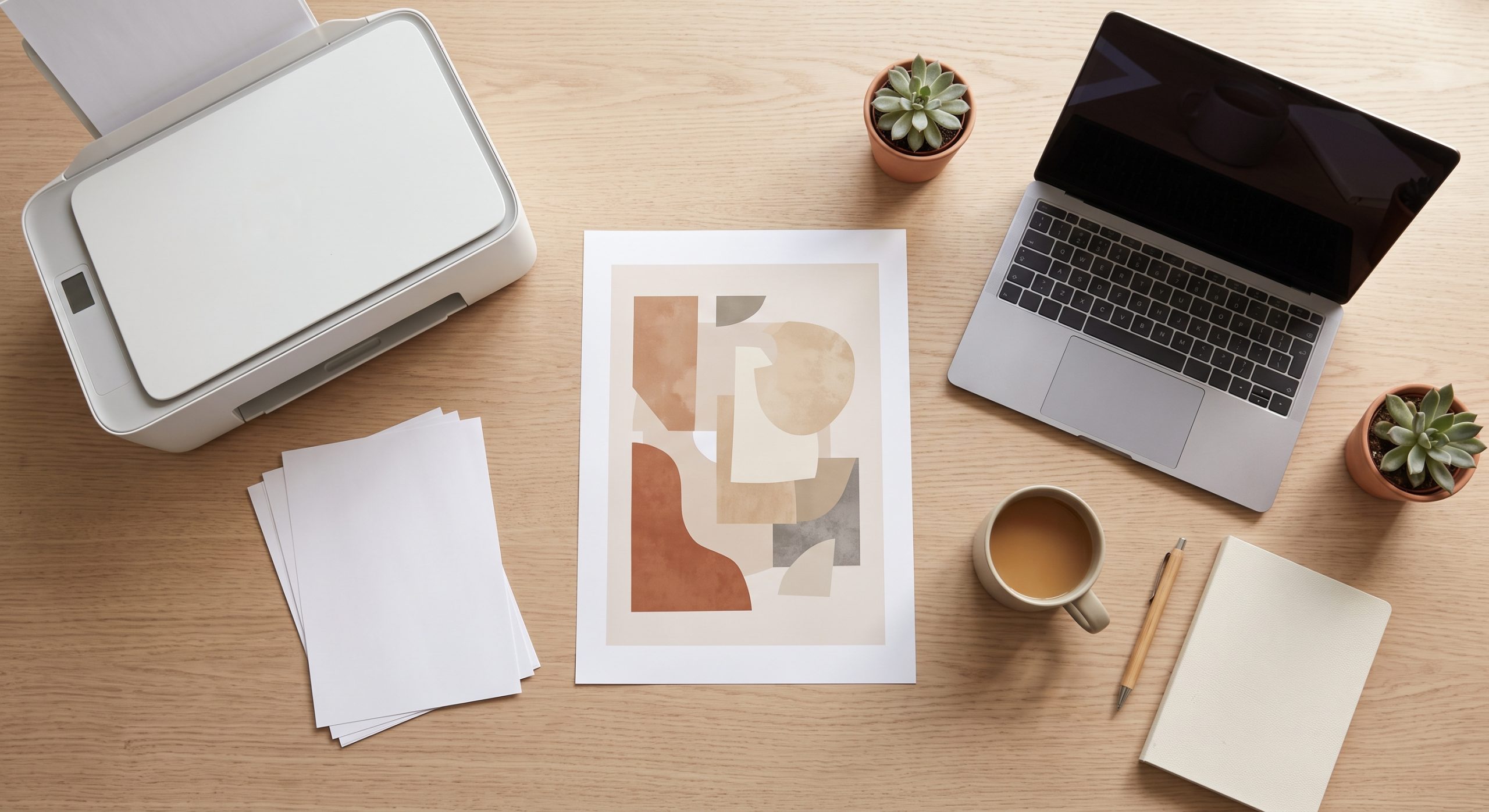
Printable wall art is a digital art file, typically a high-resolution JPEG or PDF, sold or shared for the buyer to print themselves rather than shipped as a finished physical product.
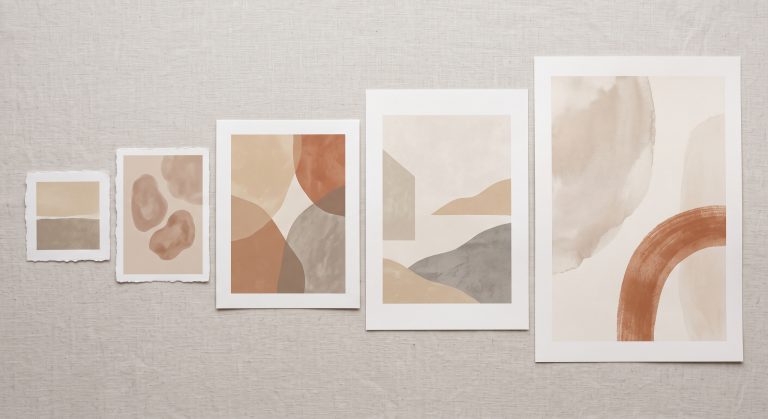
The artist creates and uploads the file once; you download it and print it wherever suits you: at home, at a local print shop, or through an online printing service. The same file can be printed at more than one size, but within limits. Its pixel dimensions decide how large it can go while staying sharp (at 300 DPI, every inch of print needs 300 pixels), and its aspect ratio decides which frame shapes it fits without cropping or white borders. That is why many sellers supply several ratio files; our printable wall art size guide shows which file suits which frame.
Printable Art vs a Traditional Art Print
Both begin as a digital file. The difference is who does the printing, and when.
- A traditional art print is printed once, by the seller or a print-on-demand service, and shipped to you as a finished product.
- Printable wall art arrives as a file. You choose the paper, the size and the printer.
That difference has real consequences. Printable art is usually cheaper and available instantly, but the final quality rests on your printing choices, a responsibility a shipped print takes off your hands entirely.
How the Process Works
- Purchase or download the digital file, usually from a marketplace or an artist’s own shop.
- Check the file’s resolution and size options, since a file made for a small print can look poor blown up to a large one.
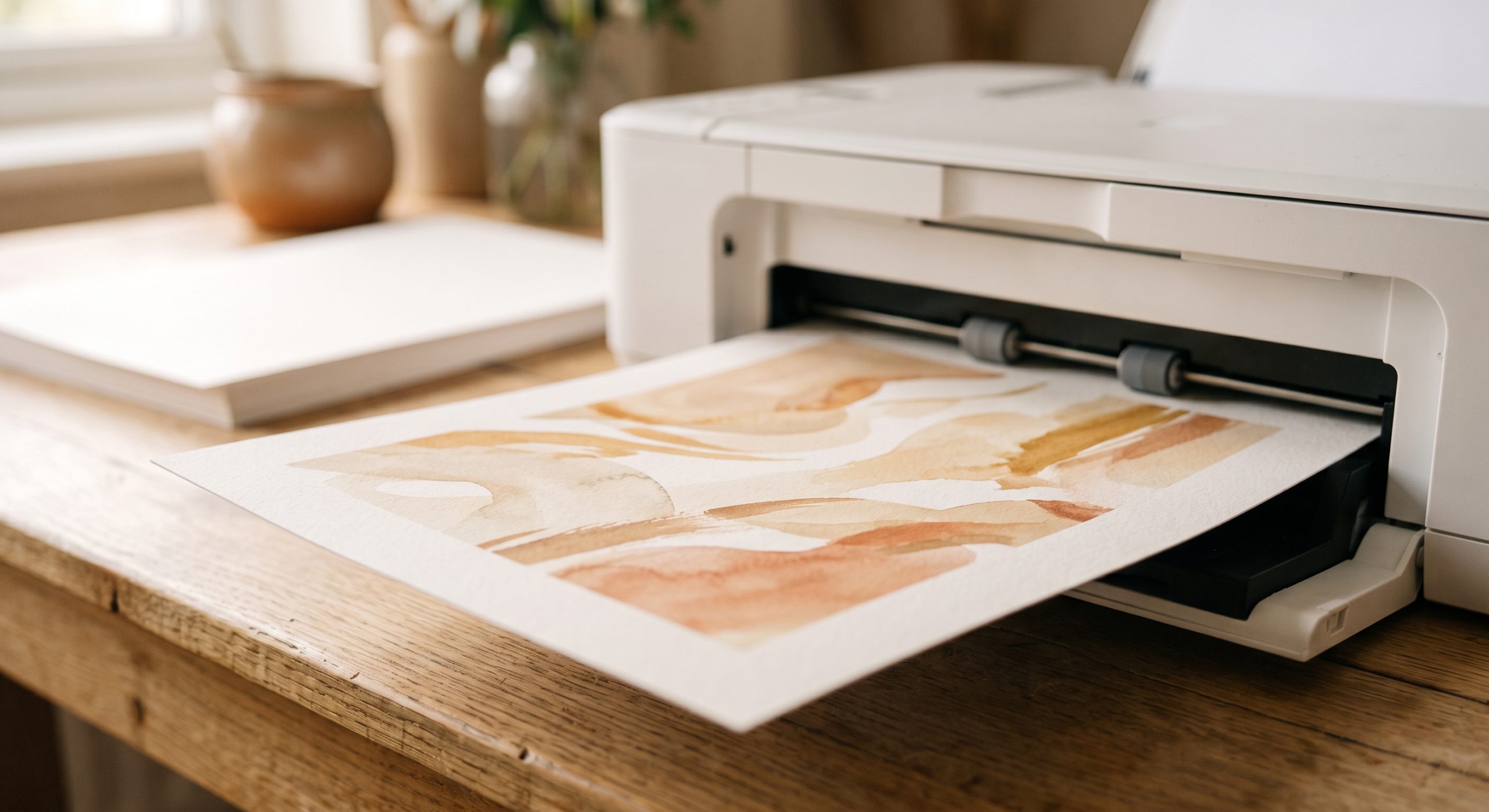
- Choose where to print: a home printer, a local print shop, or an online printing service.
- Choose your paper and, if relevant, print settings such as colour profile.
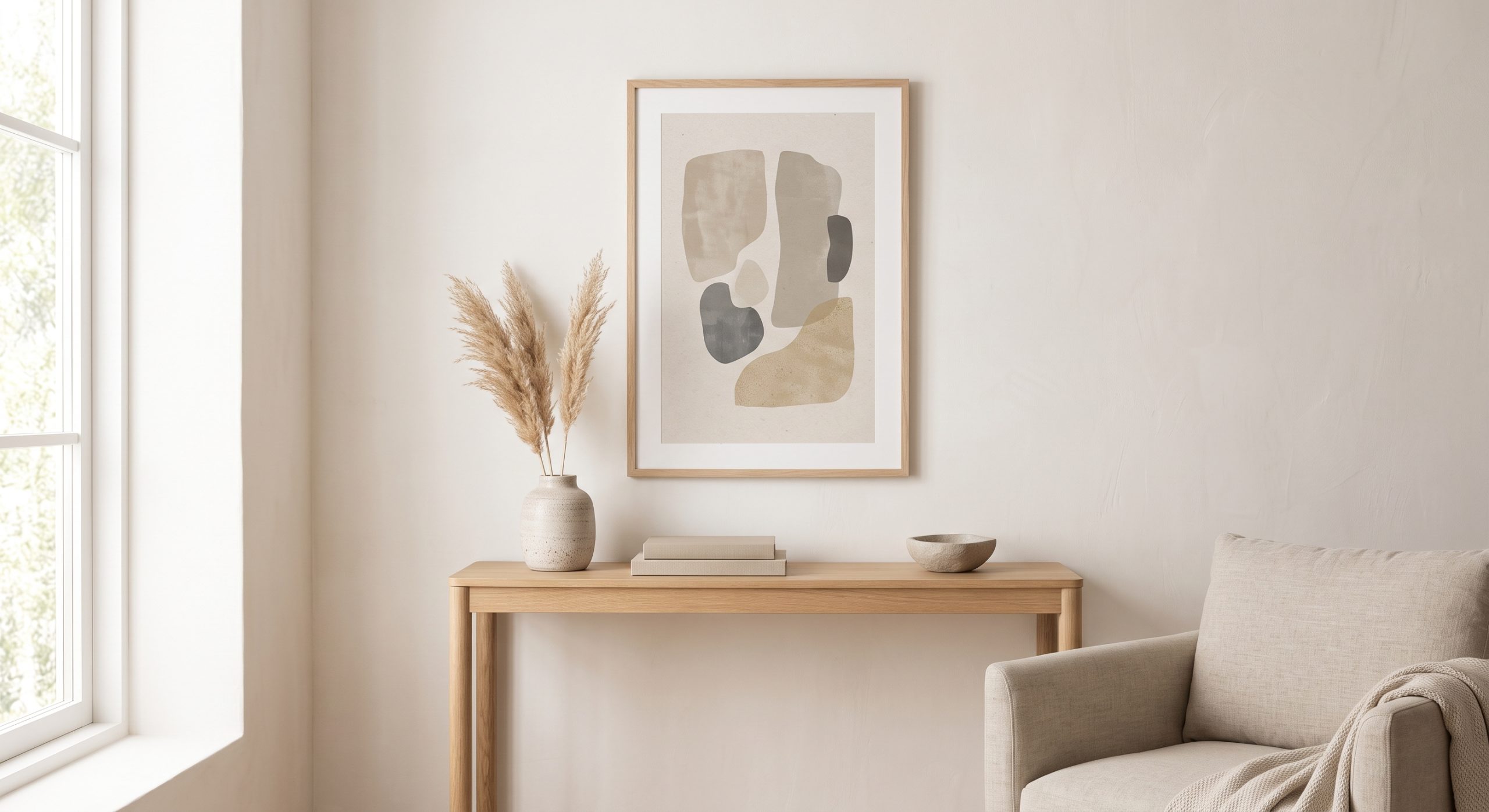
- Frame the result, or have it framed.
Advantages of Printable Wall Art
- Instant access. No waiting for a delivery; download and print the same day.
- Flexible sizing. Many files include several standard ratios in one purchase, so the same piece can fit more than one frame shape, up to the largest size each file’s resolution supports.
- Lower cost. Without shipping, packaging or physical stock, printable files are often cheaper than shipped prints.
- Easy to update. Swapping a printable piece for a new one costs little, which suits anyone who likes their walls to change with the seasons.
Trade-Offs to Know About
- Quality depends on your printer and paper. A tired home printer or thin paper can undersell a beautiful file.
- You do the framing. Some people enjoy this part; others would rather it arrived finished.
- Colour can shift. Screens and printers render colour differently, so the print may not match exactly what you saw on screen. A small test print is always worth it.
- File resolution limits size. A file intended for a small print can look soft or pixelated when enlarged too far. Our guide to how big you can print a 300 DPI image explains the maths.
Getting a Good Result
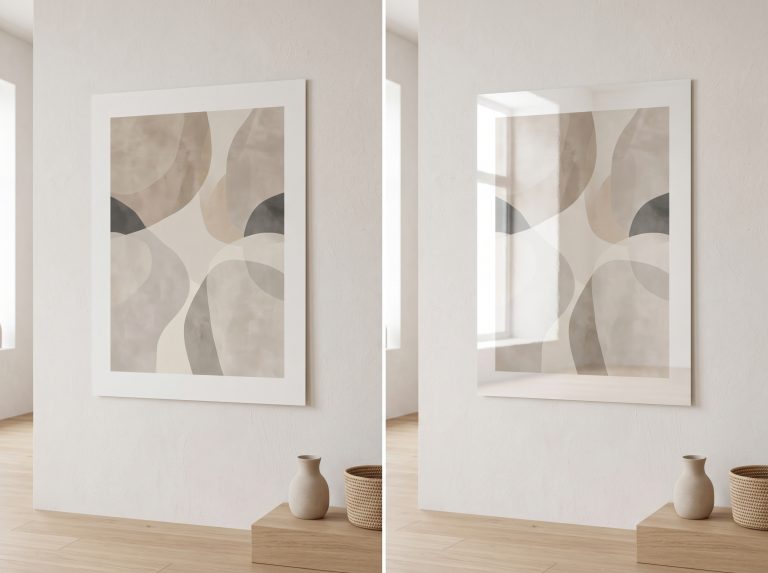
Two decisions matter more than any other: paper and print size. Matte paper suits soft, neutral tones because it shows them with much less glare, and the right size is what makes a print look deliberate on the wall. See matte vs glossy paper for art prints and what are the most common art print sizes for guidance on both. Once printed, a well-chosen frame finishes the job. See how to frame printable wall art.
Printing at Home vs a Print Shop
A good home inkjet printer with proper photo or art paper can produce lovely results, especially at smaller sizes. For larger formats, or for the most consistent colour and finish, a professional print shop or an online large-format service is usually more reliable: they use wider printers and calibrated colour profiles that most home setups don’t have. If you bought your file on Etsy, our guide to where to print digital art from Etsy compares the main UK and US options.
Who Printable Art Suits
- People who want to live with a piece for a while before committing to a larger, framed original
- Renters who move often and want art that is easy and inexpensive to replace
- Anyone who likes to refresh their walls seasonally
- Buyers on a tighter budget who still want a specific, considered look
Common Mistakes
- Printing a low-resolution file at too large a size
- Using standard copy paper instead of proper art or photo paper
- Ignoring the paper finish (matte vs glossy) and its effect on the final look
- Skipping framing altogether, which can make even a good print look unfinished
Final Thoughts
Printable wall art hands the final steps of production to you, in exchange for speed, flexibility and a gentler price. Choose the paper, size and frame with care, and the result can look every bit as considered as a piece that arrived ready-made. For where this fits into choosing art more broadly, see the complete guide to choosing artwork for your home.
If you would like to see how a printable collection is put together in practice, our own neutral abstract printable wall art collection shows what the files include and how each piece is designed to be printed. And when you are ready to print, the printable wall art size guide will help you match each file to the right frame.