What Size Picture Light Do I Need? A Simple Sizing Guide for Artwork
There is a moment, usually on a dark winter evening, when a favourite painting slips into shadow and you realise it deserves its own light. Then comes the question that stops many people at the checkout: what size picture light do I need?
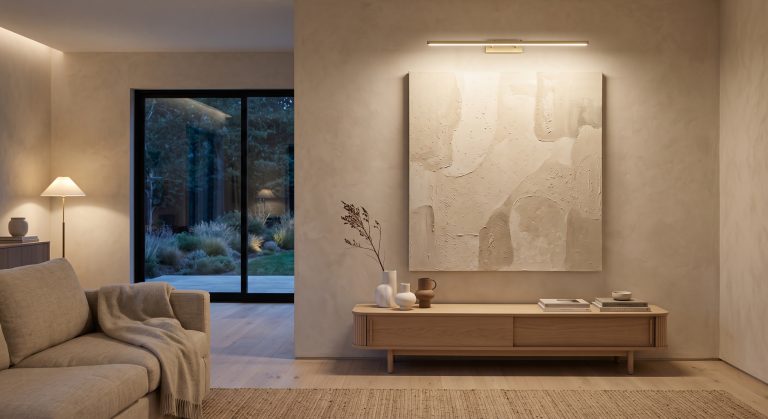
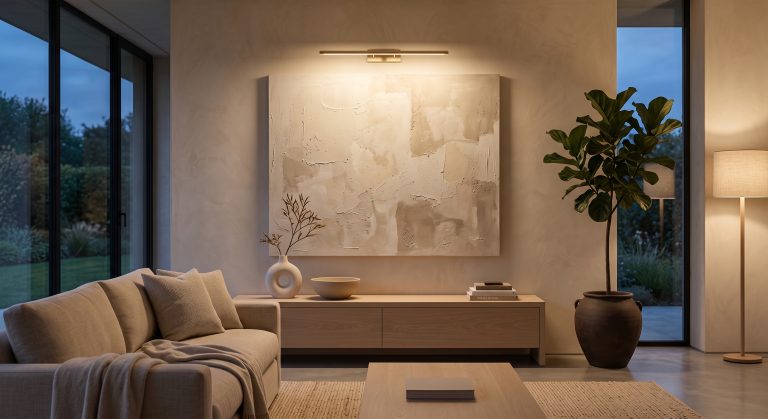
The short answer: start with a light roughly half to two-thirds the width of your artwork or frame, then check its beam spread and mounting position. Too small, and the light looks like an afterthought while the edges of the painting fall into shadow. Too large, and the fixture starts competing with the art it is meant to serve.
Sizing a picture light is not complicated. This guide gives you that starting point in detail, a size chart for every kind of artwork, and the few details that matter more than most people expect.
As an Amazon Associate I earn from qualifying purchases. This does not affect the price you pay. We may earn a commission when you purchase through qualifying links in this article.
The Quick Answer: What Size Picture Light Do I Need?
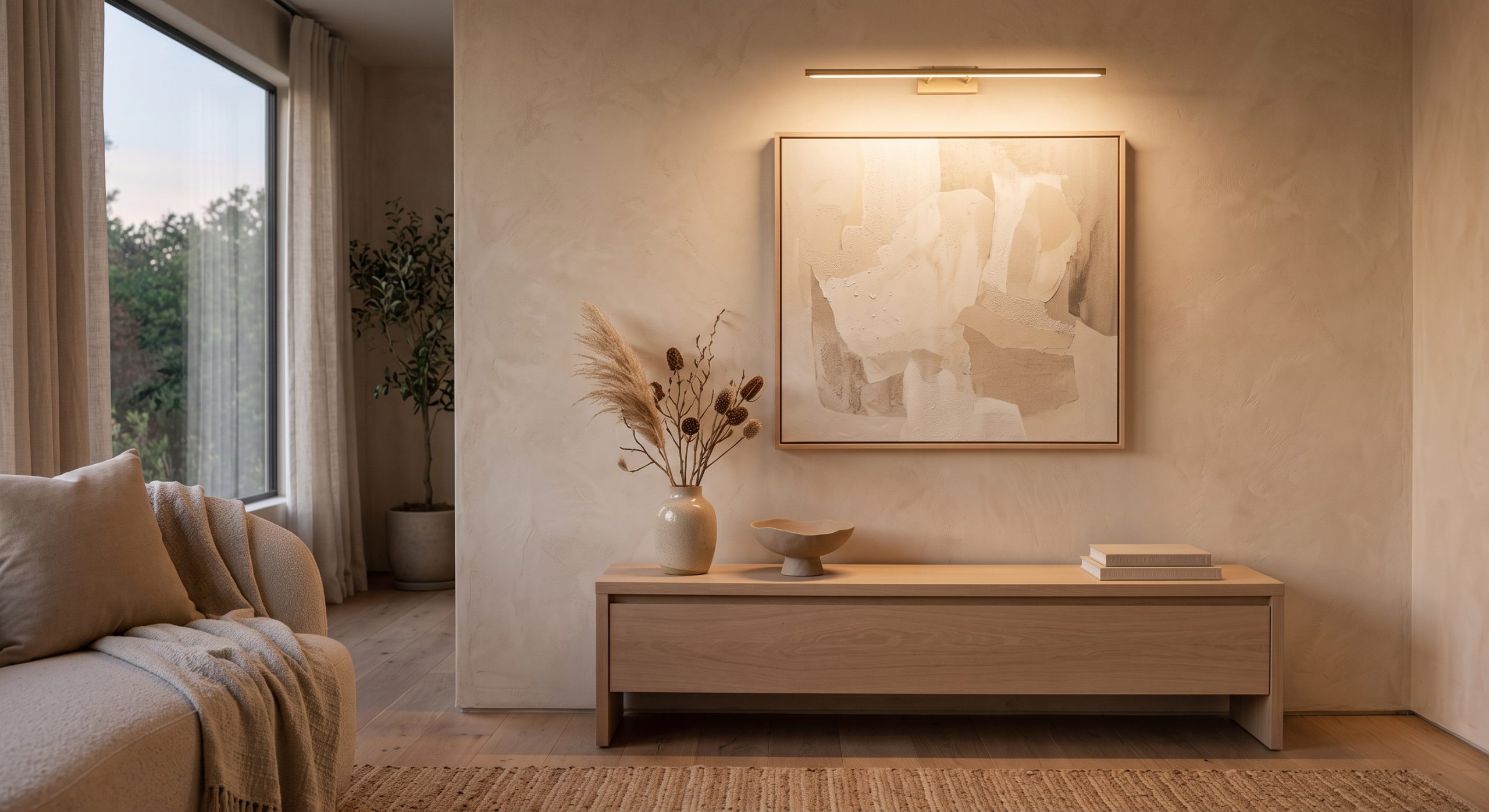
A common starting point is a picture light roughly half to two-thirds the width of your artwork or frame.
So for a frame around 60 cm wide, you might start by looking at lights somewhere around 30 to 40 cm wide.
Treat that as a guideline, not a rule. The right size also depends on:
- Artwork width: the main measurement to start from
- Frame width: a deep or ornate frame changes the proportions
- Beam spread: how widely the light actually spreads
- Mounting distance: how far the lamp sits above and in front of the art
- Light output: how bright the light is across its full width
- Orientation: whether the piece is portrait or landscape
- Number of pieces: one artwork or a group
Fixtures vary a great deal, so always check the manufacturer’s dimensions and any information about beam coverage before you buy.
Picture Light Size Chart
The ranges below apply the half-to-two-thirds starting point to typical artwork sizes. They are broad on purpose. Use them to narrow your search, then check the individual fixture.
| Artwork / frame width | Suggested picture light range | Notes |
|---|---|---|
| Small framed artwork (up to about 40 cm) | Around 20 to 25 cm, or the smallest fixture available | A compact light keeps the frame the focus. Avoid anything that looks heavier than the frame. |
| Medium artwork (about 40 to 80 cm) | Around 25 to 50 cm | The most common size range. Many rechargeable lights fall here. |
| Large paintings (about 80 to 120 cm) | Around 45 to 80 cm | Check that the beam reaches the edges, not just the centre. |
| Oversized canvases (over about 120 cm) | A wide fixture, or two matching lights | Two lights often give more even coverage than one stretched fixture. |
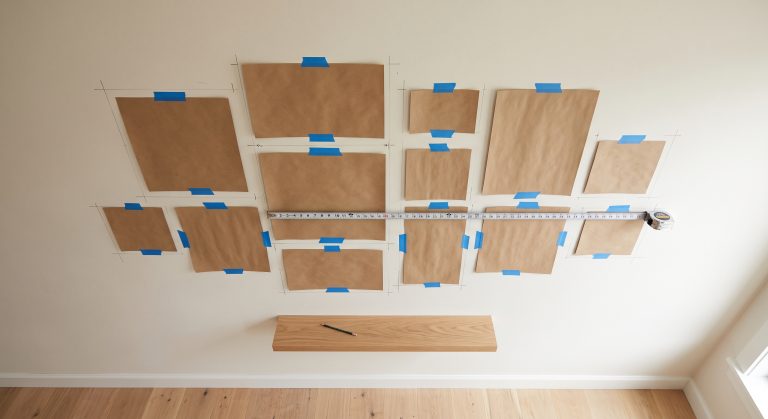
| Gallery walls | Several small lights, sized to individual pieces | Light the arrangement piece by piece, or light only the key pieces. |
Should the Picture Light Be Smaller Than the Artwork?
In most cases, yes.
A picture light is a supporting element. When it is noticeably narrower than the frame, the eye reads the artwork first and the light second, which is exactly the hierarchy you want.
Physical width is only half the story, though. Light spreads outwards as it travels down the canvas, so a lamp narrower than the frame can still illuminate the full width if its beam is wide enough. That is why proportion and coverage need to be judged together.
How Wide Should a Picture Light Be?
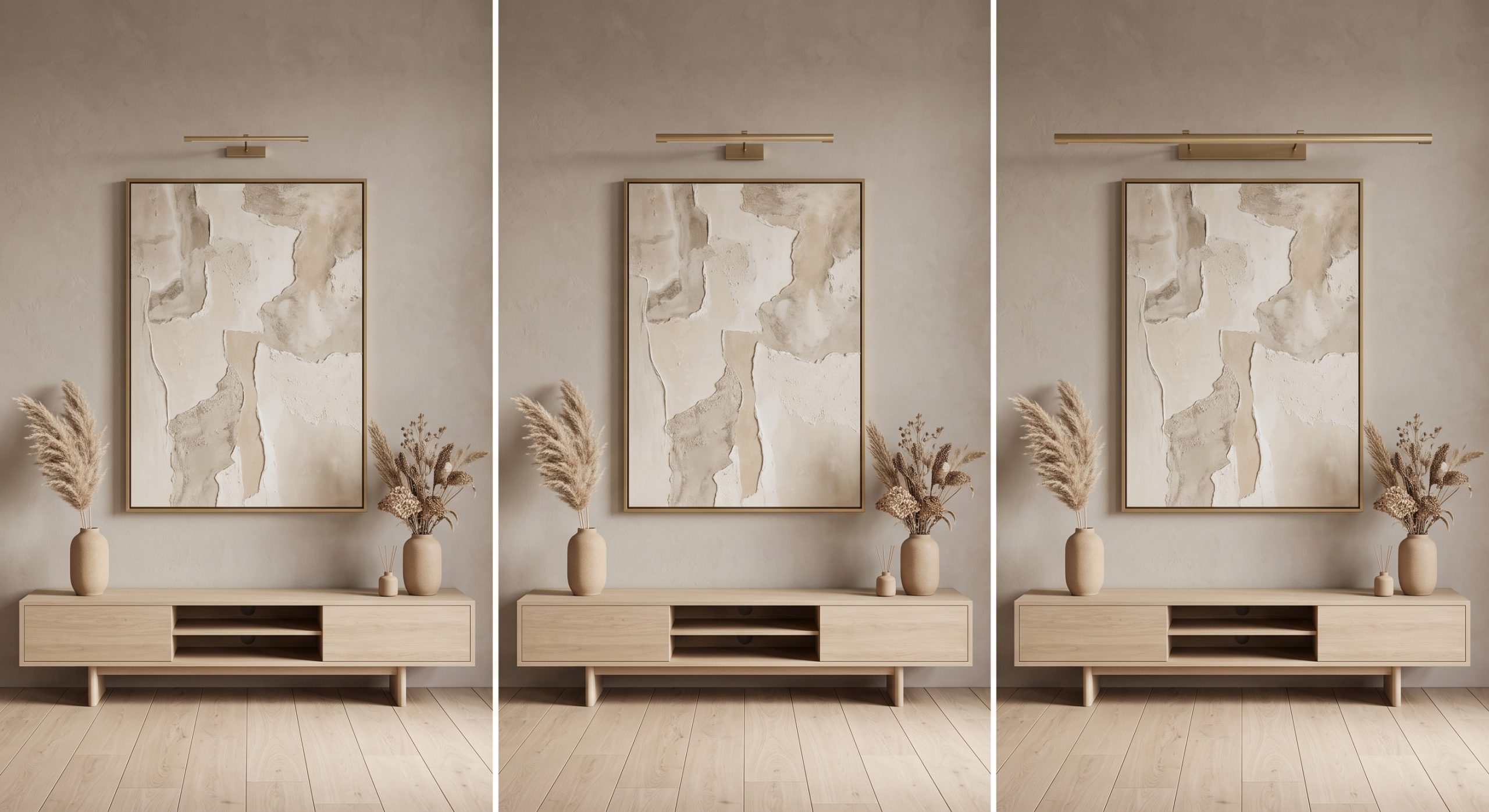
Start with the half-to-two-thirds range, then adjust for the piece in front of you.
Lean towards the wider end when the artwork is detailed right to its edges, when it is a landscape format, or when the light will sit close to the wall.
Lean towards the narrower end when the piece is small, when the frame is already visually strong, or when you want a more discreet look.
If you are sizing the artwork itself at the same time, our guide on how big wall art should be covers scale above furniture and on empty walls.
Does Frame Width Matter?
Yes. For framed work, measure the outer width of the frame, because that is what the eye reads as the edge of the piece.
A wide mount or a deep, ornate frame can make a modest print feel much larger on the wall. Sizing the light to the frame keeps everything in proportion.
For an unframed canvas, simply measure the canvas width.
Bear in mind that the light needs to reach the artwork, not just the frame. A very deep frame can catch some of the beam, so an adjustable lamp head is helpful here.
What Size Picture Light for a Small Painting?
Small pieces need a light that feels delicate. The half-to-two-thirds guide suggests something compact, but in practice you may simply be choosing the smallest fixture you can find.
If even the smallest option looks heavy above the frame, consider whether the piece needs its own light at all. A small artwork can sometimes be lit more gracefully by a nearby lamp, or by grouping it with other pieces.
What Size Picture Light for Medium Artwork?
Medium artwork is the easiest to light. This is the size range most picture lights are designed around, so you will usually find plenty of options in a sensible width.
A single light centred above the frame is normally all you need. A rechargeable model such as the YITGOG Rechargeable Picture Light is a typical example of the single-artwork approach. Check its listed dimensions against your frame before buying.
What Size Picture Light for a Large Painting?
Large paintings are where undersized lights are most obvious. A short fixture over a wide canvas tends to create a bright patch in the middle and dim edges.
Look towards the upper end of the half-to-two-thirds range, and pay close attention to beam spread. If a single fixture in the right width is hard to find, two matching lights spaced evenly across the top of the frame can give better coverage.
What Size Picture Light for Oversized Artwork?
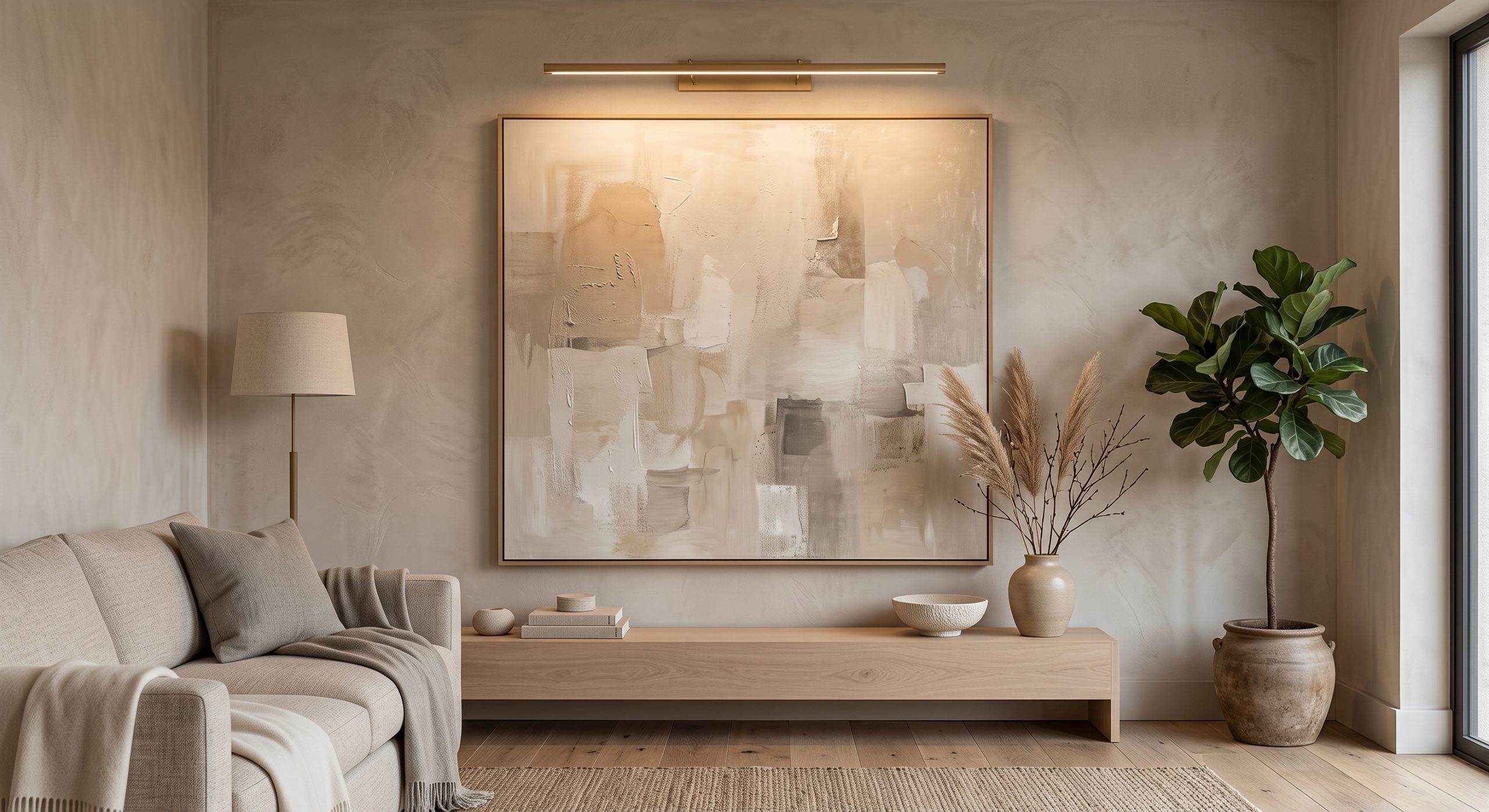
For very large canvases, one light often is not enough, whatever its width.
Two matching picture lights are a practical solution. Look for lights sold as a matched set, so the finish and colour of light agree; the Kitloo Rechargeable Picture Lights are one option to compare, but check the listing for how many lights are included. Position them so the illuminated areas meet or overlap gently across the centre, adjusting the spacing to suit the beam pattern of the individual lights.
For truly oversized work, you could also light the whole wall instead of the canvas alone. Our guide on how to light artwork without wiring covers uplighters and wall sconces as alternatives.
What Size Picture Light for a Gallery Wall?
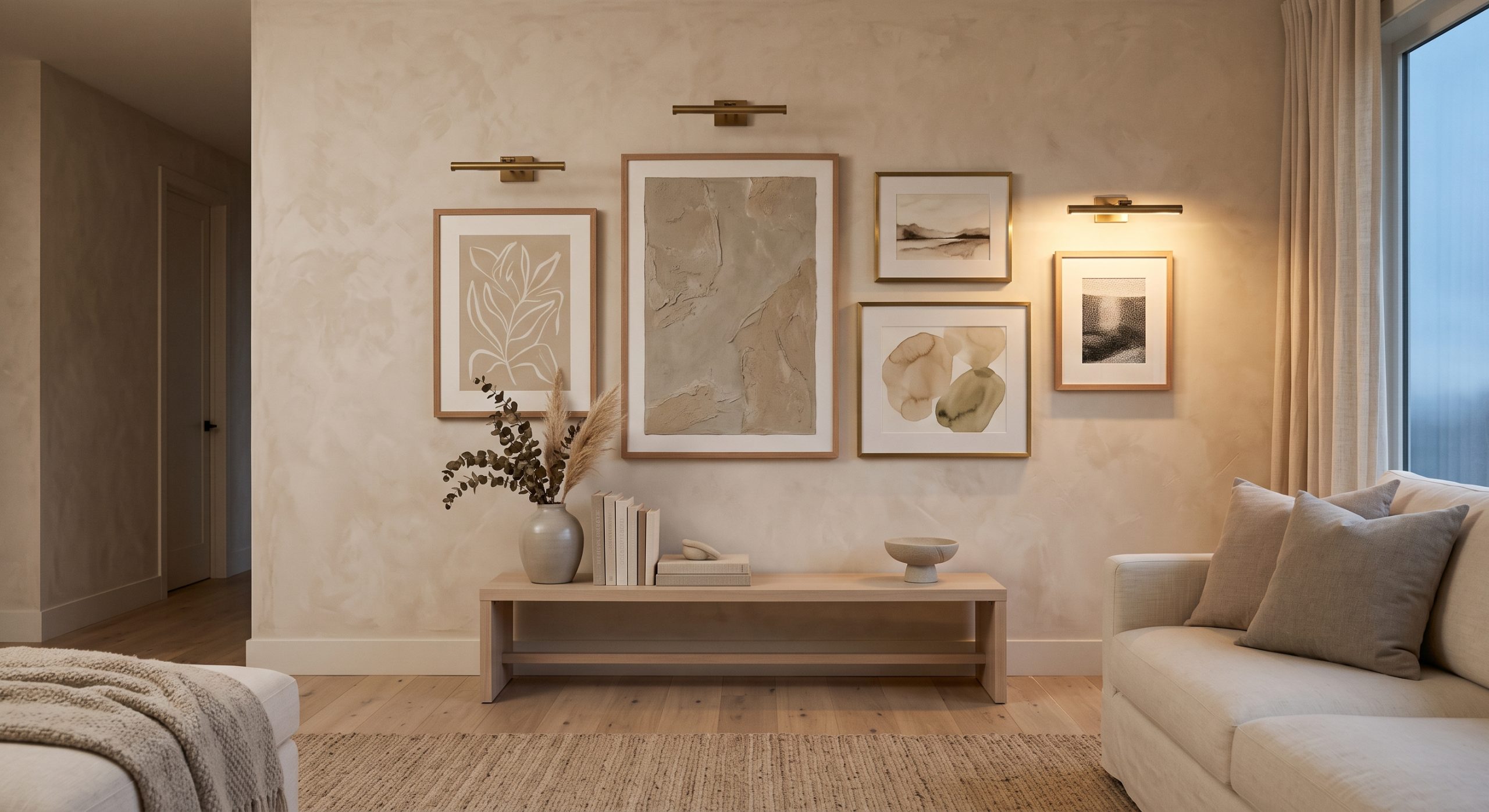
A gallery wall is rarely lit well by one long fixture. The pieces sit at different heights and the edges of the arrangement fall away from the beam.
Instead, use several small lights, each sized to the piece below it. Alternatively, light only the largest or most important works and let the rest sit in softer surrounding light.
A multi-light set such as the Homelist 3-Pack Rechargeable Picture Lights is one example of this approach. Matching fixtures keep a busy wall looking calm.
If you are still arranging the wall itself, see our guide on how to plan a gallery wall layout.
Does Portrait vs Landscape Artwork Change the Light Size?
Width is still the measurement to size from, but orientation changes what you need to watch.
Landscape artwork is wide, so coverage across the width is the main concern. A light at the wider end of the range usually suits it.
Portrait artwork is tall, so the challenge is getting light down to the bottom of the piece. A narrower light can work, but a lamp that projects further from the wall, or one with an adjustable head, helps the light travel down the full height.
How High Should a Picture Light Sit Above Artwork?
Most picture lights sit just above the top of the frame, angled down towards the artwork. Beyond that, there is no single correct measurement, because fixture designs, arm lengths and beam angles vary.
Follow the manufacturer’s mounting guidance, then test before drilling. Hold the light in place, view the artwork from normal standing height, and check it after dark if you can.
Mounting too high is a common mistake. The beam lands partly on the wall above the frame and the lower half of the artwork is left in shadow.
It helps to hang the artwork at the right height first. Our guide on how high to hang wall art covers this step.
Beam Angle Matters as Much as Width
Two lights of exactly the same width can light very different areas.
A light with a wide beam spreads outwards and can cover a canvas broader than the fixture itself. A light with a narrow, focused beam may only light a strip roughly as wide as the lamp.
Distance plays a part too. The further the light has to travel down the artwork, the more it spreads, and the softer it becomes.
Not every listing states a beam angle. If it is not given, look at product photos showing the light in use, and choose an adjustable fixture if you are unsure.
What Size Picture Light for Textured Artwork?
For textured work, the angle of the light matters as much as its size.
Light that skims across a raised surface at a slight angle creates small shadows, which bring plaster, impasto and layered paint to life. Light that hits the surface flat-on tends to soften that texture.
Size the light as you would for any artwork of the same width, but favour a fixture you can angle. The EZVALO Rechargeable Picture Light is one option to compare; check the current listing to confirm whether, and how far, the head can be angled.
For more on how texture is built into a piece, see our guide to textured abstract art, and for why light matters so much to a raised surface, what textured wall art is.
What Colour Temperature Should You Choose?
Colour temperature does not change the size you need, but it does change how the artwork looks.
Warm white tends to flatter neutral and earthy palettes, bringing out the warmth in sand and ivory, while a more neutral white can show colourful work more cleanly. A light with several settings lets you compare them against the actual piece. Warm, mineral-toned pieces such as those in our neutral abstract collection tend to suit a warm setting.
We cover colour temperature and colour rendering in more detail in our guide to the best wireless picture lights for artwork.
Rechargeable vs Wired Picture Lights: Does Size Change?
The sizing principles are broadly the same. You still size from the artwork width and check the beam coverage.
The difference is in the fixture itself. A rechargeable light has to house a battery, which can make the body or mounting plate slightly bulkier. Above a small frame, that extra visual weight is worth considering.
Rechargeable models vary considerably in width, so check the listed dimensions carefully. For very large artwork, two rechargeable lights may be easier to find than one wide one.
Common Picture Light Sizing Mistakes
- A light that looks too small for a large canvas. It reads as an afterthought and leaves the edges dim.
- A fixture that overwhelms a small frame. The light becomes the focal point instead of the art.
- Ignoring beam spread. Width alone does not tell you how much of the artwork will be lit.
- Mounting too high. Much of the beam lands on the wall above the frame.
- Assuming physical width equals lit width. A narrow beam can light less than the fixture’s width suggests, and a wide beam can light more.
- Lighting a large gallery wall with one small light. Several smaller lights almost always work better.
Which Picture Light Should You Choose?
Once you know roughly what size you need, the next step is comparing real fixtures.
Our guide to the best wireless picture lights for artwork compares options for single paintings, colour-sensitive work, textured art and gallery walls. Take your artwork measurements with you, and check each product’s listed dimensions against them.
How to Light Artwork Without Wiring
If you cannot install mains wiring, rechargeable picture lights let you follow exactly the same sizing principles without cutting into walls. Our guide on how to light artwork without wiring covers rechargeable lights, cordless sconces and other options.
Frequently Asked Questions
What size picture light do I need for a 60 cm painting?
Using the half-to-two-thirds starting point, a light of roughly 30 to 40 cm is a sensible place to begin. Check the beam coverage, and measure the outer frame if the painting is framed.
Should a picture light be wider than the frame?
Usually not. A light narrower than the frame keeps the focus on the artwork. A wider fixture can look heavy, although very large canvases may suit a wide light or two lights.
Can a picture light be too small?
Yes. A light that is too small can look out of proportion and may leave the edges of the artwork dim.
How far above a picture should a light be?
Most sit just above the top of the frame, but the right position depends on the fixture’s arm length and beam angle. Follow the manufacturer’s guidance and test the position before drilling.
Do large paintings need two picture lights?
Not always, but two matching lights often give more even coverage on very wide or oversized canvases than one fixture.
What size light should I use for a gallery wall?
Use several small lights, each sized to the piece below it, or light only the main pieces. One long light rarely covers an arrangement evenly.
Does picture-light width affect brightness?
Fixture width can influence how evenly a wide artwork is illuminated, but it does not determine brightness or beam spread on its own. Light output, beam angle, mounting position and the fixture design all matter.
Can I use a rechargeable picture light on large artwork?
Yes, but check that its width and beam coverage suit the piece. For very wide artwork, two rechargeable lights are often easier than finding a single wide one.