How to Choose Art for a Gallery Wall
Choosing one piece of art for a wall is hard enough. Choosing several that need to work together, and hang together, is a different problem entirely.
A gallery wall lives or dies on relationships between pieces, not on any single piece alone. This guide gives a practical process for choosing art that will cohere once it is on the wall, rather than assembling it piece by piece and hoping.
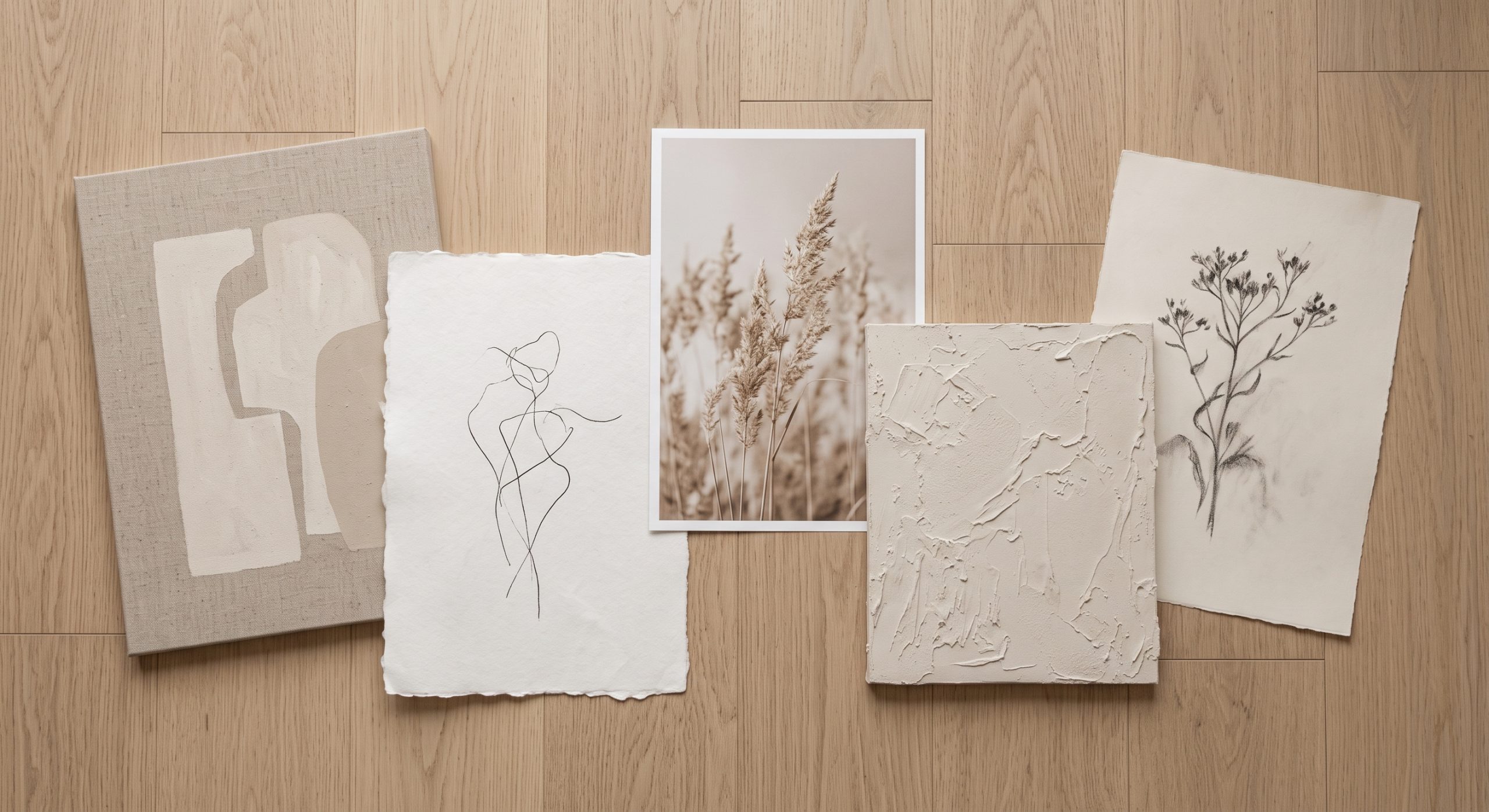
Start With a Unifying Thread
Before choosing individual pieces, decide what will tie them together. It is usually one of these:
- Colour palette. The most reliable option. See gallery wall colour schemes that work.
- Subject matter. All abstract, all botanical, all architectural.
- Medium or technique. All line drawings, all textured pieces, all photography.
- Mood. All calm and quiet, or all energetic and bold.
Pick one thread as the anchor. You can bend the others, but if nothing ties the group together, it will read as a random collection rather than a considered wall.
Decide How Much Variety You Want
Two approaches both work, for different results.
Tight cohesion
Similar palette, similar mood, similar subject. Calm and easy to get right, but can feel a little safe.
Deliberate contrast
One shared thread (usually colour), but real variety in format and mood: a bold gestural piece beside a quiet line drawing. Riskier, but more dynamic when it works.
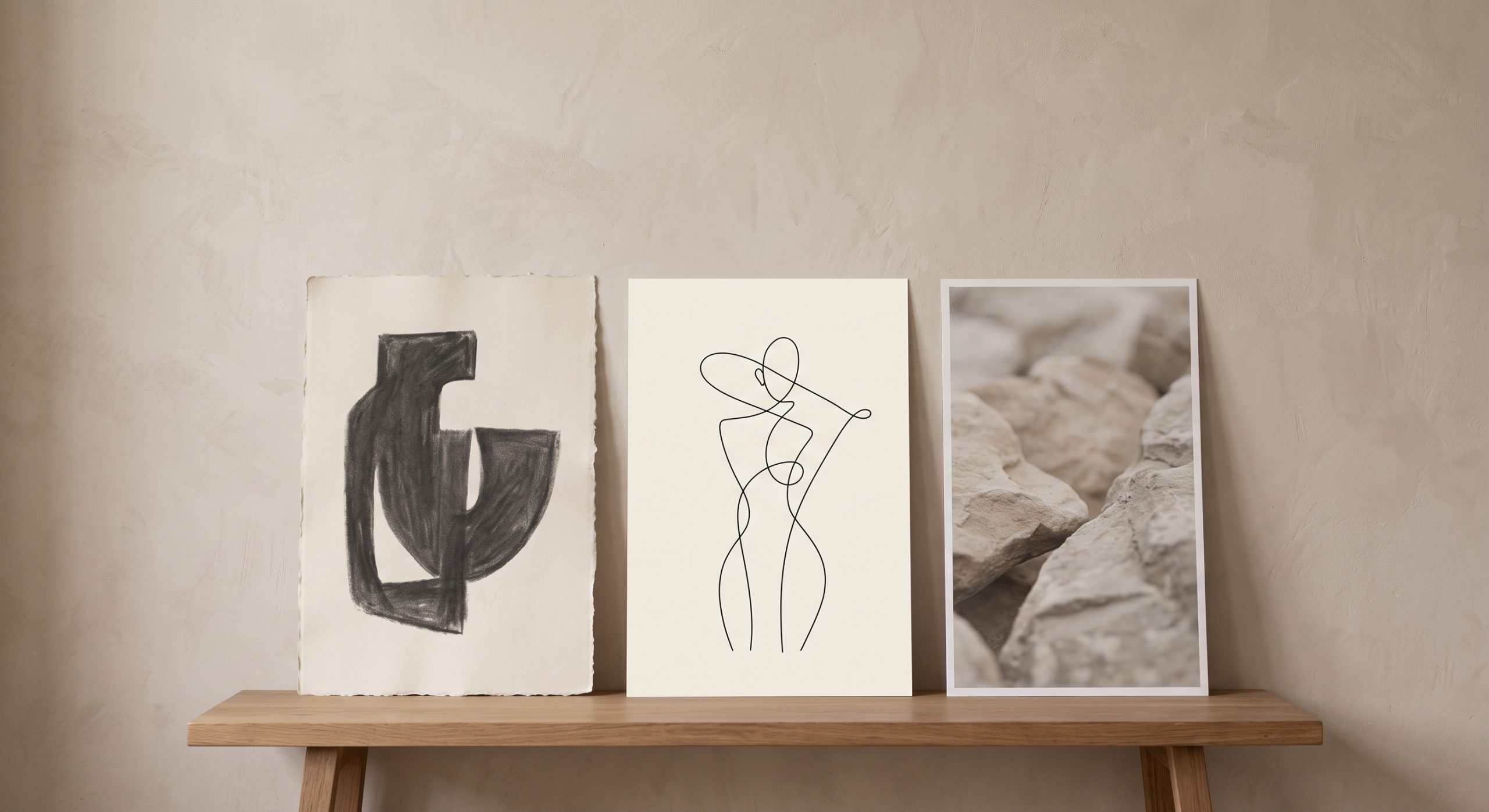
Mixing Formats on Purpose
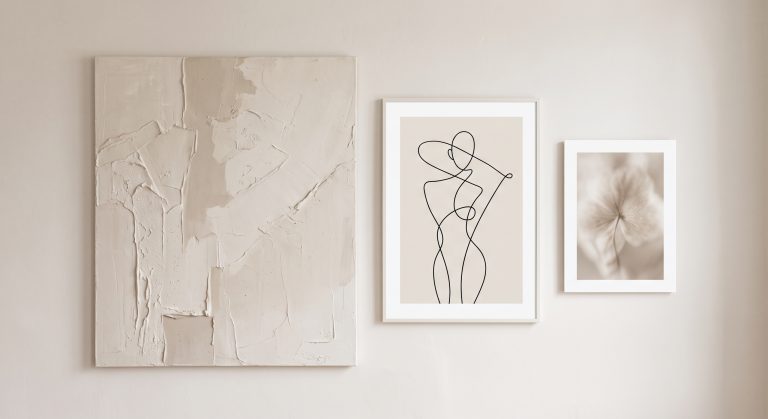
A gallery wall of five identical abstract paintings can feel repetitive. Mixing formats tends to look more considered:
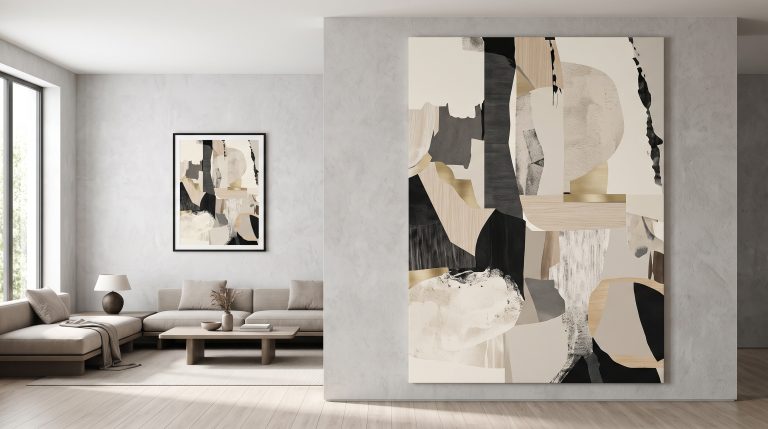
- An abstract piece for colour and mood
- A line drawing for lightness and contrast, see minimalist line art
- A photograph for a different kind of realism
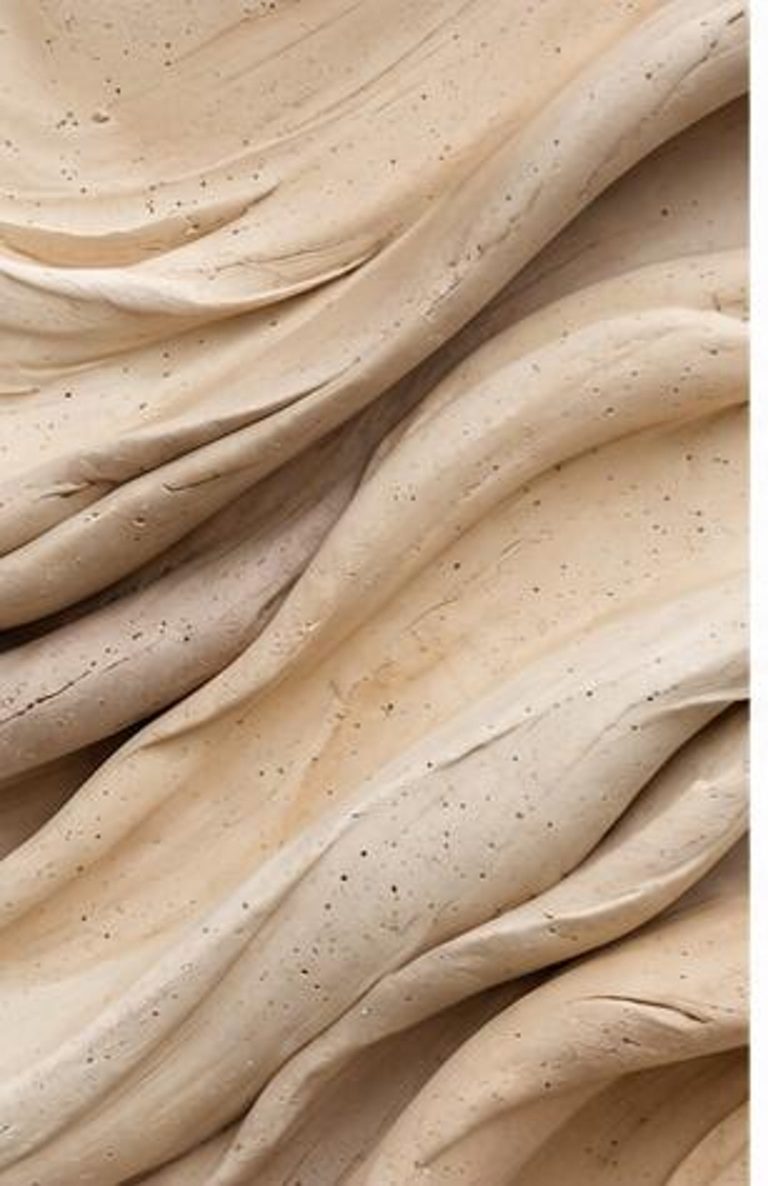
- A textured or sculptural piece for depth, see textured abstract art
- A botanical or natural study for warmth
You do not need all five. Two or three formats, sharing one palette, is usually enough.
Choosing an Anchor Piece
Most successful gallery walls have one piece that is either larger, bolder or more detailed than the rest. It gives the eye somewhere to land first, and everything else supports it. Choose this piece before the others, since it sets the scale and tone for the group.
Checking for Balance, Not Matching
Pieces do not need to match. They need to balance. A busy piece can sit beside a very quiet one if their palettes agree, in the same way a single artwork balances a dominant mark against negative space. See understanding balance in abstract art.
A Practical Selection Process
- Choose your unifying thread (usually palette).
- Choose an anchor piece.
- Add two to four supporting pieces in different formats.
- Lay everything out on the floor and check the group as a whole, not each piece individually.
- Remove anything that fights for attention rather than supporting the group.
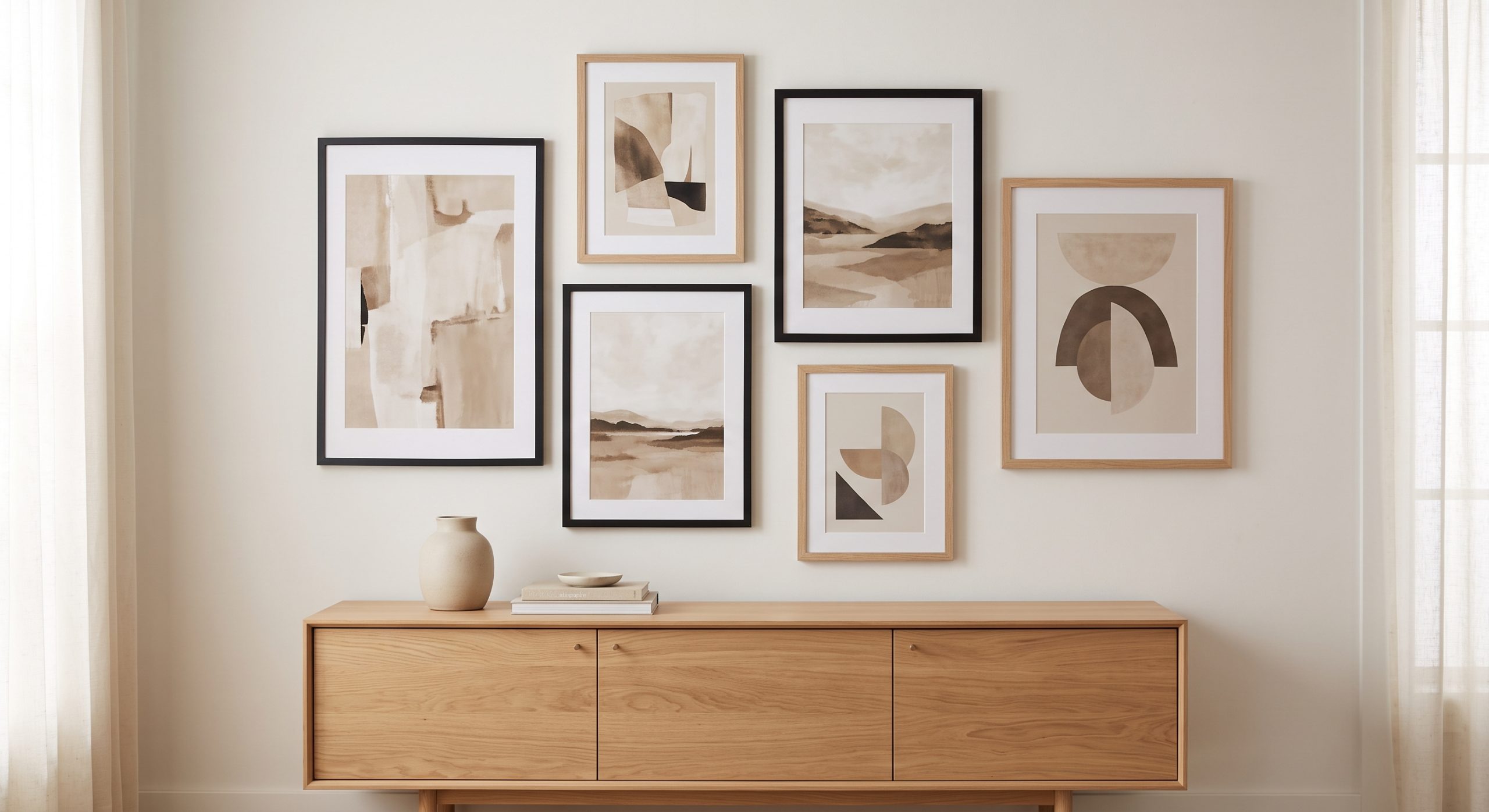
Once You’ve Chosen: Sizing and Count
How many pieces you need, and how large the group should be, depends on the wall itself. See how many pieces should be in a gallery wall and how to plan a gallery wall layout for the next steps.
Common Mistakes
- Choosing pieces you love individually without checking they relate to each other
- No anchor, so nothing stands out
- Too many competing focal points
- Ignoring frame finishes, which can undo an otherwise cohesive group
- Buying to fill space rather than to complete a composition
Final Thoughts
Choosing art for a gallery wall is closer to editing than shopping. Decide what ties the group together, choose an anchor, and let everything else support rather than compete.
A wall of five pieces chosen this way will look more considered than ten pieces chosen at random.