Sandstone Wall Art Ideas for Modern Interiors
Some of the most beautiful abstract art in the world was never made by an artist. It was made by wind, water and an almost unimaginable amount of time, and you can find it in the walls of a sandstone canyon: bands of cream, honey and soft rust, folded into curves so smooth they look poured rather than carved.
Sandstone wall art borrows that language. It comes in six main forms: layered strata, wind-carved curves, granular surfaces, canyon photography, contour-line drawings and sculptural relief. Its warm mineral palette suits warm-neutral living rooms, bedrooms, dining rooms and hallways, and it sits naturally beside oak, linen and stone.
Below, you will find what makes sandstone such a rich source of inspiration, each of the six styles in turn, how to use them room by room, and what to check before you buy. For the wider context, see what neutral wall art is.
What Is Sandstone, and Why Does It Inspire Art?
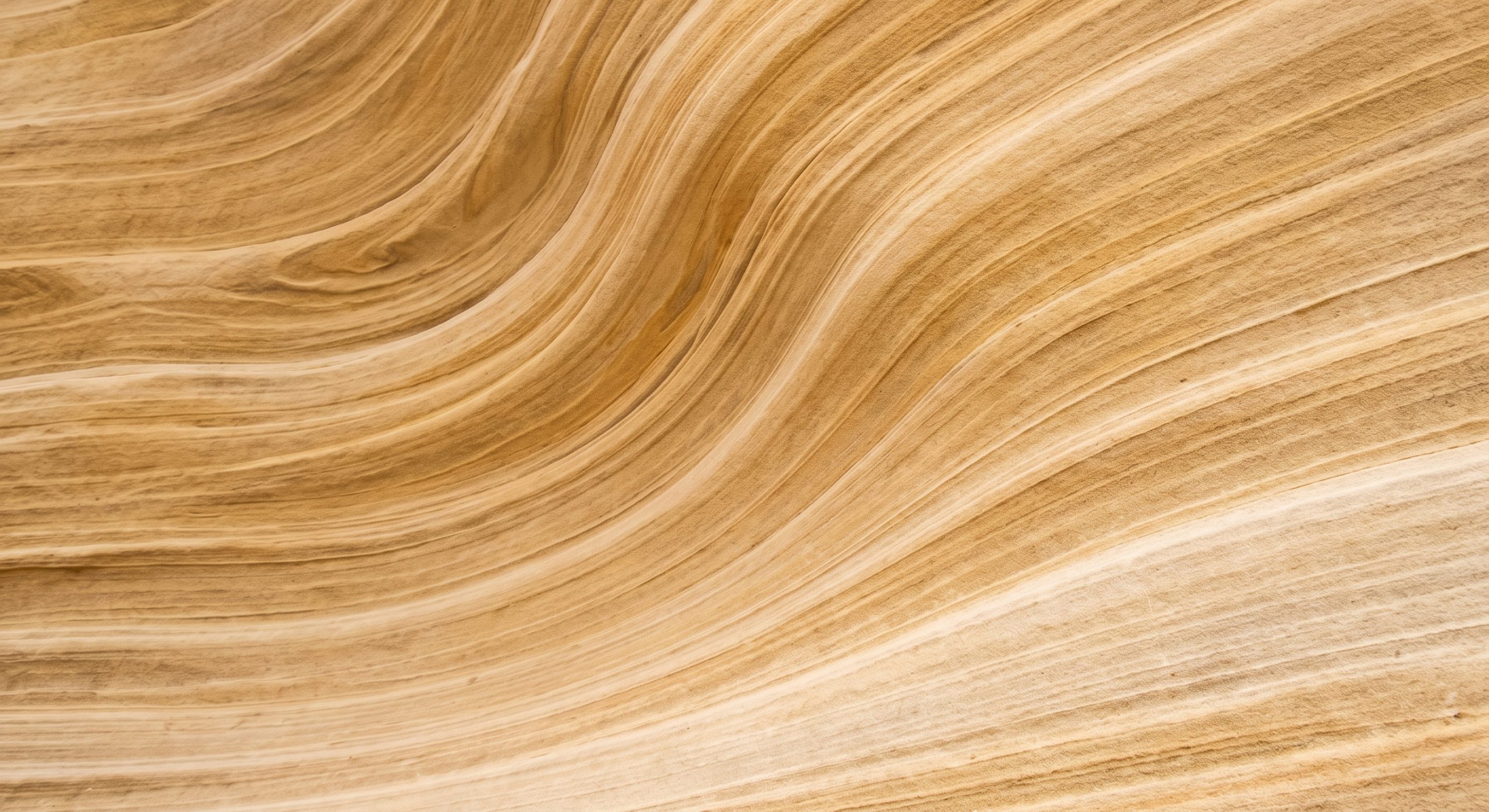
Sandstone is a sedimentary rock made mostly of sand-sized mineral grains, often quartz, cemented together over long periods. Because it forms in layers, an exposed rock face often reads like a page of stripes: bands of slightly different tone and thickness, each one a record of a different moment in the stone’s making.
Its colour ranges from cream and buff through golden yellow to orange, red and brown, depending largely on the minerals present. Iron compounds, for example, commonly give sandstone its warm red and rust tones.
Then wind and water go to work, carving the rock into smooth, flowing forms. Well-known canyon landscapes, such as Antelope Canyon in Arizona, show how far erosion can go, sculpting stone into sweeping curves that look almost like draped fabric.
Together, those qualities give art a ready-made vocabulary: layered lines, soft curves, warm earthy colour and a fine, matte surface that seems to absorb light rather than reflect it.
What Sandstone-Inspired Art Looks Like
It rarely depicts rock directly. Instead, it borrows the qualities that make sandstone so absorbing to look at:
- Layering: horizontal or gently curving bands of tone, close in value, so the eye moves slowly across them
- Erosion curves: smooth, flowing shapes with softened edges and no sharp corners
- Warm mineral colour: cream, sand, honey, ochre, clay and soft rust
- Granular surface: a fine speckle or grain, either physically real or visually suggested
- Understated drama: a single sweeping line, or a shadowed fold where one layer turns beneath another
Sandstone Wall Art Ideas
1. Layered strata
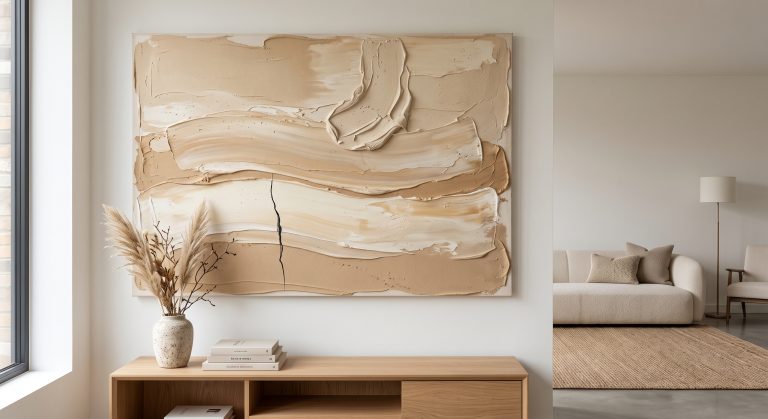
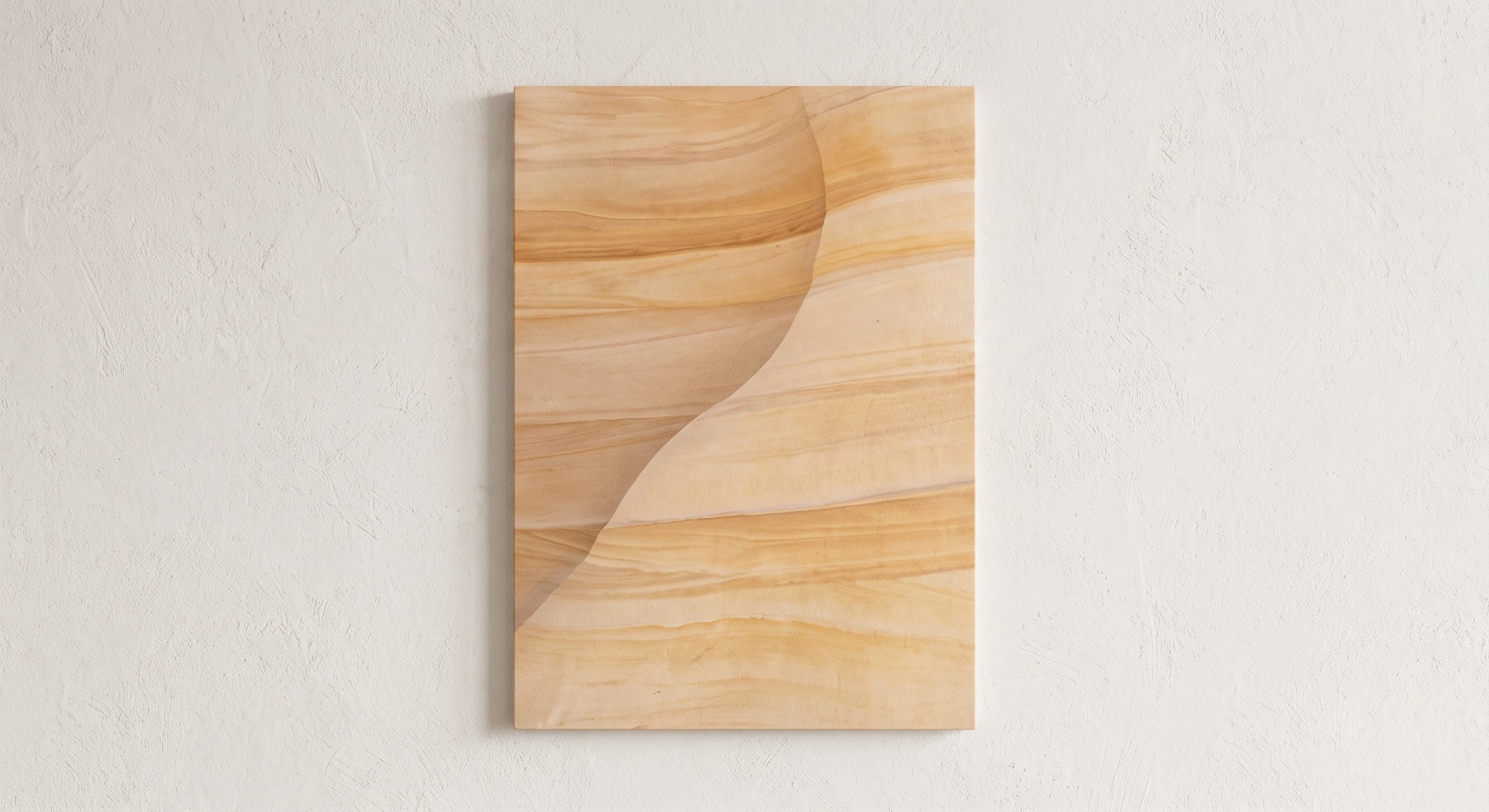
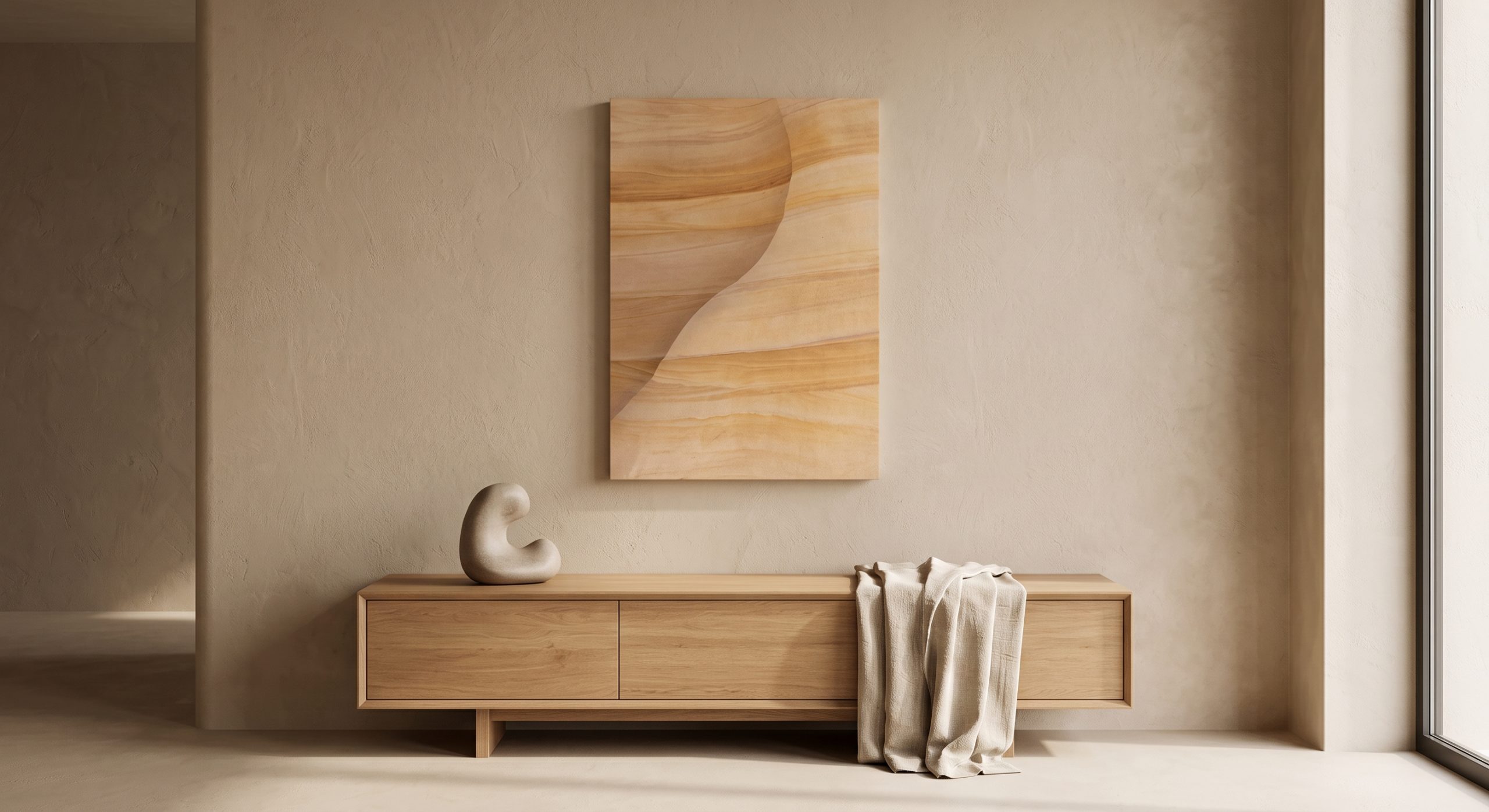
Horizontal bands in subtly shifting tones, like the exposed edge of a cliff. The eye reads this kind of order the way it reads a horizon, which is why it feels so settling. It suits bedrooms, hallways and living rooms that need a little structure. Our own Gilded Strata takes the idea in a softer direction, with pale, flowing bands that drift diagonally rather than lying flat.
2. Wind-carved curves
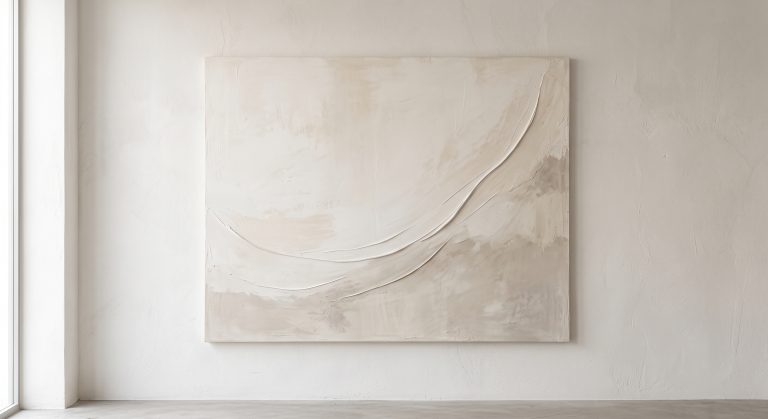
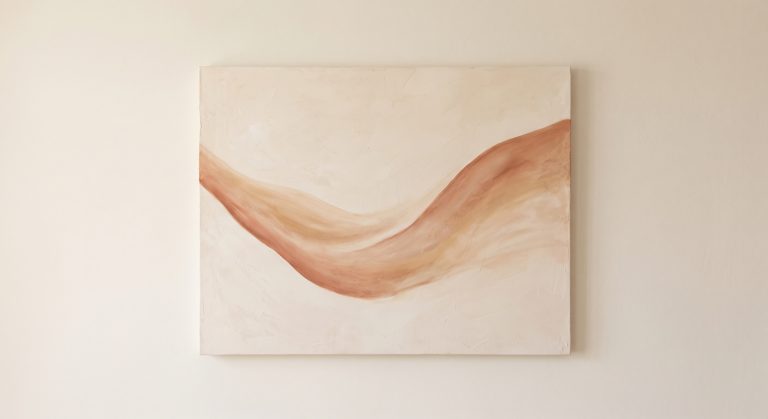
Flowing S-shapes and slow folds in warm sand and cream. These pieces carry movement and softness in equal measure, and connect naturally with organic abstract art. They are especially good in bedrooms and reading corners, where you want the eye to slow down.
3. Granular, speckled surfaces
Pieces that suggest sand grains and tiny mineral inclusions. Up close you notice the flecks; from across the room they melt into a surface that simply looks tactile.
4. Canyon and rock photography
Close-up photographs of layered stone, catching smooth curves in warm, low light. The most successful compositions read as abstract first and landscape second, so look for framing that removes the horizon and lets the forms take over. Canyon Passage, from our own collection, brings the same look to a digital artwork: a photorealistic view into a narrow carved canyon in a muted, warm palette.
5. Contour-line and topographic pieces
Fine lines that trace the flowing contours of eroded stone, like a map of a landscape. They combine the restraint of minimalist line art with a geological feel, and work well where a room needs detail without visual weight, such as a home office or a small hallway.
6. Sculptural relief
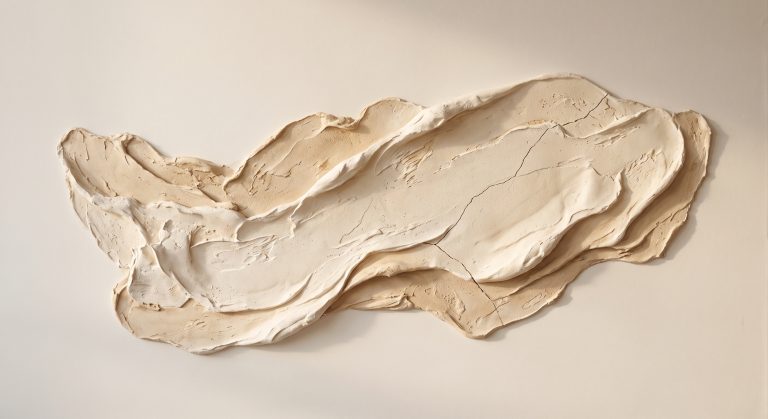
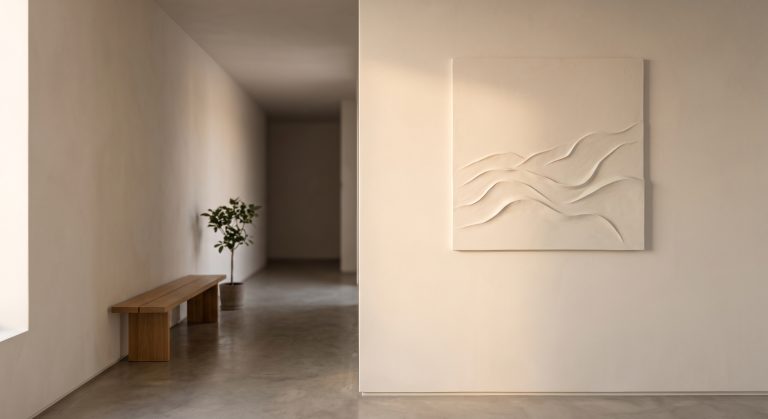
Original works built up with plaster or modelling paste so that they physically resemble stone. These have genuine depth: raised edges catch the morning light, and shadows lengthen across them as the afternoon wears on. That changing surface is something a flat print cannot reproduce.
Print or Original? A Note on Texture
Sandstone art is so often about surface that this distinction really matters. An original made with plaster, sand or textured mediums has physical relief that changes with the light throughout the day. A print of a sandstone-style piece reproduces the appearance of layers and grain, but the surface itself is flat.
Both can be lovely; they are simply different things, as explained in textured abstract art and what is printable wall art. The pieces in our neutral abstract printable wall art collection are prints, so they offer the visual effect of sandstone texture rather than physical relief.
Sandstone Art in Different Rooms
- Living room: a large layered piece above the sofa, acting as a warm, grounding anchor for the whole room
- Bedroom: soft curved forms in low-contrast sand and cream, restful enough to be the last thing you see at night
- Dining room: a wide horizontal strata piece above a sideboard, echoing the long line of the table
- Hallway: a tall, narrow piece with vertical erosion lines that draws the eye upward in a tight space
- Home office: a layered piece that adds depth without competing for your attention
What to Pair It With
Sandstone art is happiest among materials that share its origins:
- Natural stone and terracotta for an earthy, grounded feel
- Oak and other pale woods, whose grain picks up the art’s layered lines
- Linen, wool and cotton in cream and oatmeal, for softness against the mineral warmth
- Dried grasses and ceramics for organic contrast and a little irregularity
Sandstone tones also sit comfortably in Japandi-style rooms. See what Japandi art is and wabi-sabi art, a philosophy that values the marks of time in exactly the way eroded stone does.
Colour and Lighting
Sandstone tones lean warm, and they look their best in warm-white light: honey deepens, cream softens and rust glows rather than shouts. Very cold white light does the opposite, draining those tones until they look dull or faintly grey. Cream and greige walls make the most sympathetic backdrop. For palette guidance, see warm neutral wall art and beige wall art ideas.
How to Choose Sandstone-Inspired Art
- Look for believable layering and soft, natural curves rather than obvious, repeating pattern. Real stone is never perfectly regular.
- Hold the palette up against your walls and flooring. Warm sandstone beside a cool grey floor can look accidental.
- Consider scale. This style rewards size, because layers and curves need room to unfold.
- Leave breathing room around it. See negative space in abstract art.
- Decide whether you want physical relief or the visual effect of texture, and buy accordingly.
Common Mistakes
- Choosing garish, over-saturated orange or rust, which reads as artificial rather than mineral
- Filling a room with too many similar earth-toned pieces until they blur into one another
- Using literal rock imagery where a subtler abstract would look more refined
- Ignoring lighting, which can make or break warm tones after dark
Final Thoughts
Sandstone-inspired art is nature’s slow abstraction, edited for the wall. It brings warmth, layered depth and a particular kind of geological calm: the sense that something beautiful took its time.
Choose gentle tones, believable layering and plenty of space around it, and a good piece will keep revealing new detail as the light moves through your day.