Neutral Wall Art Ideas for Every Room
Neutral art is easy to like and surprisingly easy to get wrong. The same soft, sandy piece that looks perfect above a linen-dressed bed can look lost in a hallway, or dull in a room with nothing else to give it texture.
The difference is rarely the artwork itself. It is how the piece suits the room: its scale, its undertone, the light, and what the space is for. In short, living rooms want one confident statement piece, bedrooms soft and low-contrast work, dining rooms something wide and warm, hallways tall pieces or a rhythmic row, and offices a single calm piece to one side of the desk. This guide gives neutral wall art ideas room by room, with practical notes on size, style and placement. If you’d like the fundamentals first, start with what neutral wall art is.
Three Principles That Apply Everywhere
- Match undertones. Warm neutrals suit warm woods and creamy walls. Cool neutrals suit grey, glass and steel.
- Add interest through texture, tone or one point of contrast, not through extra colour.
- Get the scale right. Neutral art needs enough size to register. Art above furniture tends to look right when it spans about two-thirds to three-quarters of the furniture’s width.
Living Room
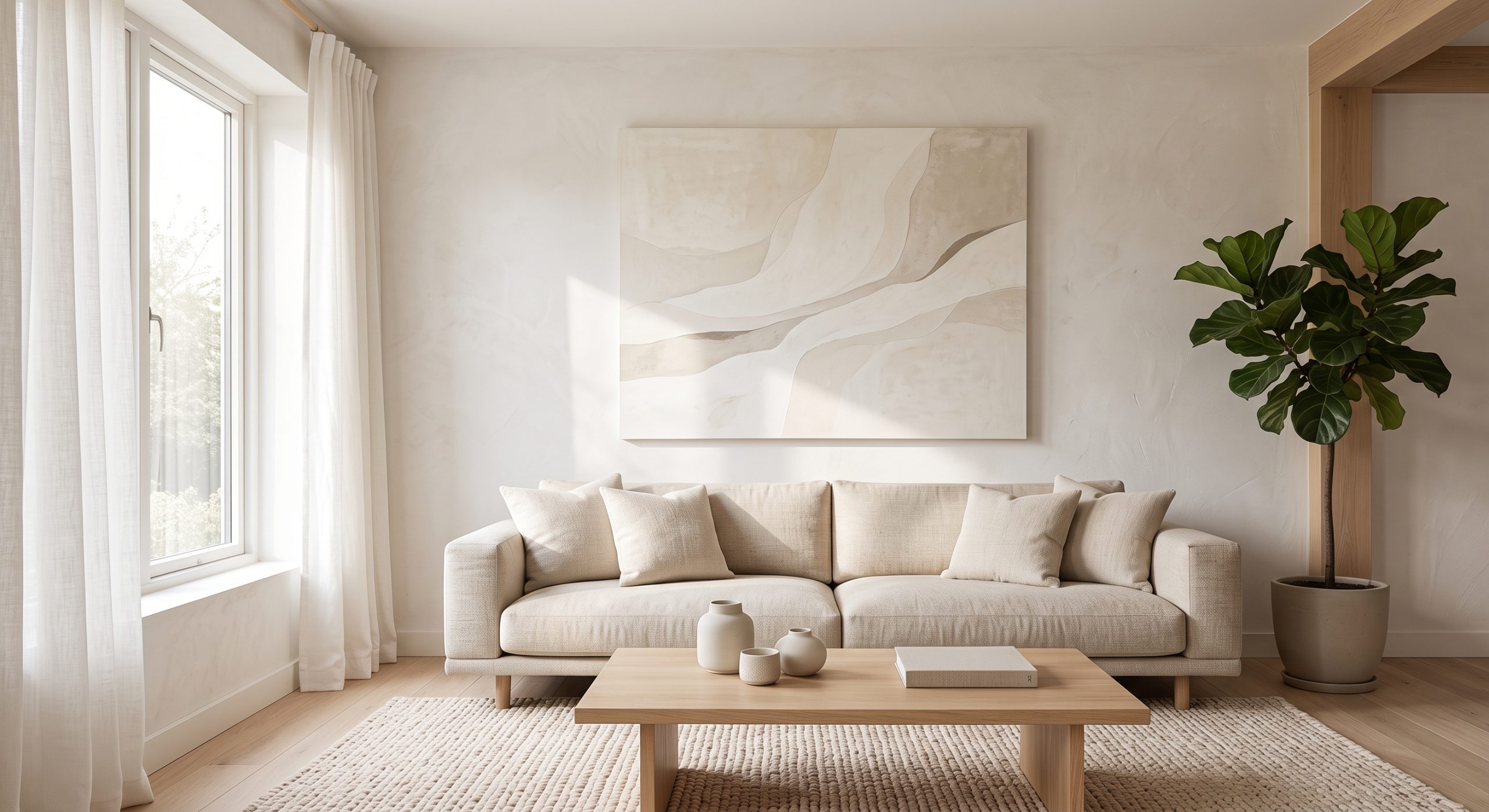
The living room usually has the largest wall and the most visual competition, so this is where a statement piece earns its place.
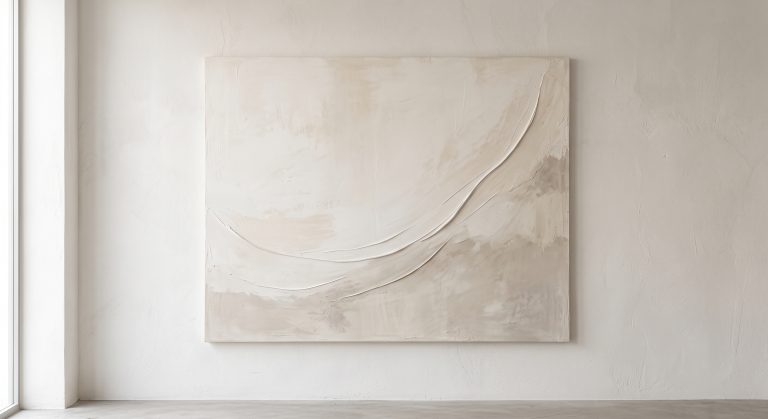
- A single large abstract above the sofa, in layered ivory, oatmeal and taupe.
- A textured piece that changes with the light. See textured abstract art.
- A horizontal diptych if the wall is wide and you want rhythm.
Because living rooms are seen in both daylight and lamplight, check that the palette still looks right after dark, when warm bulbs push cream towards gold and grey towards mushroom.
Bedroom
The bedroom favours the gentlest, lowest-contrast art in the house.
- Soft, blended tones above the bed for a restful mood.
- Fine line art for a lighter presence. See minimalist line art.
- Organic forms with curved edges. See organic abstract art.
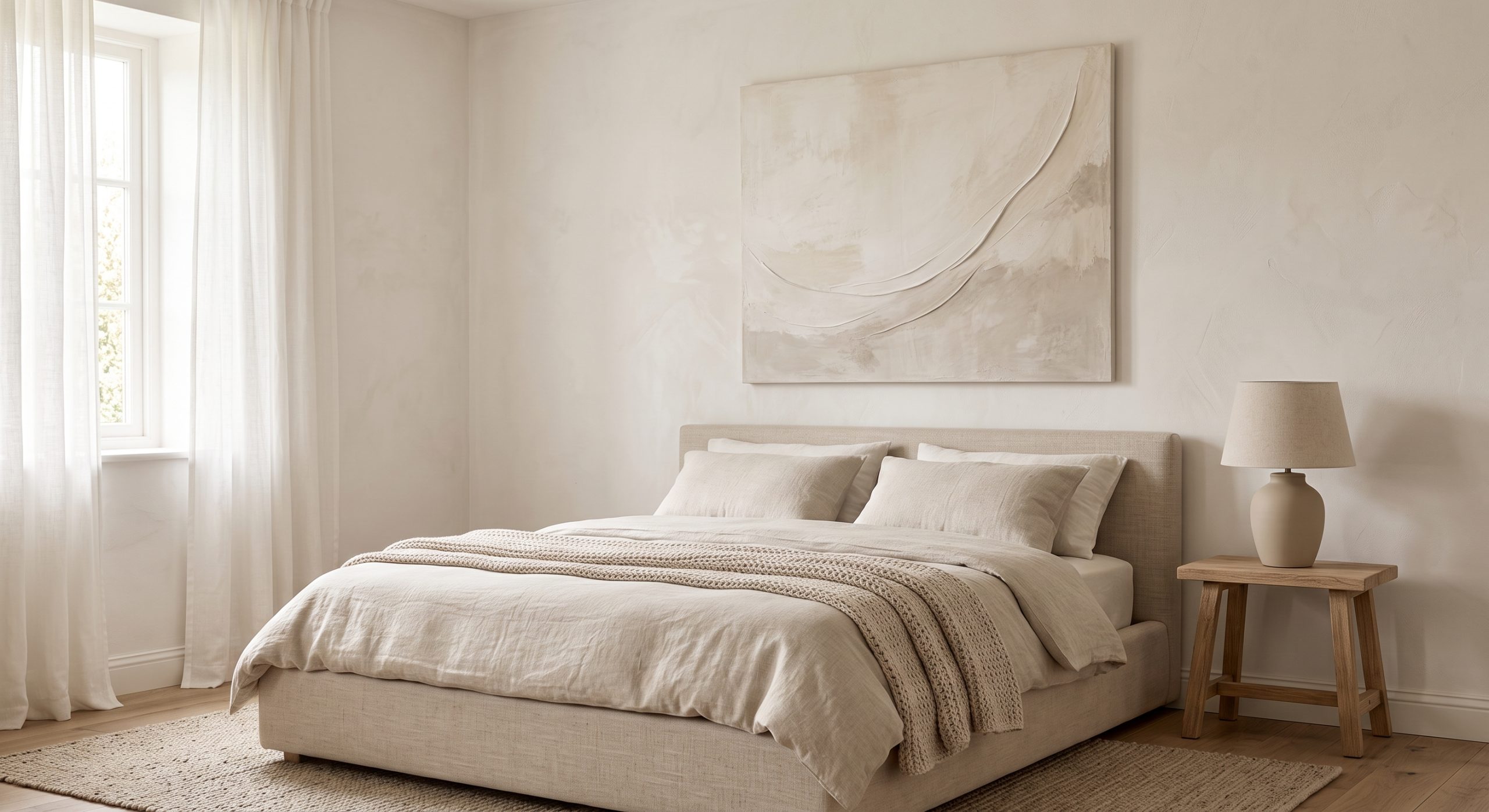
For more detail, see how to choose wall art for your bedroom.
Dining Room and Kitchen
Dining spaces are for long conversations and second helpings, so art should feel warm without demanding attention.
- A wide horizontal piece above a sideboard or banquette.
- Neutral botanical or still-life studies, which suit food spaces naturally.
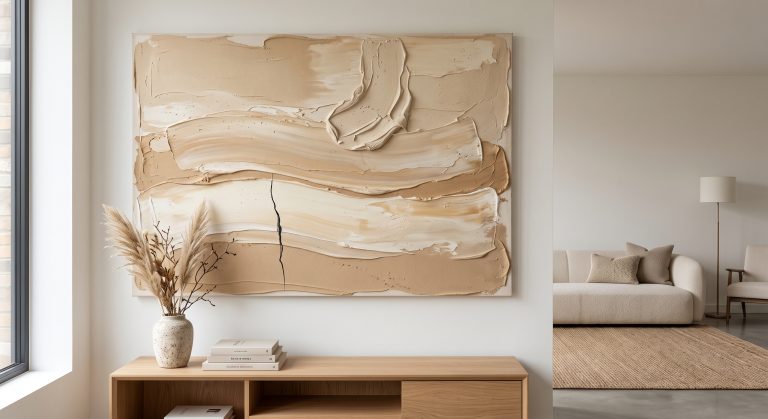
- Textured, mineral-toned work that adds richness to an otherwise hard-surfaced room. A grounded piece such as Deep Earth Relief gives a dining room a calm anchor.
In kitchens, keep art away from direct steam and splashes and choose glazed or sealed framing.
Hallway and Entryway
Hallways are passed through rather than sat in, so a slightly stronger tone or mark reads better at a glance.
- A tall vertical piece to draw the eye up.
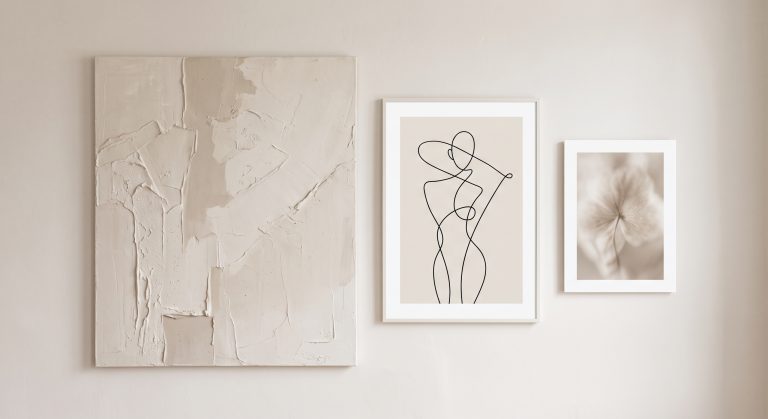
- A row of two or three related pieces for rhythm along a wall.
- Slim frames, so nothing projects into the walkway.
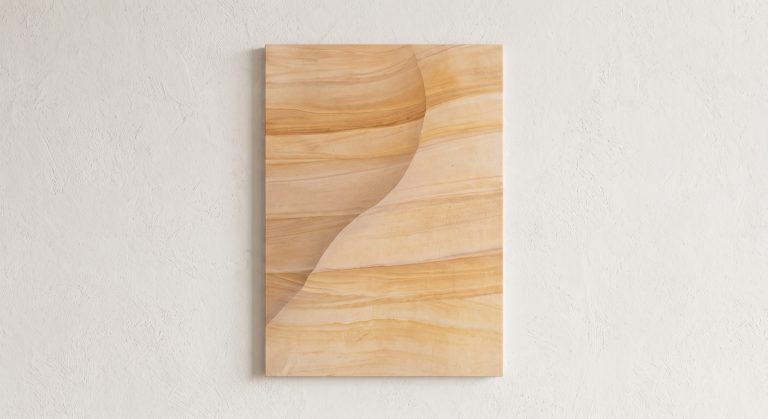
At the end of a long corridor, a piece with a strong sense of depth, like the carved sandstone passage of our Canyon Passage, pulls the eye down the length of the hall. See wall art for narrow hallways for sizing and placement.
Home Office
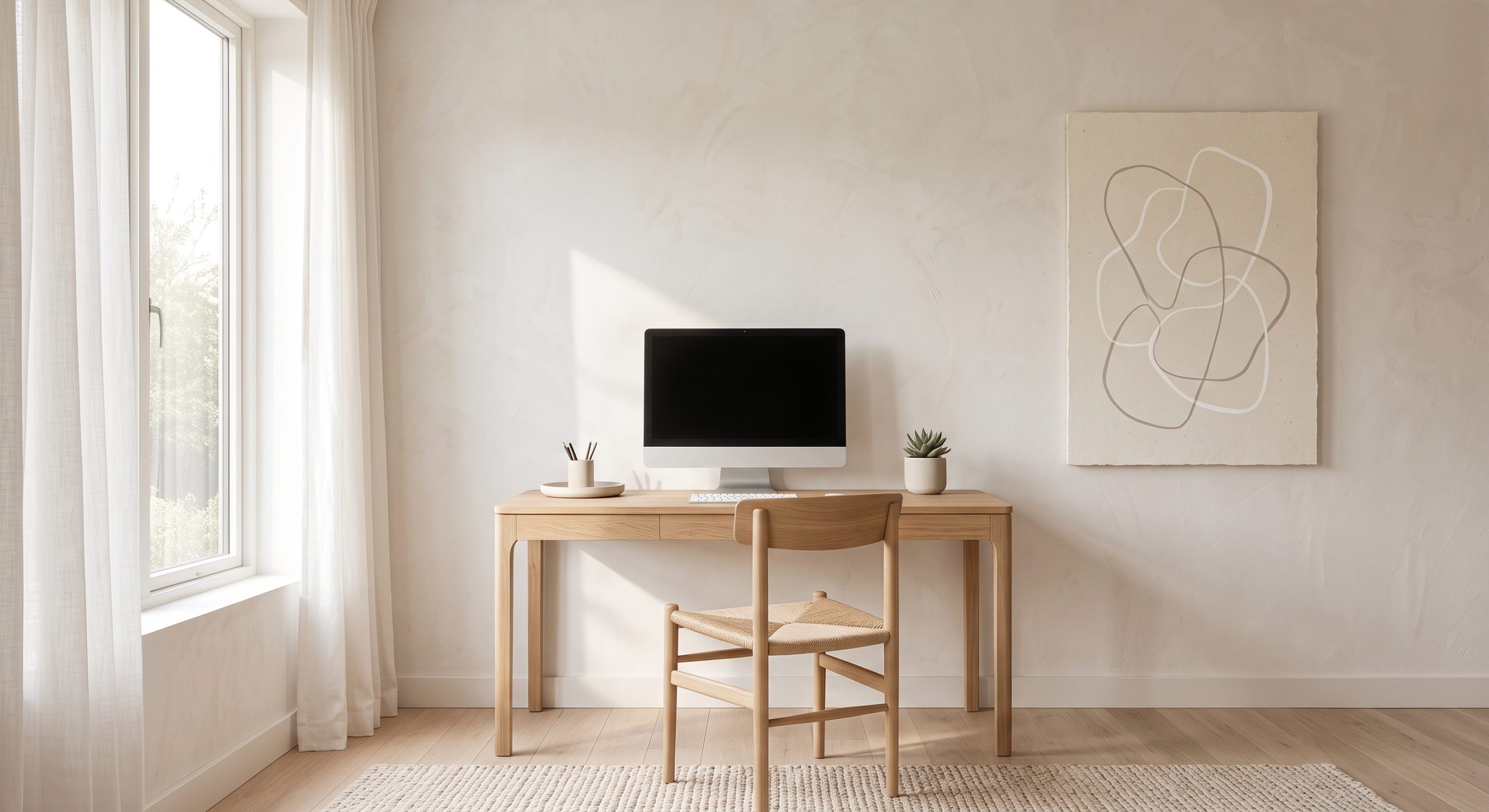
The office wants calm without sleepiness.
- One focal piece to the side of the desk, not directly behind the screen.
- Clear structure, such as gentle geometry or a confident single line.
- A restrained palette that will not distract in video calls.
Bathroom
Steam and splashes are hard on paper, so choose a position away from the shower and use sealed or glazed framing. Simple, quiet pieces suit small bathrooms best.
Small Spaces and Studios
In compact rooms, fewer and larger usually beats many and small. See minimalist artwork for small spaces for more.
Keeping Neutral Rooms From Feeling Boring
- Choose art with tonal layers or texture rather than one flat tone.
- Add a single darker note, such as a fine charcoal line.
- Vary shapes: a soft organic form beside a straight-edged frame.
- Let natural materials, such as wood, linen and ceramics, add warmth.
- Leave empty wall, because space is part of the effect. See negative space in abstract art.
A Quick Room-by-Room Summary
- Living room: one large statement piece
- Bedroom: soft, low-contrast, curved
- Dining room: wide, warm, textured
- Hallway: tall or a rhythmic row
- Home office: structured and calm
- Bathroom: simple, sealed, away from steam
For guidance on mixing shades, read how to mix different shades of neutral artwork, and for choosing across all rooms, how to choose abstract art for your home.
Final Thoughts
Neutral art works in every room, but it works differently in each. Think about what the room is for, who uses it and when, and let that guide the tone, the scale and the amount of contrast.
Get those right and neutral art becomes what it should be: the quiet foundation that lets everything else in a room look its best. To see these ideas in a single, coordinated palette, browse our neutral abstract printable wall art collection.