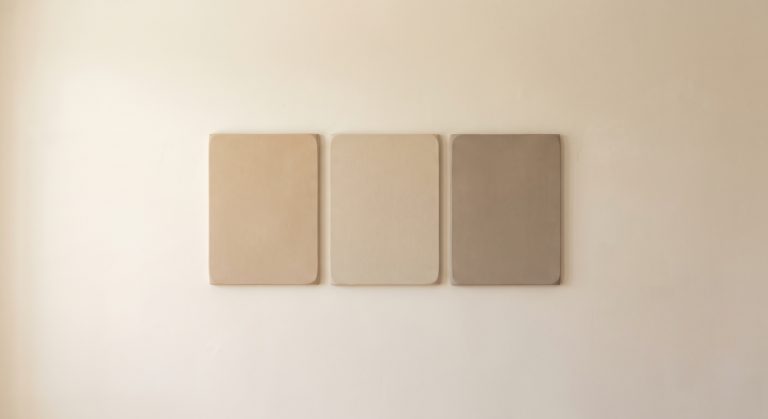
Japandi vs Minimalist Art: Understanding the Difference
Japandi and minimalist art look like close cousins. Both are calm. Both favour restraint. Both avoid clutter.
But put them side by side and the difference is easy to feel: one is precise and cool, the other is warm and softly imperfect. Knowing which is which makes it much easier to choose art that suits your room and your temperament.
This guide breaks down the differences, shows you how to recognise each, and explains when to choose one, the other, or a blend of both. For background, see what minimalist art is and what Japandi art is.
The Short Answer
Minimalist art is defined by reduction and precision: as little as possible, exactly placed.
Japandi art is defined by warmth and naturalness: restrained like minimalism, but softened by organic shapes, handmade texture and a touch of imperfection.
Minimalism removes. Japandi removes and then warms.
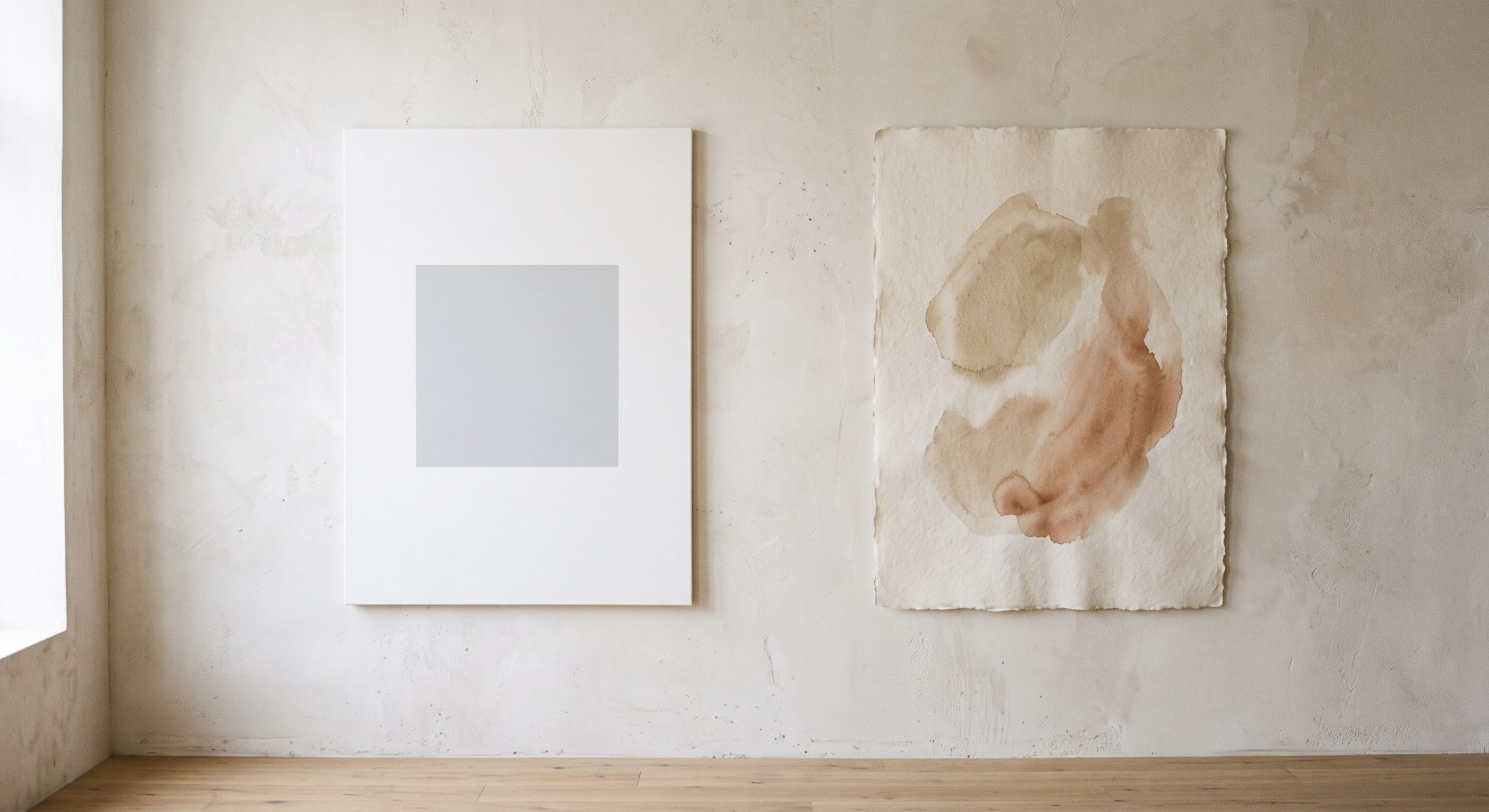
Where They Overlap
It helps to start with what they share, because the overlap is real.
- Restrained palettes
- Uncluttered compositions
- Generous empty space. See negative space in abstract art.
- A preference for quality over quantity
- A calm effect on a room
Both are also influenced, in different ways, by Japanese ideas about simplicity, which is one reason they are so often confused.
Side-by-Side Comparison
| Quality | Minimalist art | Japandi art |
|---|---|---|
| Overall mood | Precise, cool, cerebral | Warm, natural, calm |
| Colour | Often stark: white, grey, black, or a single bold colour | Muted, earthy: oatmeal, clay, sand, faded sage, soft charcoal |
| Shapes | Geometric, straight-edged, exact | Organic, curved, softly irregular |
| Surface | Smooth, flat, even | Tactile, textured, handmade |
| Edges | Crisp and sharp | Soft, slightly uneven |
| Imperfection | Avoided | Welcomed |
| Materials | Often industrial or synthetic | Natural: clay, plaster, paper, linen, wood |
| Space | Empty space is exact and geometric | Empty space is soft and atmospheric |
| Feeling | Rigour | Comfort |
Recognising Minimalist Art
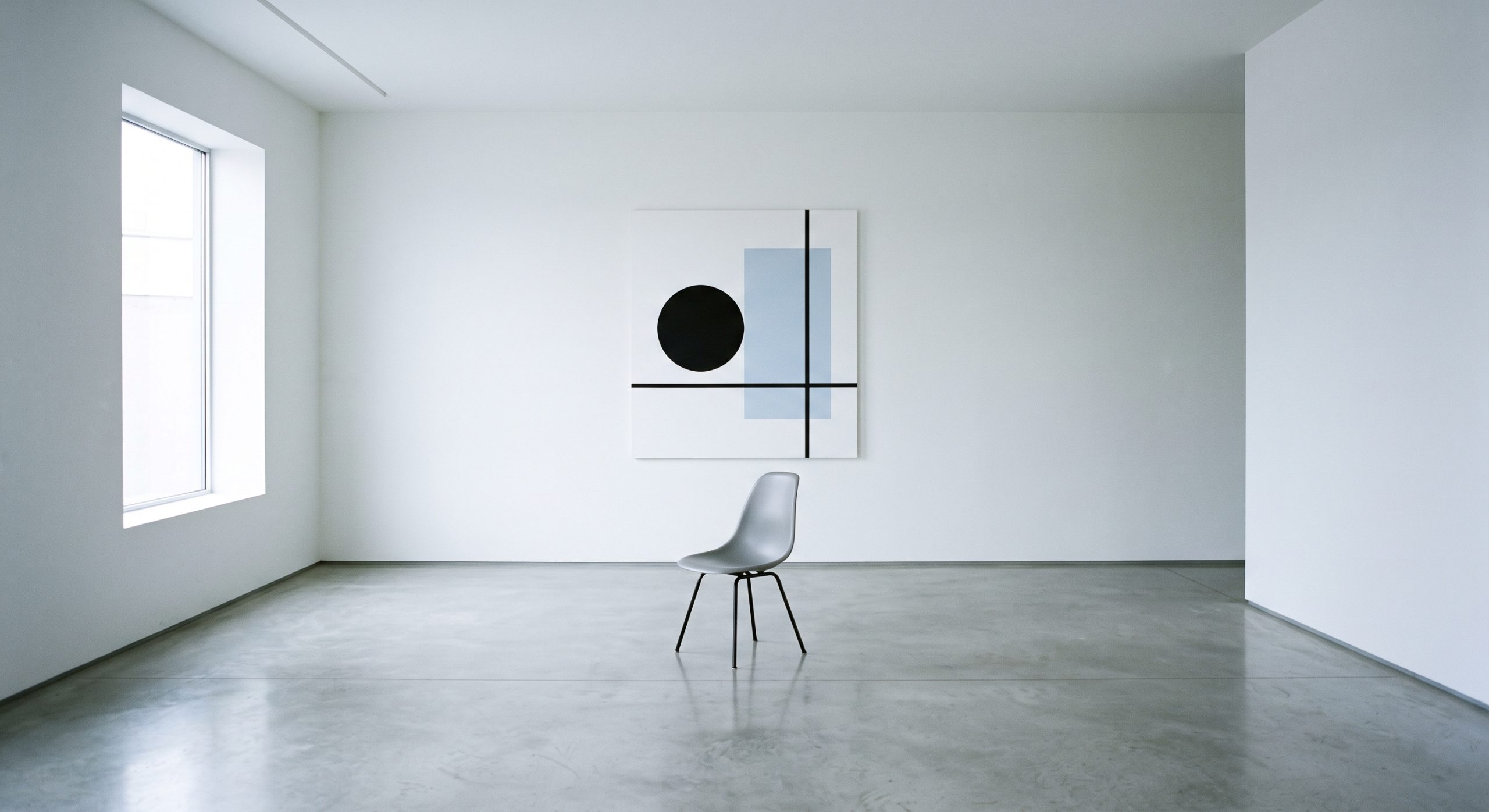
Look for a strict economy. A single shape, a repeated form, a few lines. Edges are clean, surfaces are even, and the palette is limited and often high in contrast. The art movement known as Minimalism, associated with artists such as Donald Judd and Dan Flavin, is the historical root of this look.
In a room, minimalist art usually goes with white or grey walls, simple furniture and hard surfaces such as glass and steel.
Recognising Japandi Art
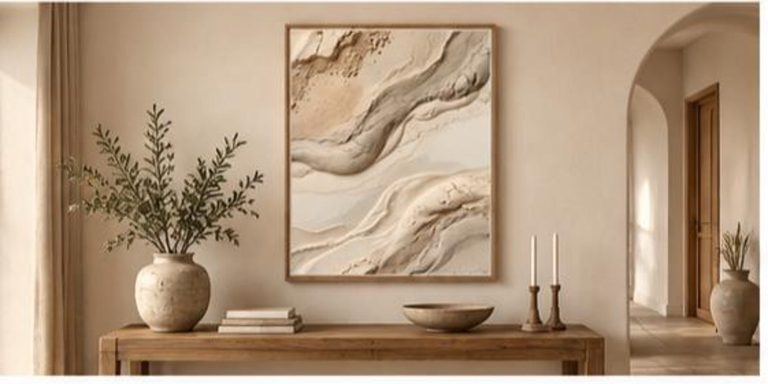
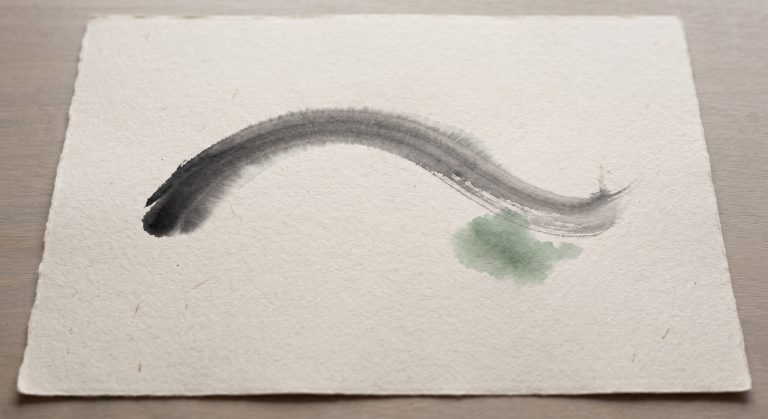
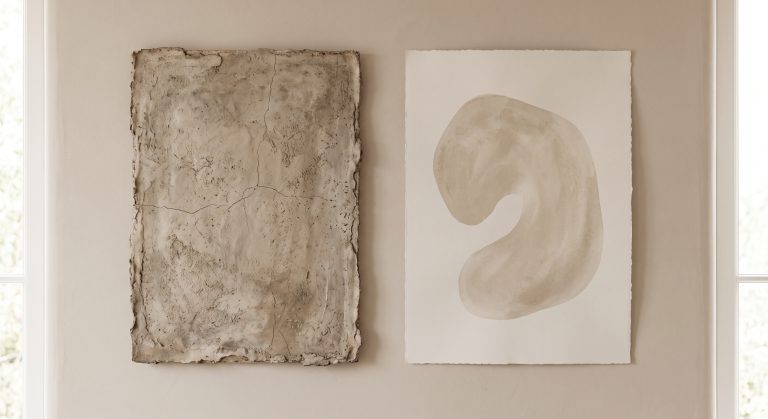
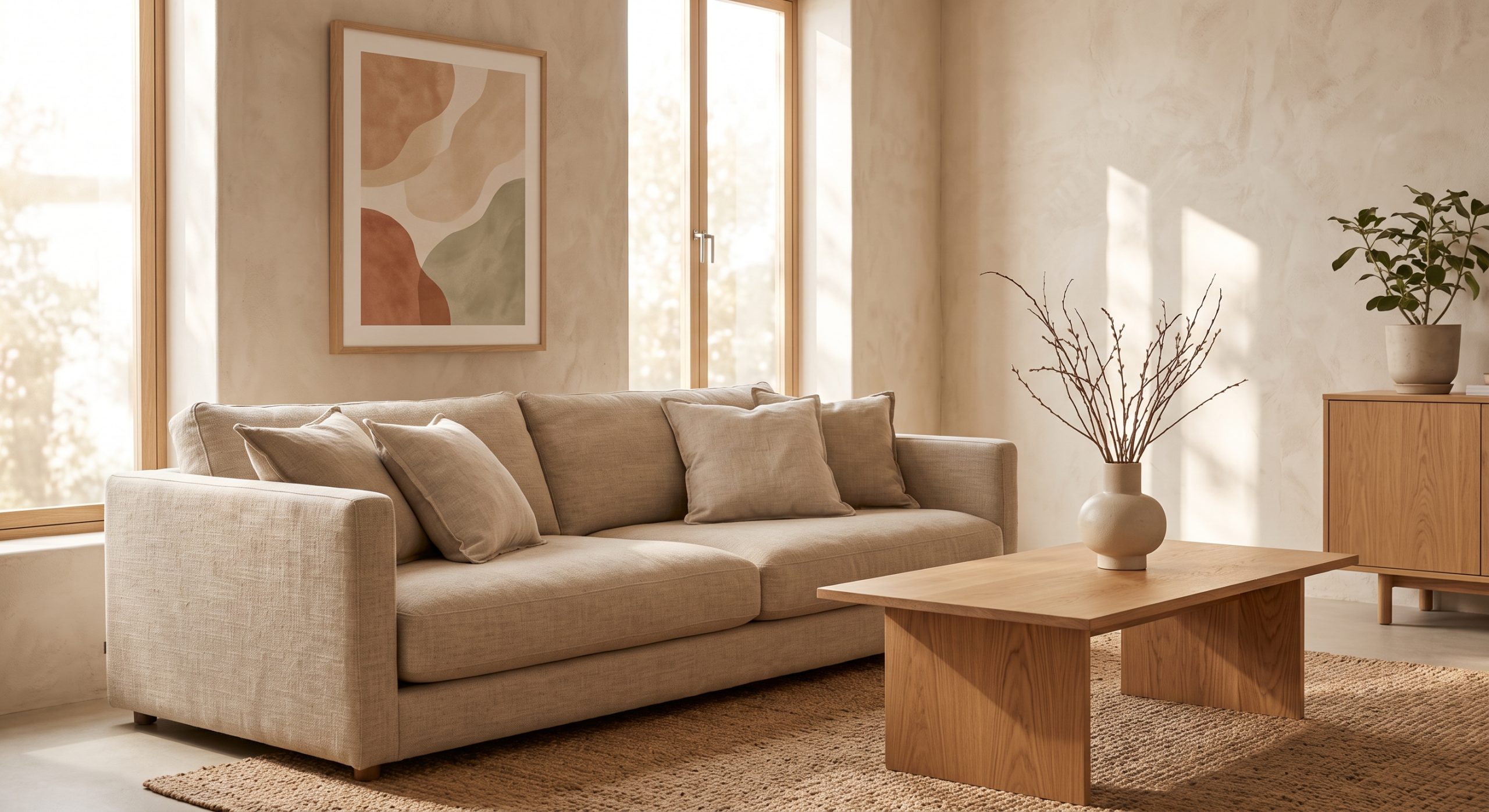
Look for softness and material. A single organic form on textured paper, a plaster-like surface with subtle relief, a sweeping ink-wash inspired arc. The palette is warm and earthy, and the composition feels handmade rather than machined.
In a room, Japandi art goes with pale oak or ash, linen, ceramics and plants. Our guides to organic abstract art and textured abstract art describe the kinds of pieces that fit.
What About Wabi-Sabi?
Wabi-sabi is a third, related idea: a Japanese philosophy that values imperfection, age and impermanence. Japandi often borrows from it, while classic minimalism tends to resist it. If a piece celebrates wear and irregularity, it leans wabi-sabi. Read more in wabi-sabi art.
How the Same Subject Looks in Each Style
Imagine a single line across a surface.
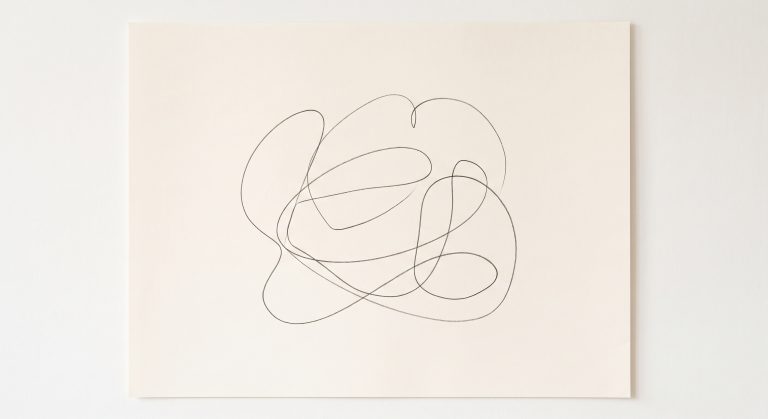
- Minimalist version: a ruler-straight black line on white, perfectly horizontal, edges razor-sharp.
- Japandi version: a softly drawn charcoal line on warm paper, gently curved, with a slightly organic edge.
Both are restrained. Only one feels hand-made. If you’re drawn to line work, see minimalist line art and abstract line art ideas.
Which Should You Choose?
Choose minimalist art if:
- your room is architectural, with clean lines, glass, concrete or metal
- you like precision, contrast and a cool palette
- you want a strong graphic statement
Choose Japandi art if:
- your room uses natural materials like wood, linen and clay
- you want a warm, softly calming mood
- you like handmade character and gentle imperfection
Choose a blend if:
- your room is a mix of clean lines and warm textures
- you like the restraint of minimalism but want it softened
Blending the Two
The two work together more easily than you might expect. A practical approach:
- Keep the palette limited and warm.
- Choose one crisp geometric piece and one soft organic piece, sharing a colour.
- Give each generous wall space.
- Repeat one material or tone across the room to tie it together.
For palette help, see how colour changes the feeling of abstract art.
Common Confusions
- “Japandi is just minimalism in beige.” Colour is only part of it. The shapes, textures and handmade quality matter as much.
- “Minimalism is always cold.” It can be warm in palette, but its precision gives it a distinct character.
- “You have to pick one.” You do not. Many good rooms mix them.
How to Choose Between Them for Your Space
- Look at the materials in your room. Hard and smooth, or warm and textured?
- Decide the mood you want: rigour or comfort.
- Check the edges and shapes of the art. Crisp or soft?
- Consider scale and placement. See how to choose abstract art for your home.
Final Thoughts
Minimalist art asks you to admire precision. Japandi art asks you to relax into warmth.
Neither is better. The right one is whichever matches how you want a room to feel, and knowing the difference lets you choose on purpose rather than by accident.