Wabi-Sabi Art: Finding Beauty in Imperfection
A bowl with an uneven rim. A wall whose plaster shows soft variations. A piece of wood that has silvered with age.
These are not flaws to be corrected. In the Japanese aesthetic known as wabi-sabi, they are exactly what makes things beautiful.
Wabi-sabi art is quiet, natural and honest about time. It does not try to look new, perfect or polished. This guide explains where the idea comes from, what wabi-sabi art looks like, how it differs from minimalism and Japandi, and how to bring it into your home with integrity rather than as a superficial “look”. If you’re new to related ideas, our guides to Japandi art and minimalist art give useful context.
What Is Wabi-Sabi?
Wabi-sabi is a Japanese aesthetic and way of seeing that finds beauty in things that are imperfect, impermanent and incomplete.
The two words have separate roots. Wabi is associated with humble simplicity and a quiet, rustic elegance. Sabi is associated with the patina of age, the beauty of things that have weathered or worn. Together they describe a sensibility that values modesty, natural processes and the passage of time.
The ideas are closely linked with the Japanese tea ceremony, where simple, handmade, even slightly irregular bowls were prized over flawless ones. The tea master Sen no Rikyū, working in the sixteenth century, is often associated with that shift towards austere, humble beauty.
The Three Ideas at the Heart of It
Writers on the subject, notably the American author Leonard Koren in his 1994 book Wabi-Sabi for Artists, Designers, Poets & Philosophers, often summarise wabi-sabi through a few linked ideas.
Impermanence
Nothing lasts. Things grow, weather and change, and wabi-sabi treats that change as beautiful rather than sad.
Imperfection
Asymmetry, irregularity and small flaws are part of a thing’s character. A perfectly uniform surface can feel lifeless by comparison.
Incompleteness
Things are not fully resolved or finished. Open space, quiet and suggestion leave room for the viewer.
What Wabi-Sabi Art Looks Like
Wabi-sabi is not a single style, but work that carries the sensibility tends to share these qualities.
- Muted, earthy colour: clay, ash, oatmeal, faded sage, weathered grey, soft brown
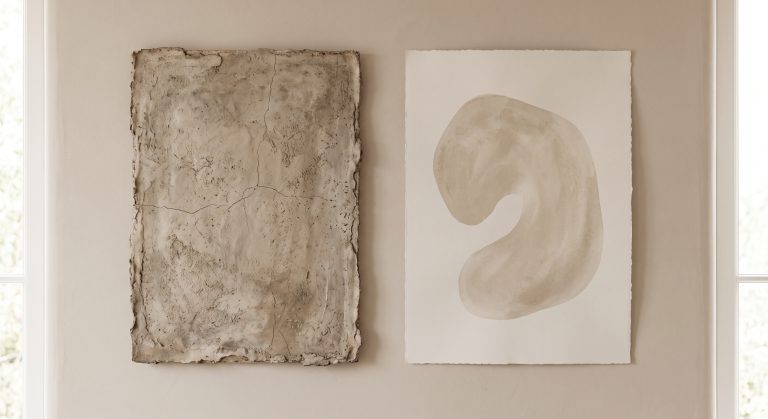
- Uneven or irregular surfaces: plaster, paper or pigment with soft variation
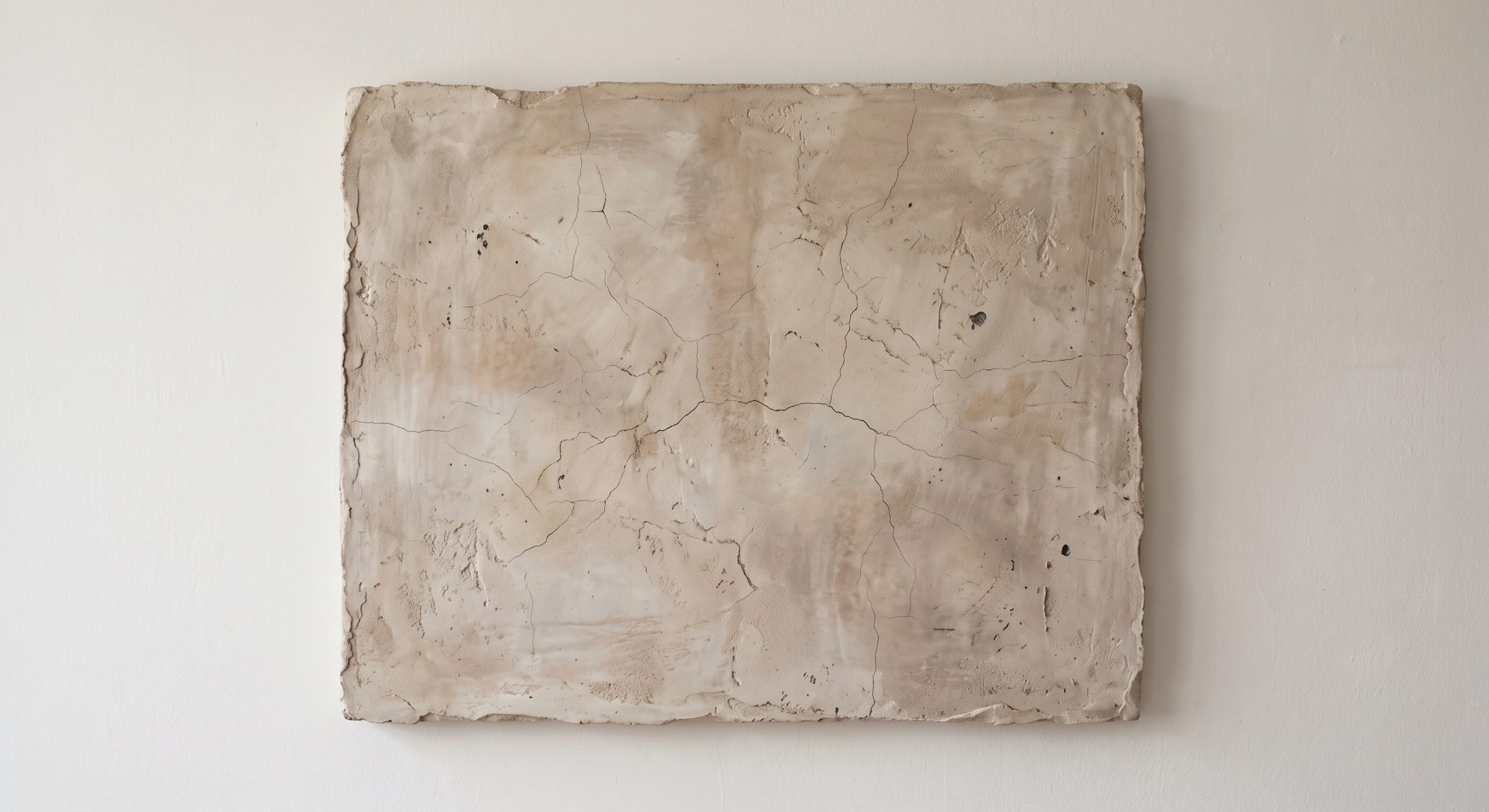
- Visible age or process: cracks, worn edges, layered, softly eroded areas
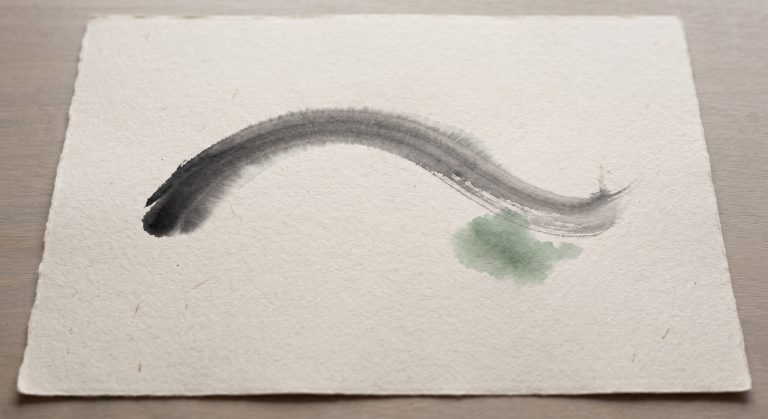
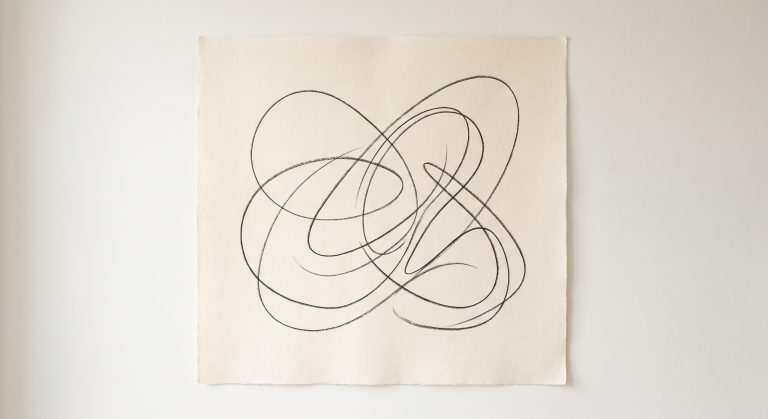
- Asymmetry: compositions that are balanced but not mirrored
- Natural materials: clay, lime, linen, paper, wood, stone
- Generous space: quiet, unfilled areas
Much of this overlaps with the qualities described in textured abstract art, particularly the idea of surfaces that suggest a physical process, such as erosion or sediment.
Imperfection in Objects: Ceramics and Repair
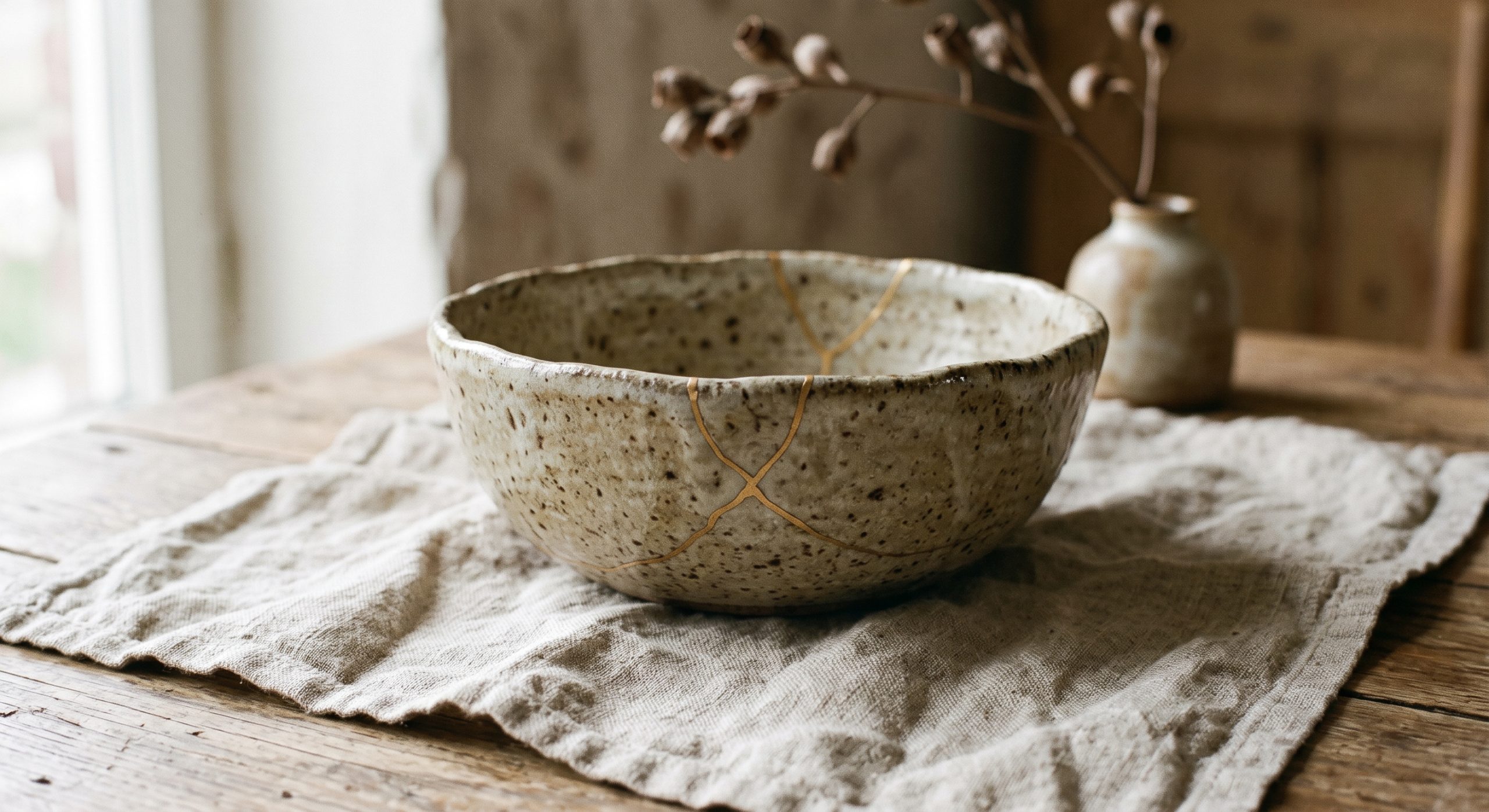
Ceramics are often the clearest illustration. A handmade bowl with an uneven rim, an irregular glaze and a slight lean carries the trace of the hand that made it.
A related Japanese tradition, kintsugi, repairs broken ceramics with lacquer dusted with gold or another metal, leaving the repair visible. Kintsugi is a distinct craft rather than a synonym for wabi-sabi, but it is frequently linked with it because both treat damage and repair as part of an object’s history rather than something to hide.
Wabi-Sabi vs Minimalism vs Japandi
The three are often confused because they share calm palettes and restraint.
- Minimalism pursues reduction and precision. Surfaces are often crisp and exact.
- Japandi blends Japanese and Scandinavian design into a warm, natural, functional look.
- Wabi-sabi is more a philosophy than a style. It welcomes age, roughness and imperfection rather than avoiding them.
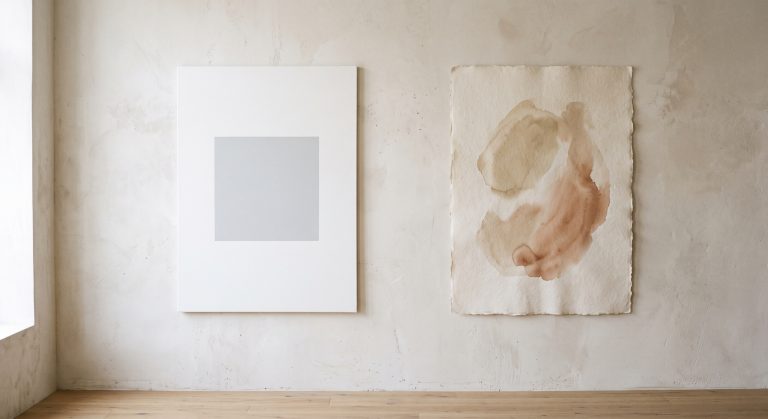
Japandi often borrows from wabi-sabi, but wabi-sabi goes further in embracing wear and irregularity. A crisp, flawless minimalist piece, by contrast, sits at almost the opposite end of the spectrum.
Wabi-Sabi Colours
The palette is drawn from the natural world and from ageing materials.
- Clay, terracotta and rust in muted tones
- Ash grey, stone and weathered wood
- Oatmeal, cream and undyed linen
- Faded sage, olive and moss
- Soft charcoal instead of pure black
For pairing tones, see beige abstract art for calm interiors and how colour changes the feeling of abstract art.
Wabi-Sabi Art at Home
The best wabi-sabi rooms feel lived-in and unforced. A few principles help.
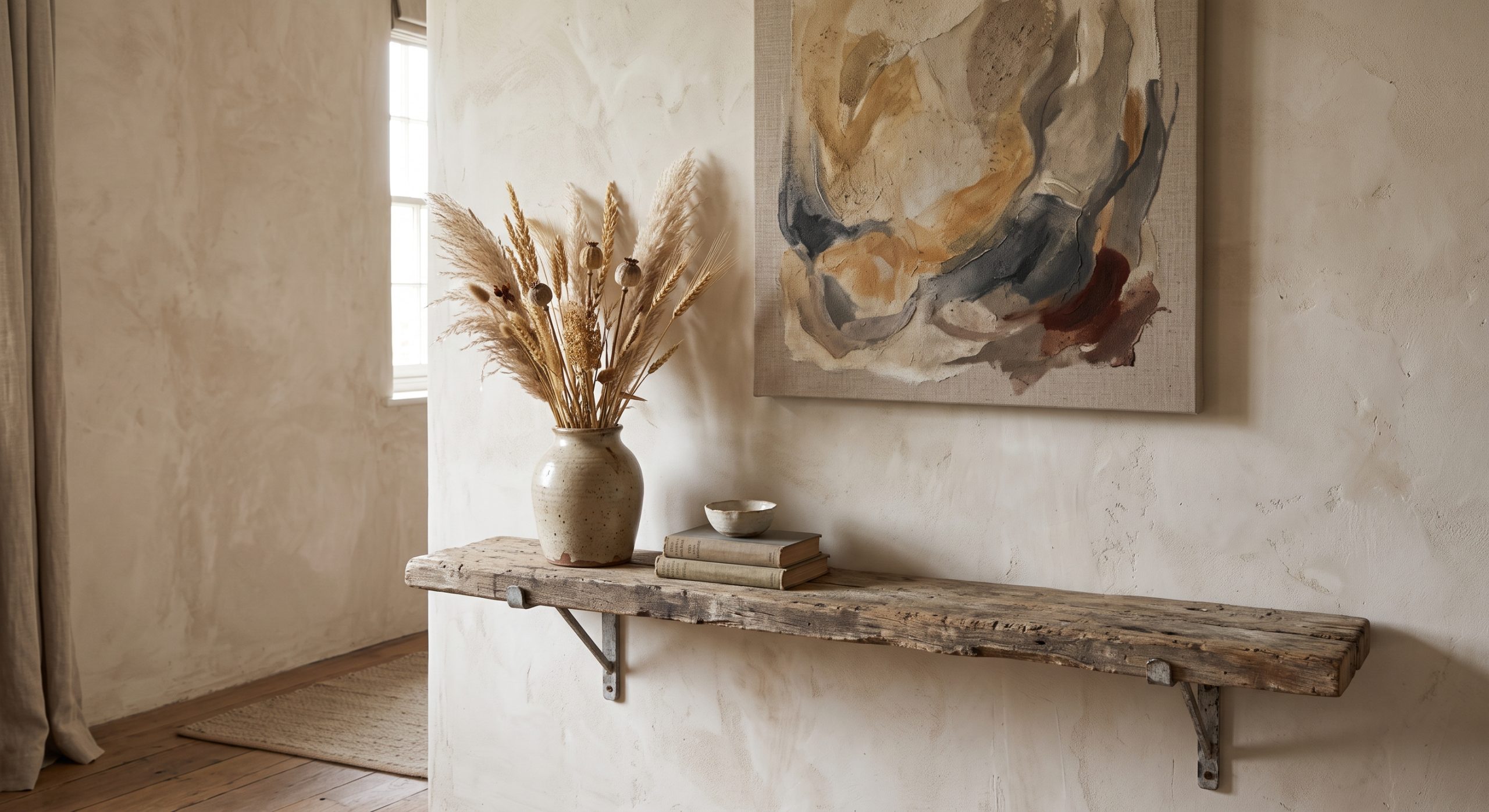
- Choose surfaces with life. Textured, hand-finished, softly irregular pieces over glossy, uniform ones.
- Let it sit with natural materials. Weathered wood, clay pots, linen and paper.
- Leave space. Empty wall is part of the picture. See negative space in abstract art.
- Favour organic shapes. See organic abstract art.
- Stay quiet. One or two well-chosen pieces beat a wall of decoration.
Authentic vs Artificial “Distressed” Looks
Wabi-sabi is sometimes reduced to a decorative effect: artificially “distressed” finishes, fake cracks, faux rust. The difference matters. Genuine wabi-sabi work suggests a real process, such as pigment settling into a surface, plaster drying, or a mark softened by repeated layering. Overdone or repetitive fake wear tends to look like costume.
A useful test: does the imperfection look like it happened, or like it was applied? This is the same distinction between convincing and superficial texture discussed in textured abstract art.
Common Misunderstandings
- “It means shabby or cheap.” Wabi-sabi is refined and deliberate, not neglected.
- “It means messy.” Rooms are often calm and orderly; the imperfection is in the materials and finishes, not the clutter.
- “It is just a style.” It is a way of looking, closer to an attitude than a set of products.
- “It has to be Japanese.” The philosophy is Japanese, but its sensibility can inform art from anywhere.
How to Choose Wabi-Sabi Art
- Look at the surface. Does it show a believable trace of process or age?
- Check the palette. Is it muted, earthy and slightly worn?
- Look for asymmetry and gentle irregularity.
- Ask whether it feels calm rather than fussy.
- Choose scale and placement with room to breathe. See how to choose abstract art for your home.
Final Thoughts
Wabi-sabi is an invitation to stop chasing perfection.
Choose art that carries the quiet marks of time, keep the room simple around it, and let a little imperfection be part of what you love. Often, that is what makes a space feel genuinely lived in and calm.