What Is Japandi Art?
Japandi is one of those words that sounds like a trend and turns out to be an idea.
It is a blend of Japanese and Scandinavian design sensibilities, and in art it shows up as work that is calm, natural, restrained and quietly handmade in feeling. Not empty. Not cold. Simply unhurried.
This guide explains what Japandi art is, where the ideas come from, what it looks like, how it differs from plain minimalism, and how to recognise and choose it for your own home. If you’re new to art terms, our pillar guide to what abstract art is is a good place to start.
What Does Japandi Mean?
The word is a blend of “Japan” and “Scandinavian”.
Japanese and Scandinavian design developed in very different places, but they share a surprising number of values: simplicity, natural materials, craftsmanship, function and a sense of calm. Japandi takes those shared values and combines them into a single look, often warmer than strict minimalism and more restrained than cosy rustic styles.
The connection is not entirely new. Scandinavian designers have long admired Japanese craft and restraint, and design historians often trace mutual influence back more than a century. The name “Japandi” is a much more recent label for a much older kinship.
The Ideas Behind It
A few concepts help explain the mood.
Wabi-sabi
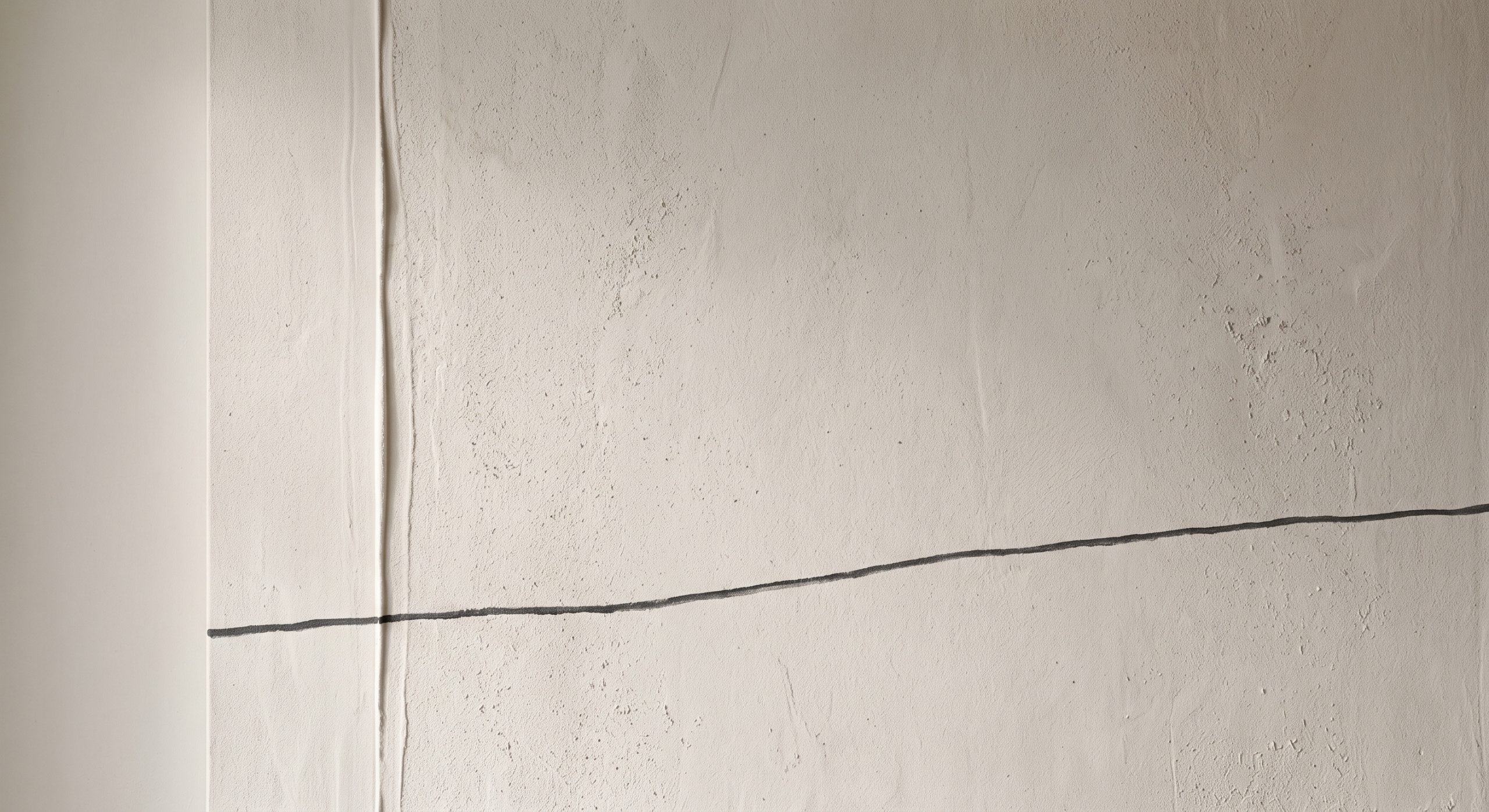
A Japanese aesthetic that finds beauty in imperfection, impermanence and incompleteness. A hand-thrown bowl with a slightly uneven rim, a wall with soft variation in its finish, a surface that shows its age: these are valued, not hidden.
Hygge and lagom
Hygge is a Danish and Norwegian idea of cosy, comfortable well-being. Lagom is a Swedish idea of “just the right amount”. Together they point to warmth without excess.
Ma
In Japanese aesthetics, ma (間) is often described as the meaningful interval or pause between things. It is the idea that emptiness has its own value, a principle that runs through Japandi rooms and Japandi art. It connects closely with negative space in abstract art.
What Japandi Art Looks Like
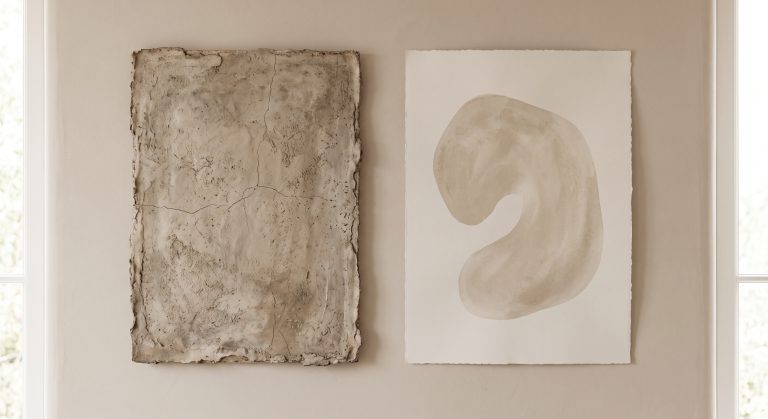
There is no single Japandi style of painting, but the work that fits tends to share these traits.
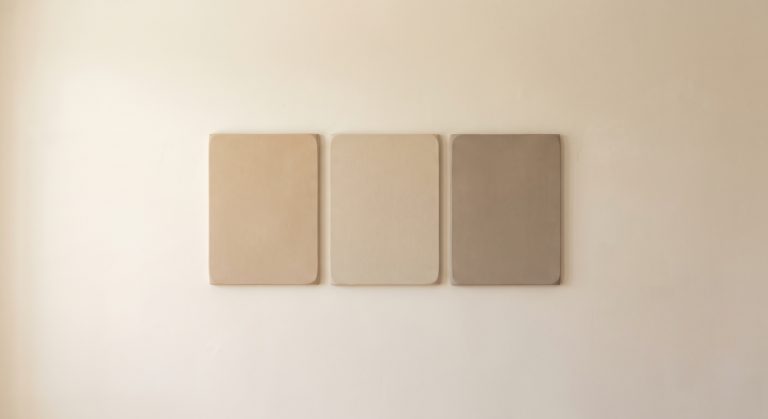
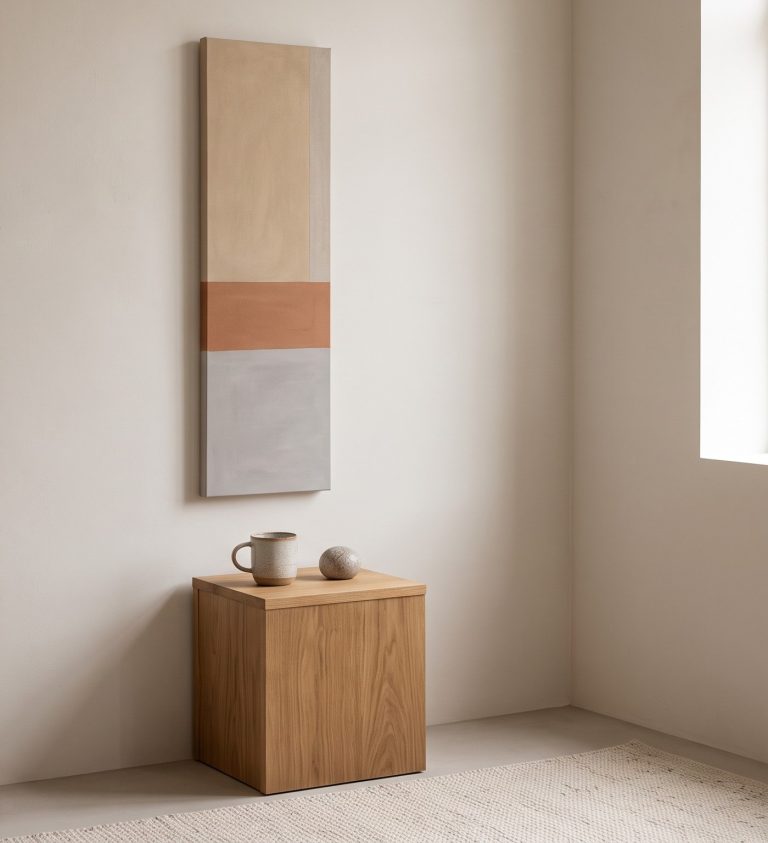
- Muted, earthy colour: oatmeal, sand, clay, stone, soft charcoal, faded sage
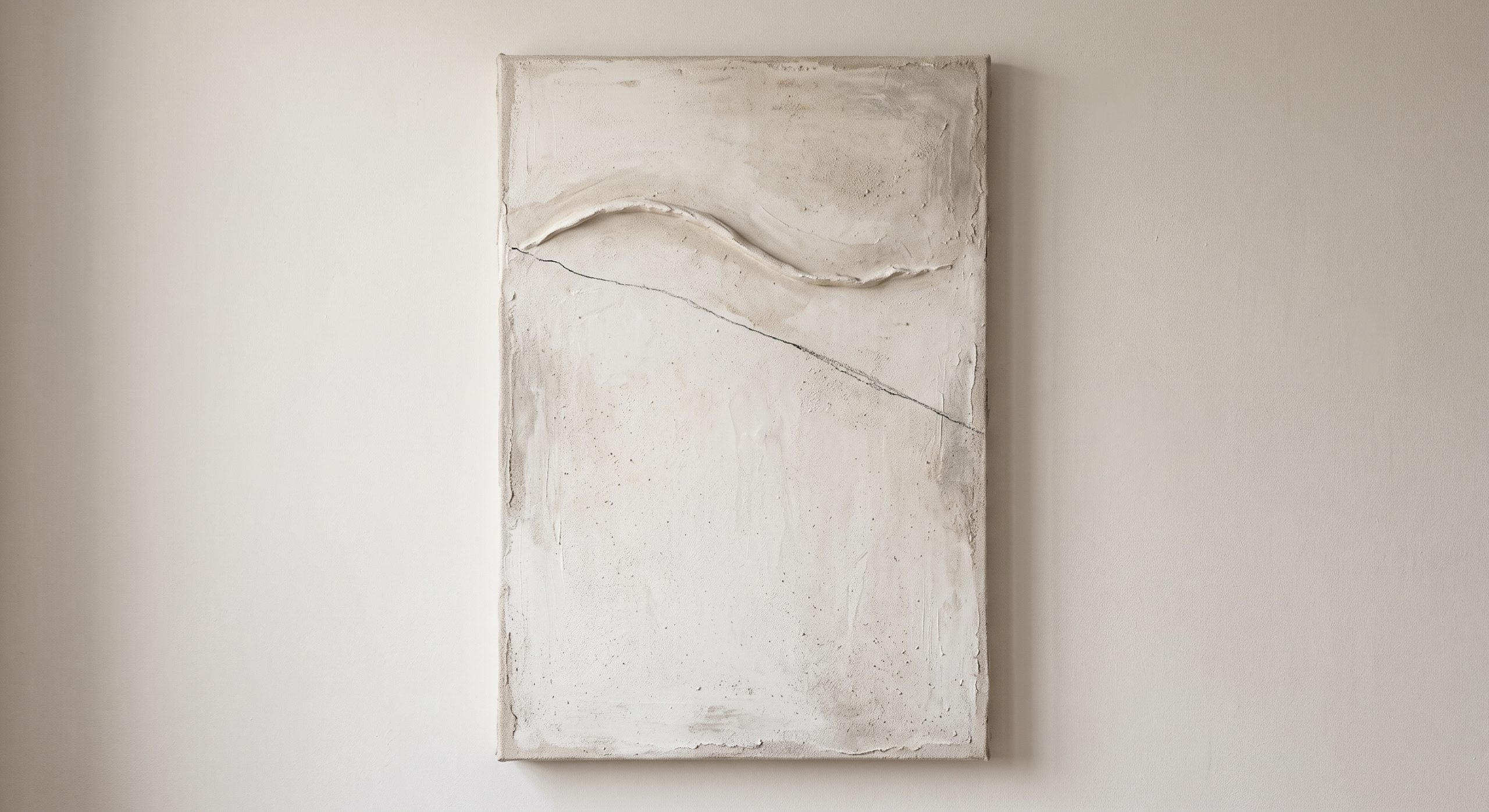
- Organic shapes: pebble-like curves, soft horizons, forms that feel drawn from nature rather than a ruler
- Generous empty space: compositions that leave room to breathe
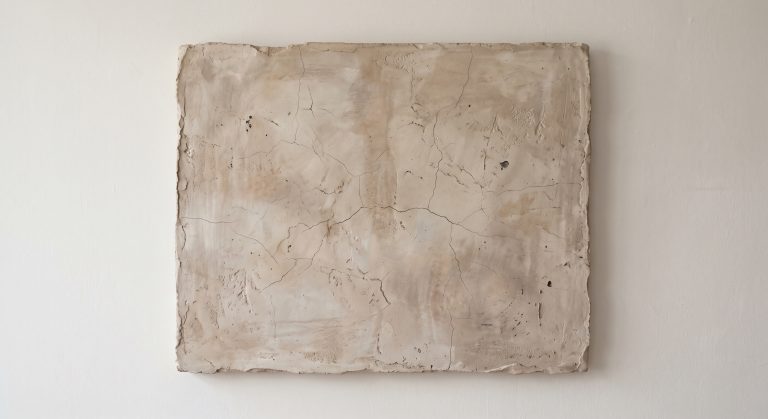
- Visible texture: plaster-like, paper-like or mineral surfaces rather than glossy finishes
- A handmade quality: soft edges, slight irregularity, the trace of a hand
- Restraint: one idea per piece, not several competing ones
The Japanese Influence: Brush, Ink and Space
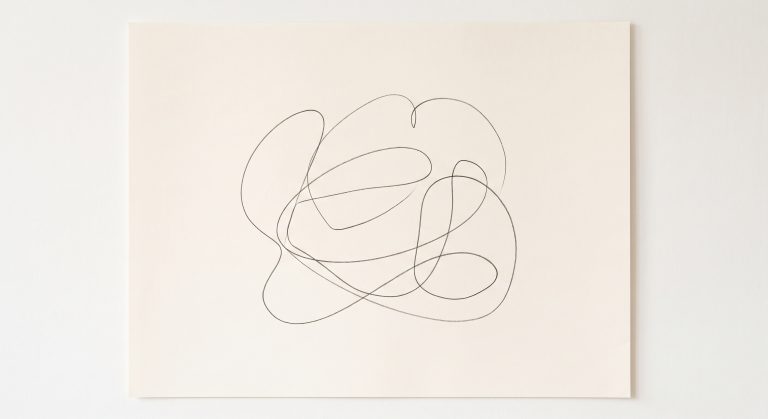
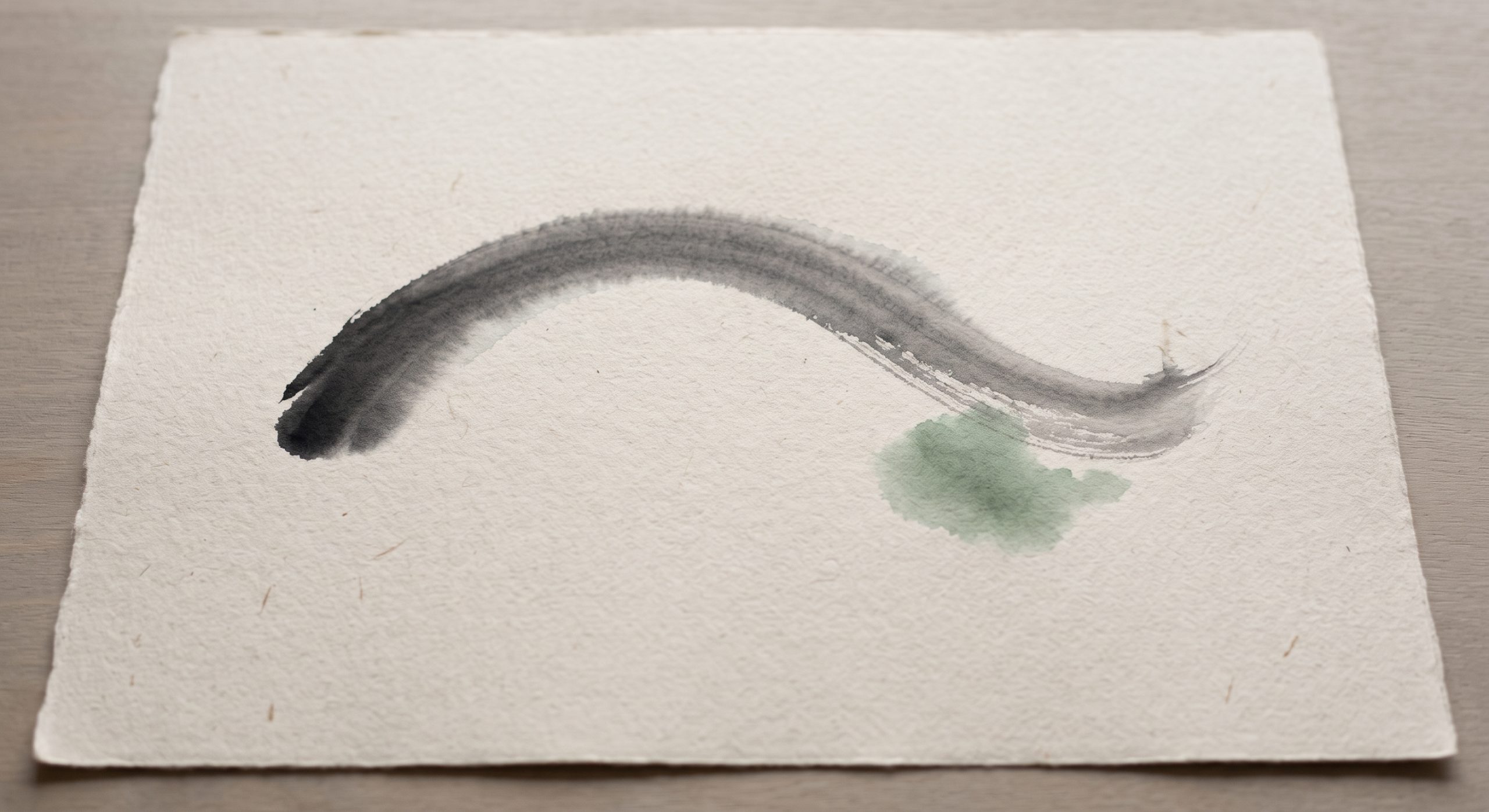
Traditional Japanese ink painting, often called sumi-e, uses a limited range of black ink tones and a few confident brushstrokes on paper, leaving much of the surface open. That approach, with its economy, its gesture and its trust in empty space, is one of the clearest influences on Japandi-style abstract art.
You do not need brush-and-ink literalism. A single sweeping charcoal arc across a warm paper-toned ground, with a small muted accent, captures the spirit.
The Scandinavian Influence: Light, Warmth and Function
Scandinavian design contributes lightness and practicality. Pale woods, soft textiles, clean lines and an emphasis on light (essential in northern countries with long dark winters) all feed into the Japandi look. In art, that shows up as gentle, luminous palettes and compositions that keep a room feeling open and bright.
Japandi vs Minimalism
They are close relatives, but not the same.
- Minimalism pursues reduction and can feel stark. See what minimalist art is.
- Japandi is restrained but warmer. It welcomes natural texture, handmade imperfection and a little softness.
A useful shorthand: minimalism removes; Japandi removes and then warms.
Materials and Texture
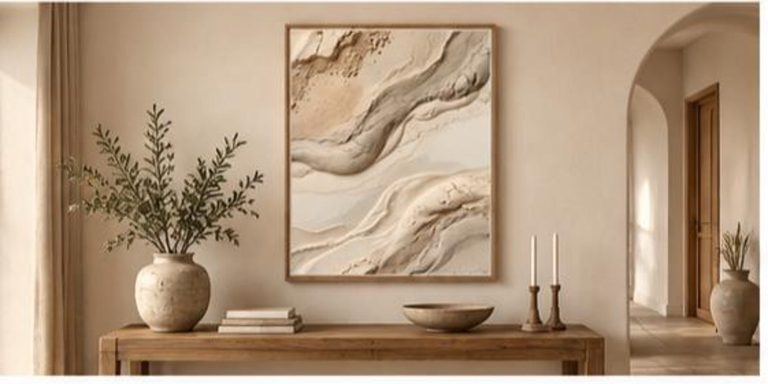
Japandi rooms lean on tactile natural materials: oak, ash, bamboo, linen, paper, clay, stone and ceramics. Art that echoes those materials sits most naturally with them. Textured plaster, mineral surfaces and subtle relief work especially well because they feel related to the room’s other surfaces, rather than applied on top. Our guide to textured abstract art explores how that works.
Colours That Suit Japandi Art
The palette is muted and natural.
- Warm whites, cream and oatmeal
- Sand, stone and greige
- Clay and soft terracotta in small doses
- Faded sage and eucalyptus greens
- Charcoal or near-black as a grounding accent
For guidance on combining tones, see how colour changes the feeling of abstract art and beige abstract art for calm interiors.
How to Choose Japandi Art
- Choose fewer, better pieces. One considered artwork usually suits the style better than many small ones.
- Look for soft, natural shapes. Curves and organic forms sit more comfortably than sharp geometry. See organic abstract art and why it feels so calm.
- Value empty space. If a piece feels crowded, it probably is not Japandi.
- Check the surface. Matte, tactile finishes beat glossy ones.
- Keep the palette quiet. One accent is plenty.
- Consider line. A single confident line can be very Japandi. See minimalist line art.
Placing Art in a Japandi Room
Japandi furniture is often low and grounded, so art frequently looks best hung slightly lower than in a conventional scheme, relating to the furniture beneath it. Leave generous wall around each piece, and let one artwork be the focal point rather than competing with others. For general scale and placement guidance, see how to choose abstract art for your home.
Common Mistakes
- Mistaking Japandi for a look made only of beige. It needs texture and contrast.
- Adding Japanese motifs as decoration (waves, lanterns, characters) rather than absorbing the sensibility.
- Over-styling. Japandi depends on restraint.
- Choosing glossy, ultra-crisp pieces that feel out of place beside natural materials.
Final Thoughts
Japandi art is less a style to copy than a mood to recognise: calm, natural, unhurried and quietly imperfect.
If a piece feels like it could have grown out of the room rather than been hung on it, you are probably looking at Japandi art. And that sense of belonging is exactly what makes it so restful to live with.
Bringing the style into a workspace? See Japandi wall art for small home offices.