What Is Textured Wall Art?
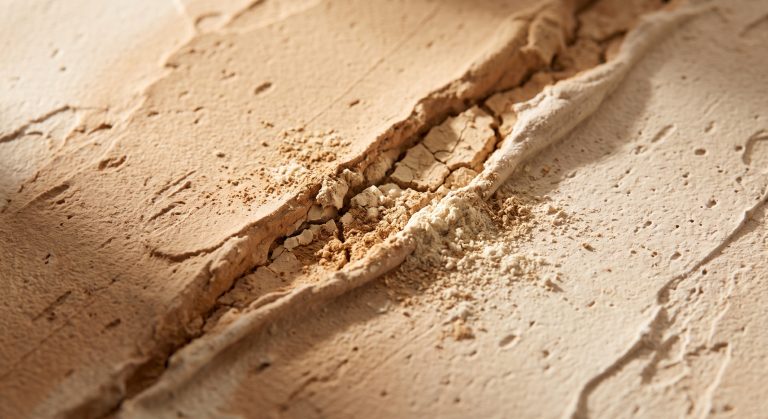
Run your hand near a textured artwork, close but not quite touching, and you can almost feel it before you do: the chalky drag of plaster, the faint grit of sand, the cool edge of a hairline crack. That pull toward touch is the whole point. Textured wall art invites you to come closer, and to look again as the light changes.
In short, textured wall art has a physical surface you could feel with your fingertips: real relief that catches shadow, so its appearance shifts as light moves across it. This guide explains how it’s made, what separates a convincing surface from a merely busy one, how light changes it, and how it differs from prints that show the look of texture. For the wider abstract art context, see our pillar guide to what abstract art is.
What Is Textured Wall Art?
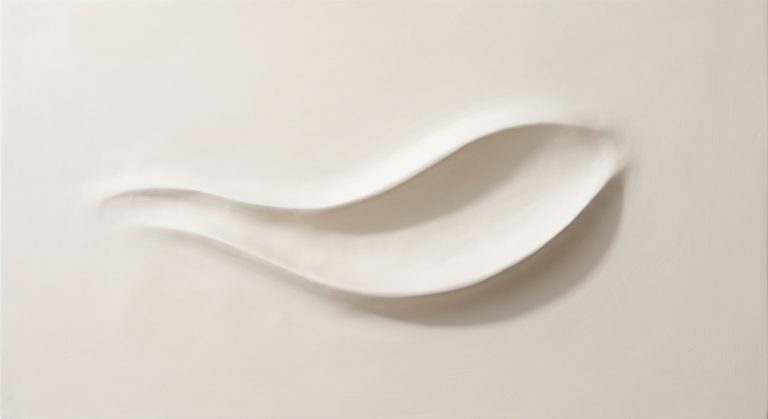
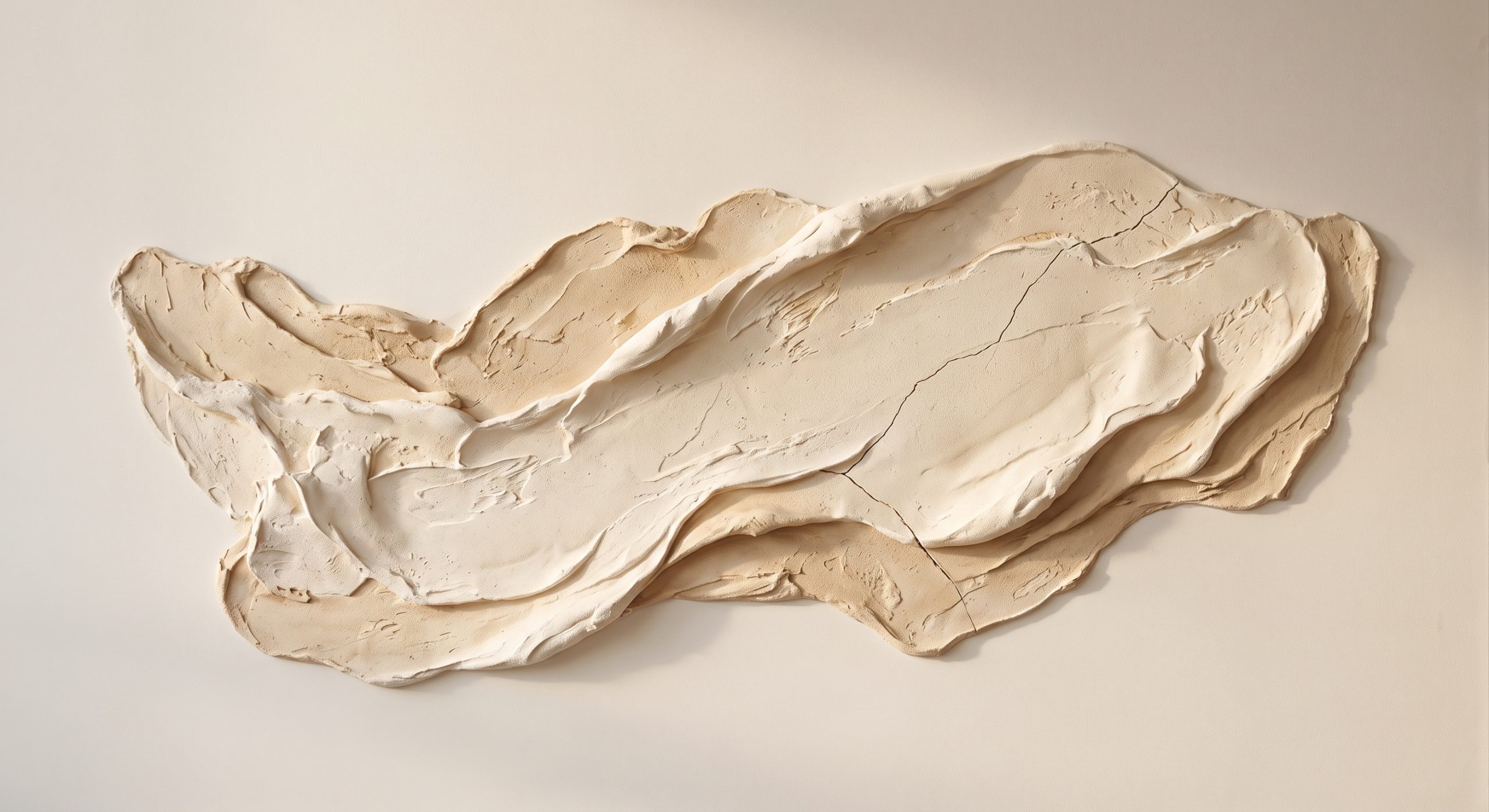
Textured wall art is artwork in which the physical surface, not just the colour or the image, is part of the composition. Instead of a flat plane, the surface is built up, carved back, layered or otherwise given genuine three-dimensional relief.
It sits within the broader category of textured abstract art, which focuses specifically on abstract composition. This guide takes a step back to look at the material and technique side more broadly, across abstract, sculptural and relief work alike.
How Textured Art Is Made
Different materials create very different surfaces, and each has its own character.
- Plaster and lime-based mediums for a matte, stone-like relief with a soft, chalky finish. See plaster art for more.
- Modelling paste and texture gels for controlled, repeatable ridges and marks
- Sand, grit and mineral powders mixed into a medium for a granular, sedimentary feel
- Carving, scraping and sanding to reveal layers beneath the surface
- Cracking, which can occur naturally as thick layers dry, or be introduced deliberately
What Makes Texture Convincing
The best textured work suggests an actual physical process, such as pressure, fracture, erosion or sedimentation, rather than a pattern laid on top. A crack that follows the logic of an underlying gesture reads as real. A crack stamped evenly across a flat surface reads as decoration.
Restraint matters just as much. A single area of raised or cracked surface, surrounded by broad calm space, almost always reads as more sophisticated than texture spread evenly from edge to edge. The contrast between quiet and active areas is what gives texture its impact, a principle explored further in negative space in abstract art.
Textured Wall Art and Light
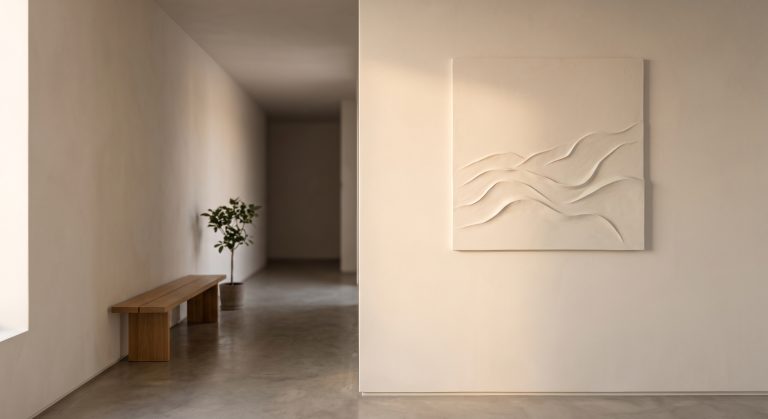
Texture depends on light more than almost any other quality in art. Light from the side, raking low across the surface, creates the small shadows that make relief visible. Flat, direct light from the front flattens the same piece and can make it look far less dramatic than it is.
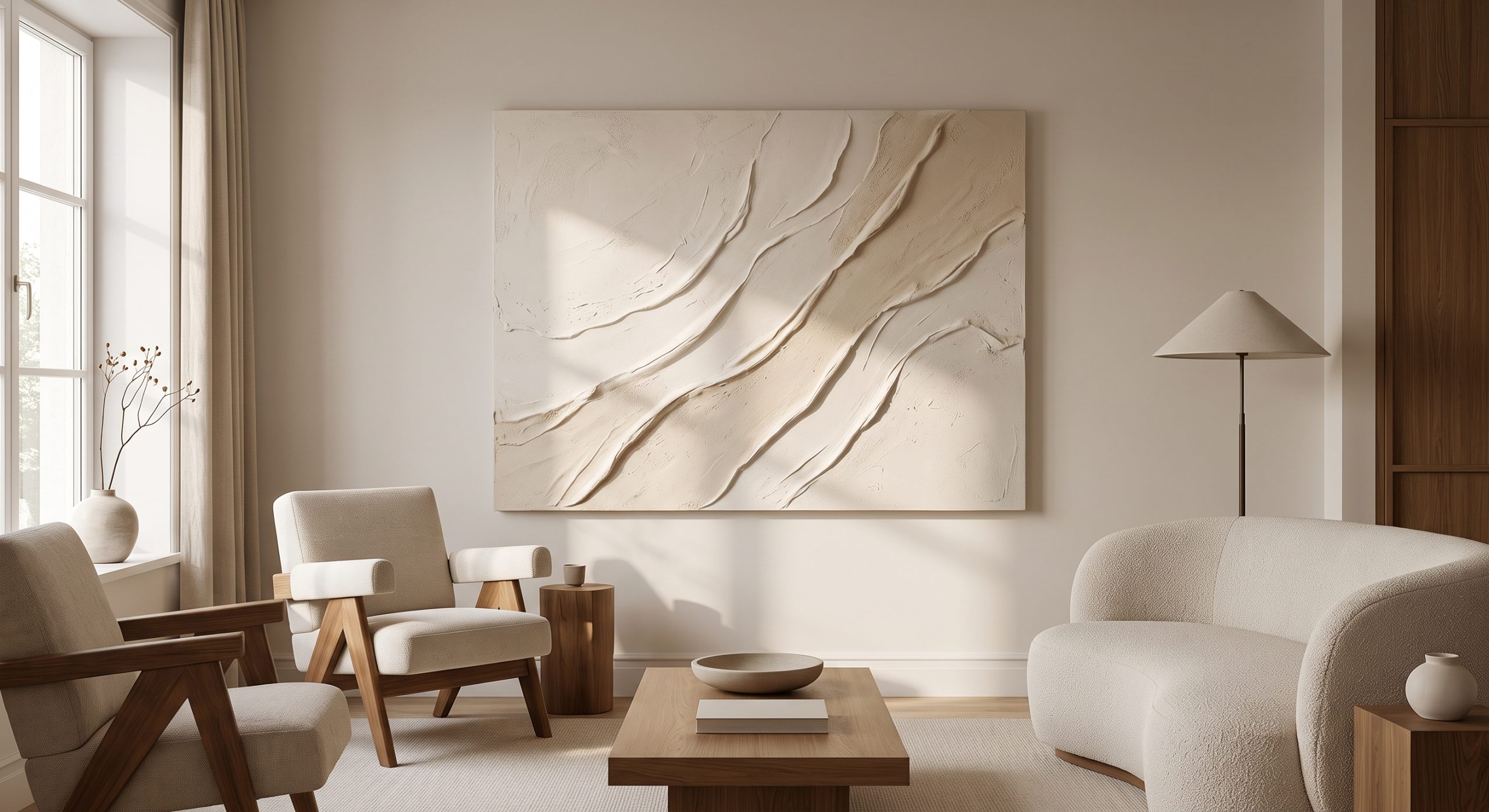
If you can choose where a textured piece hangs, a wall that receives some side light, from a window or a nearby lamp, will do far more justice to the surface than one lit only from straight ahead. After dark, an adjustable picture light angled across the surface can recreate that effect. Our picture light sizing guide explains how to choose and angle one.
Textured Art vs the Appearance of Texture
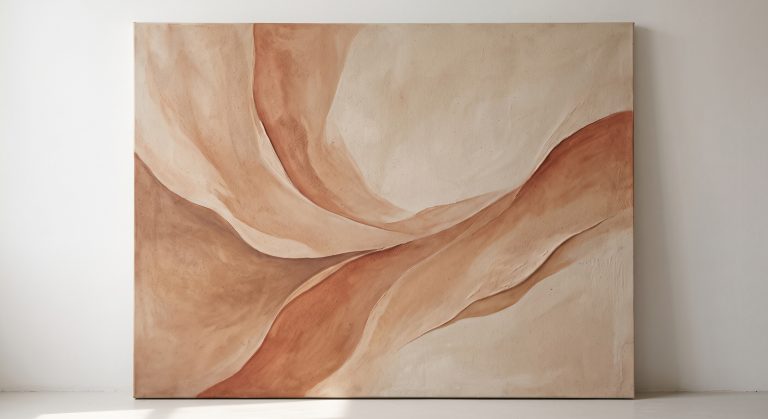
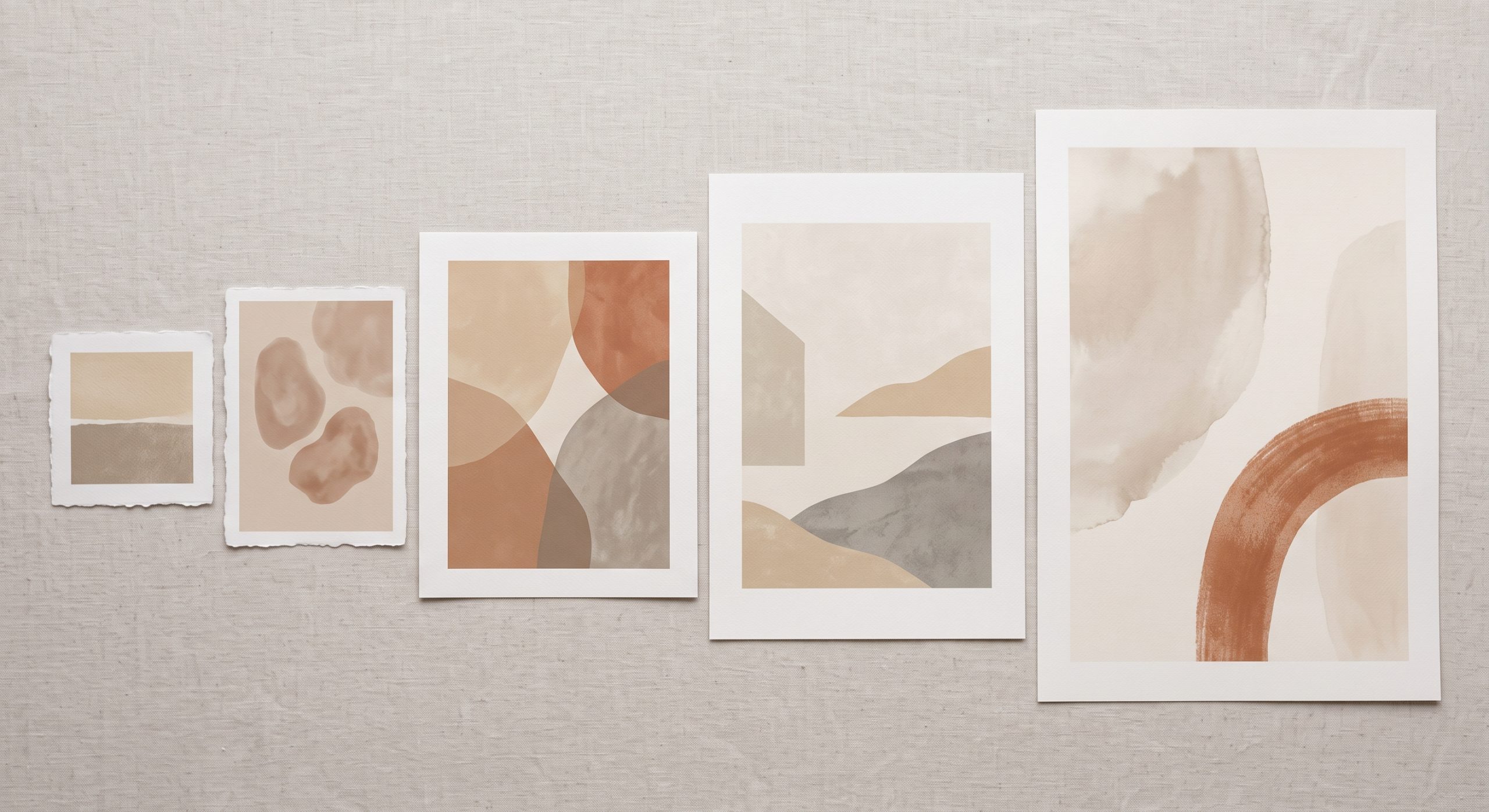
This distinction matters more than it might seem. An original piece made with plaster or texture mediums has real physical relief. A printed reproduction can capture the appearance of that texture in a photograph, but the print itself is flat: light will not create real shadows across it the way it does on the original. Neither is better in every case, but they are different products, and it is worth knowing which one you are buying.
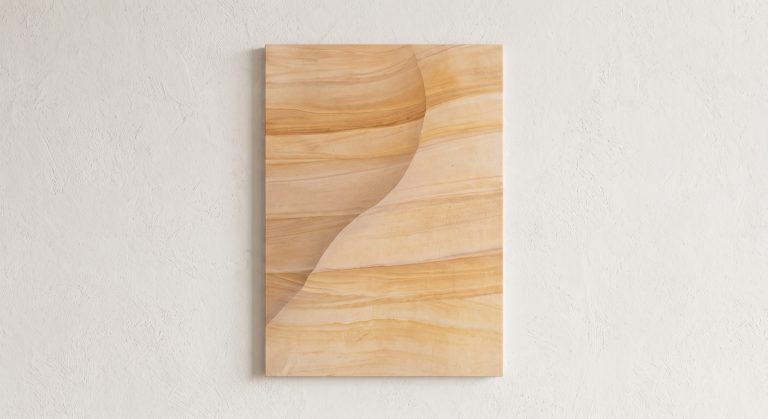
A well-made print brings its own kind of depth into a room. The pieces in our own neutral abstract printable wall art collection, such as Deep Earth Relief, show the look of carved sandstone through light and shadow in the image, but they are flat prints with no raised surface. Pair a print like that with real texture elsewhere in the room, such as linen, bouclé, raw stone or a hand-thrown vase, and the two work beautifully together.
Related Approaches
Textured wall art overlaps with several related ideas worth knowing:
- Bas relief, where a shallow raised form emerges from a flat background. See what is bas relief art.
- Plaster art, a specific material approach with its own long history. See plaster art.
- Sandstone and mineral-inspired work, which borrows the layered, eroded look of real stone. See sandstone wall art ideas.
Choosing Textured Wall Art
- Look for a surface that suggests process, not pattern.
- Favour one clear area of disruption over texture spread everywhere.
- Check where the piece will hang, and whether it will get any side light.
- Decide whether you want a textured original or a print of one, and set your price and expectations accordingly.
Final Thoughts
Textured wall art gives a room a real surface that the light keeps redrawing. The relief itself stays the same, but its shadows shift from breakfast to lamplight, so the piece rarely looks quite the same twice and always rewards a closer look. Choose it for a wall with good light, give it room to breathe, and it will keep revealing new detail as the light moves around the room. For the wider choosing process, see the complete guide to choosing artwork for your home.