Organic Abstract Art: What It Is and Why It Feels So Calm
Some abstract art feels tense, architectural, watchful. Other abstract art feels like a long exhale.
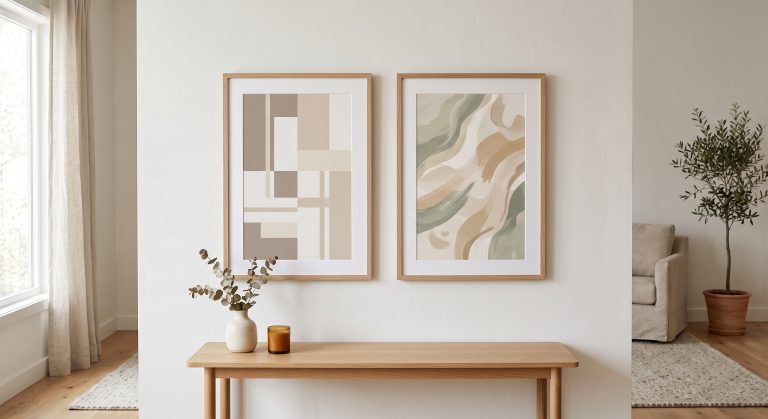
Organic abstract art almost always belongs to the second group. It takes its visual language from nature without depicting anything literally: smooth, pebble-like curves, ripples, eroded edges and cloud-like washes, usually in muted earthy tones. It feels calm because curves let the eye drift rather than race, the forms are familiar from landscapes and natural materials, the palettes tend to be quiet, and the compositions leave room to breathe. It is especially at home in bedrooms, reading corners and rooms full of hard lines that need softening.
Below, you will find how to recognise it, where it comes from, why it feels so restful, and how to choose and place it. If you are new to the subject, our pillar guide to what abstract art is is a helpful starting point.
What Is Organic Abstract Art?
Organic abstract art echoes the natural world without showing it. You will not see a recognisable tree, hill or shell. Instead you see forms that recall them: a smooth curve worn by water, a ripple, a softly eroded edge, a line that behaves like a horizon.
The forms might suggest:
- river stones and pebbles
- water, ripples and tide lines
- eroded cliffs and sand banks
- seed pods, shells and leaves
- clouds and atmosphere
- geological layers
It sits opposite geometric abstraction, which is built from straight lines and hard angles. We compare the two, and the other main styles, in the different types of abstract art.
How to Recognise It
- Curves rather than corners. Sharp angles are rare.
- Soft or irregular edges. Shapes may blur, feather or wobble slightly, the way a watercolour edge bleeds into damp paper.
- A sense of continuation. Forms often feel as if they could carry on beyond the frame.
- Muted, earthy palettes. Sand, clay, stone, sage, ivory and charcoal are common.
- Little or no obvious symmetry. The arrangement feels grown rather than measured.
A Short Note on Its History
Rounded, nature-derived abstraction has a long lineage. In the twentieth century, artists such as Jean Arp and Joan Miró worked with fluid, rounded forms, and this approach is often described as biomorphic abstraction, meaning shapes that suggest living organisms without depicting them. Sculptors including Barbara Hepworth and Henry Moore explored similar softly curved, natural-feeling forms in three dimensions.
Today the same sensibility appears in calm, contemporary work, often with a more restrained palette and closer attention to surface.
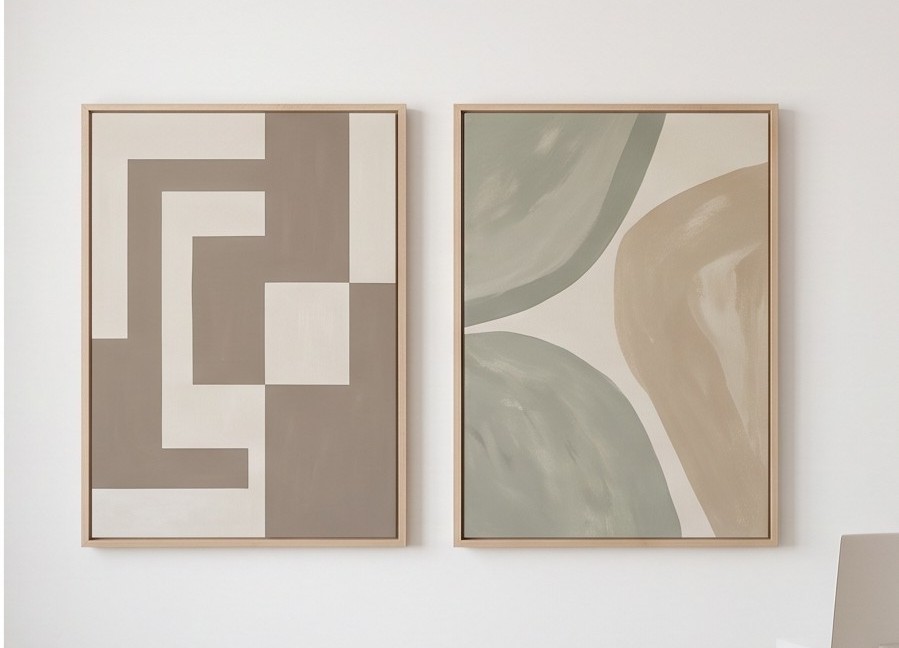
Why Organic Abstraction Feels Calm
There is no single explanation, but several things point the same way.
Curves slow the eye
Straight lines and hard angles tend to send the eye quickly along a path. Curves let it wander. Some psychology research has also suggested that people tend to prefer curved contours over sharp ones, which fits with how restful curved forms often feel.
The forms are familiar
Organic shapes echo things we already associate with landscapes and natural materials: the hollow of a shell, the line of a dune, the swell of a river stone. They rarely feel alien or confrontational.
The palette is usually gentle
Warm neutrals and muted earth tones lower the visual temperature of a room. See how colour changes the feeling of abstract art.
There is usually room to breathe
Organic compositions often leave generous open areas, which supports the sense of calm. This is explored in negative space in abstract art.
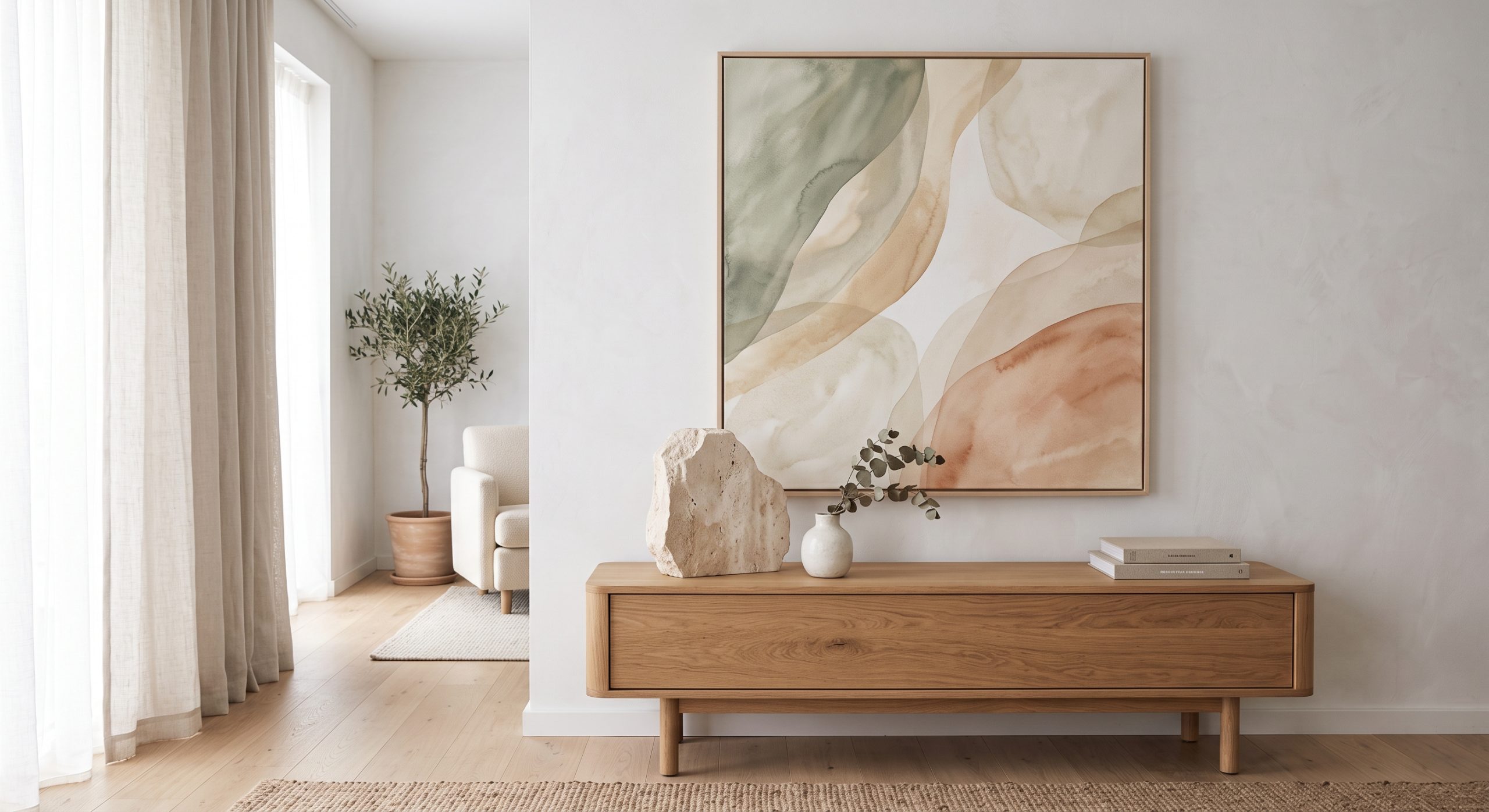
Organic Abstraction and Natural Materials
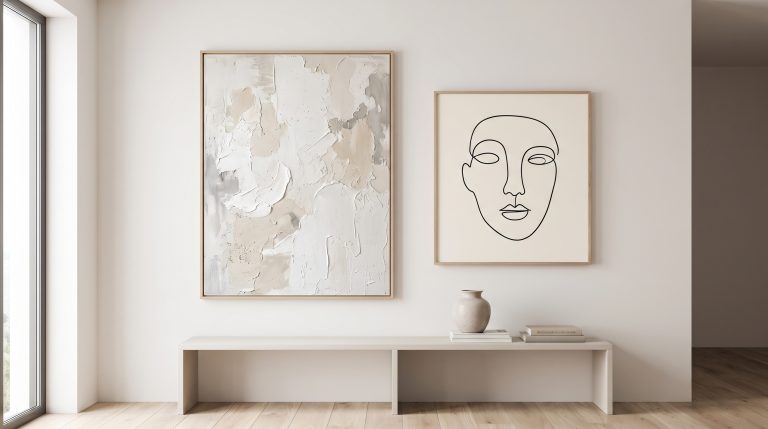
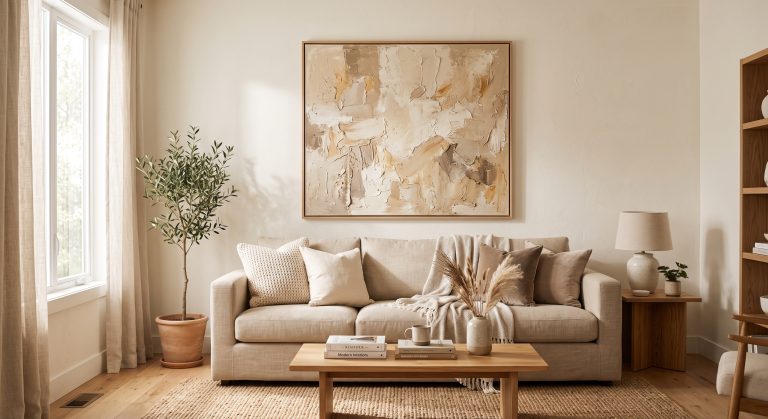
Organic forms sit especially well beside natural materials. Linen, raw wood, stone, unglazed ceramics, rattan and plaster share the same unhurried, tactile character, and a curved canvas beside a knotted oak bench or a chalky clay vase feels instantly at home.
That is a major reason organic abstraction is central to Japandi and organic modern interiors. The artwork and the room speak the same language, so nothing feels imposed.
Adding Texture to Organic Work
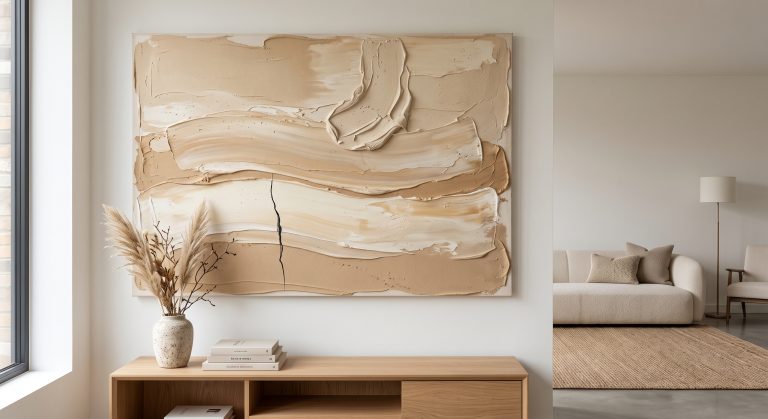
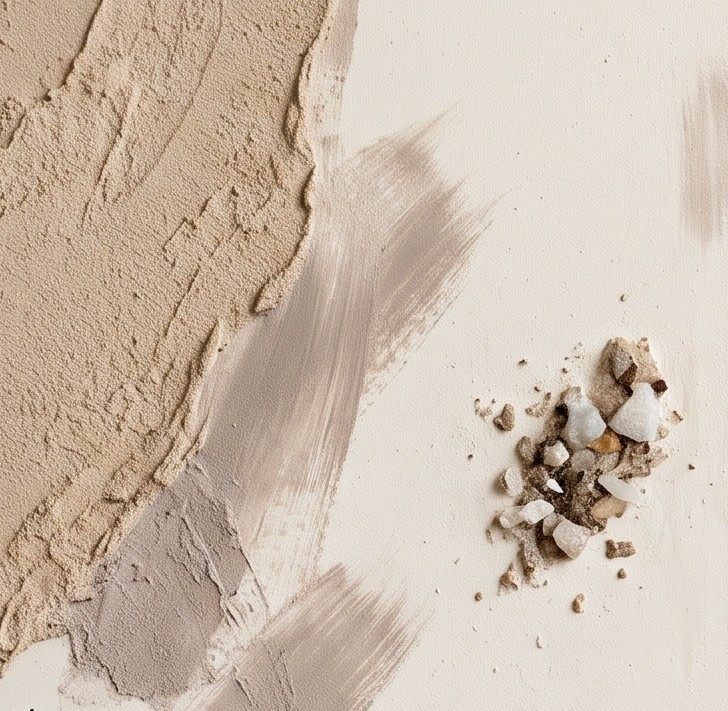
Organic shapes combined with tactile surface make a particularly strong pairing. A soft, pebble-like form built up in plaster, or a ripple pattern pressed into a mineral-toned surface, gives the eye something to explore while keeping the mood serene. On a print, that texture is suggested visually rather than physically raised. See textured abstract art for more.
Where Organic Abstract Art Works Best
- Bedrooms: to lower the energy of the room
- Bathrooms and spa-like spaces: where a soft, watery feel suits the setting
- Reading corners and quiet nooks: for a restful focal point
- Rooms full of hard lines: to soften glass, steel and sharp-edged furniture
- Home offices: when you want calm rather than stimulation
How to Choose Organic Abstract Art
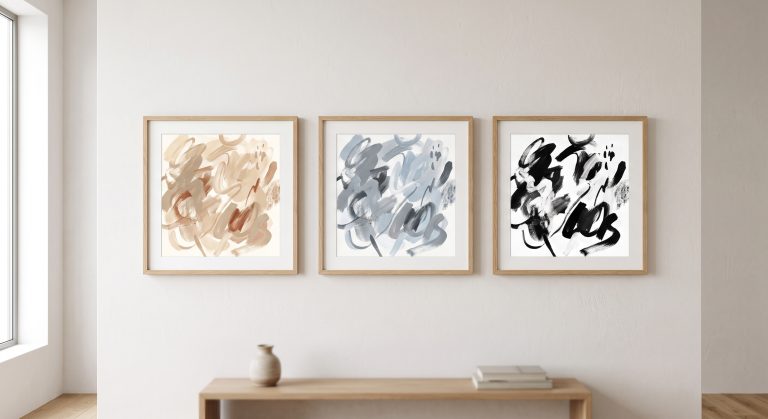
- Check the palette against your room. Warm sand suits timber and linen. Cooler stone tones suit grey-toned rooms.
- Look at the edges. Soft, slightly irregular edges feel more natural than perfectly smooth vector-like ones.
- Look for variation. A composition made of several similar blobs can feel repetitive. One dominant form with gentler supporting ones tends to work better.
- Consider balance. Organic compositions are usually asymmetrical, so see understanding balance in abstract art.
- Think about scale. Large, softly curved pieces can look wonderful above a sofa or bed.
For a full walkthrough, see how to choose abstract art for your home. And for warm neutral palettes in particular, read beige abstract art for calm contemporary interiors.
A Caution: Calm Is Not the Same as Bland
Because organic abstraction is gentle, it can drift into blandness if everything is equally soft. The pieces that hold interest tend to have a point of contrast: a slightly darker curve, a fine textured edge, a thin line that crosses the form. A little tension is what keeps calm from turning into emptiness.
Final Thoughts
Organic abstract art does not ask for much. It offers curved forms, a gentle palette and a little space, and in return it makes a room feel softer.
If you want a piece that will still feel restful years from now, this is one of the safest and most rewarding directions to explore.