Abstract Art vs Contemporary Art: What’s the Difference?
Walk through a gallery, a design magazine or a homeware website and you will see “abstract” and “contemporary” used as though they mean the same thing.
They do overlap, constantly. But they are answering two completely different questions, and knowing which is which makes it far easier to describe what you want, search for it and understand what you are looking at.
The short version: abstract describes how a piece of art looks. Contemporary describes when it was made.
If the term “abstract” is still new to you, our pillar guide to what abstract art is is a good place to start. This article focuses on how it differs from contemporary art.
What “Abstract” Means
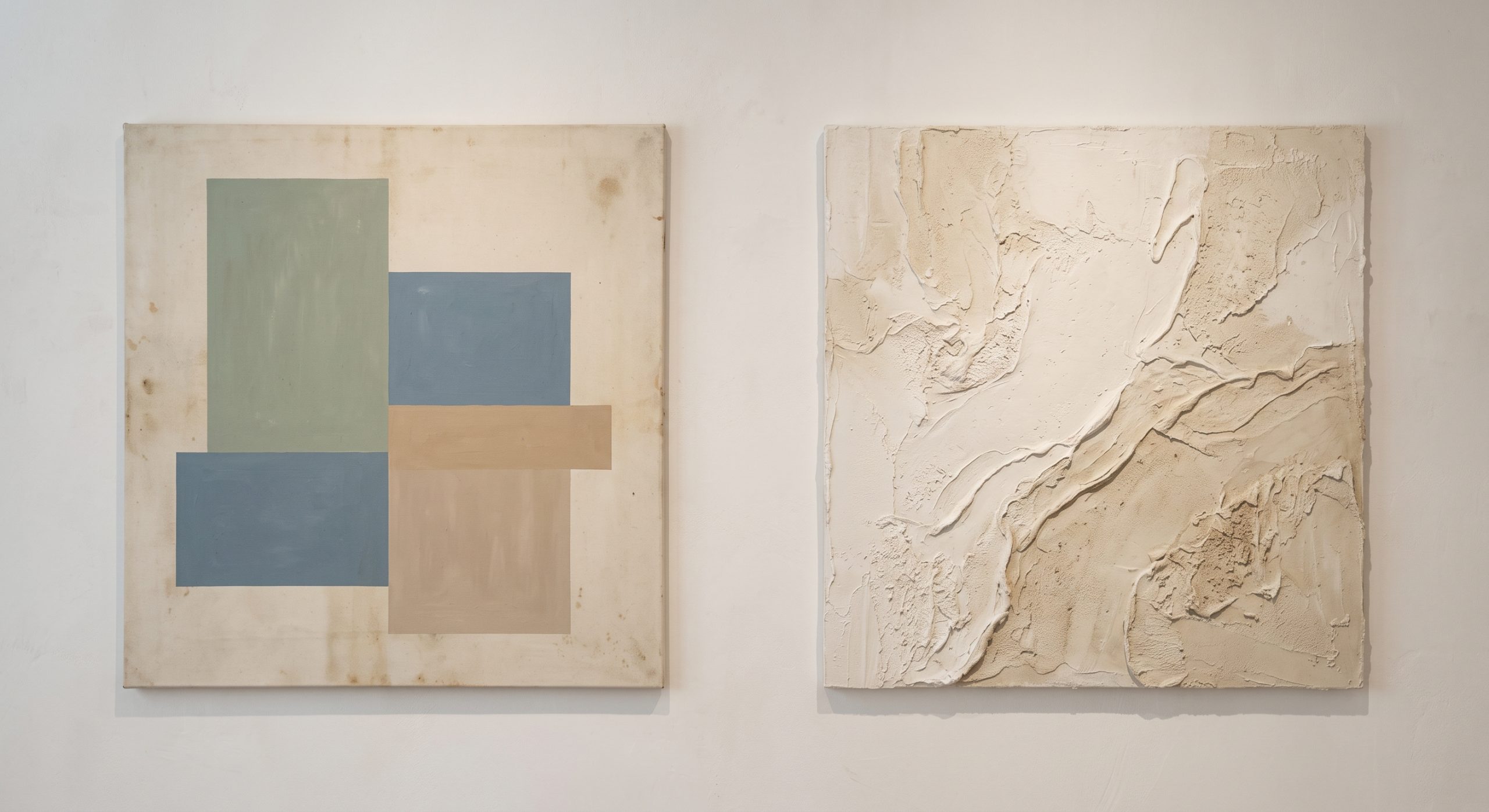
Abstract art moves away from directly representing the visible world. Instead of a recognisable landscape, portrait or still life, it works through colour, line, shape, texture and composition.
“Abstract” is a style, or more accurately a family of styles. It says something about the appearance of the work and how it communicates, but nothing about the date.
Abstract art has been around for over a century. Wassily Kandinsky is often credited as one of the pioneers of abstract painting in the early 1910s, and Hilma af Klint produced abstract work from around 1906, though it was not widely shown until much later. Since then, abstraction has been made in every decade.
What “Contemporary” Means
Contemporary art is a time label, not a style.
Definitions vary slightly between institutions. In general, contemporary art means art of the present or recent past, usually counted from around the 1970s onwards. Some definitions are stricter and mean only work by living artists.
Because it is a time period, contemporary art can look like anything. It can be:
- abstract
- figurative or realistic
- photographic
- sculptural
- installation or video
- conceptual, where the idea matters more than the object
Saying a work is contemporary tells you roughly when it was made. It tells you nothing about how it looks.
Where They Overlap
Think of two separate questions you can ask about any artwork.
- How does it look? Abstract or representational?
- When was it made? Early twentieth century, mid-century, or recently?
Combine the answers and you get four possibilities:
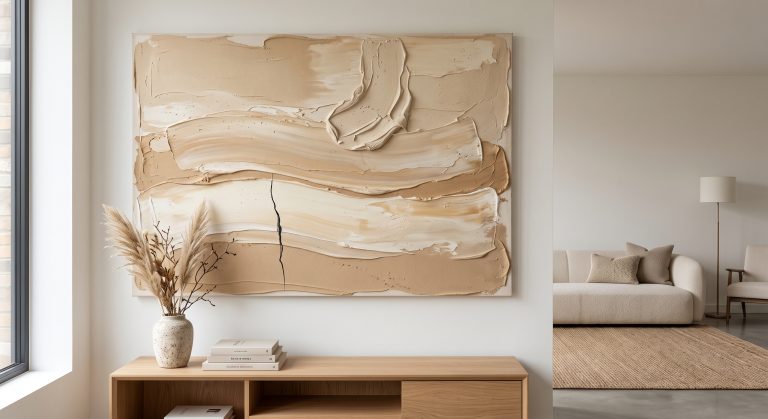
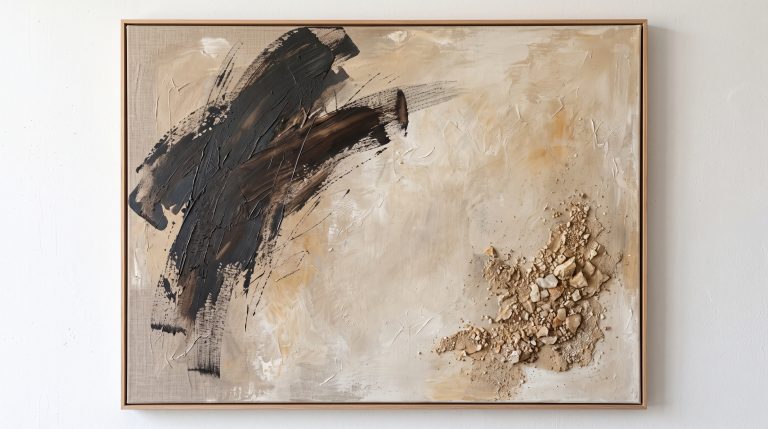
- Abstract and contemporary: a non-representational painting made recently. This is what most people picture when they search for “contemporary abstract art”.
- Abstract but not contemporary: a geometric painting from the 1920s, for example.
- Contemporary but not abstract: a realistic portrait or a documentary photograph made this year.
- Neither: a traditional landscape from the nineteenth century.
Why the Two Terms Get Mixed Up
There are a few reasons the confusion is so common.
Abstraction dominates modern interiors
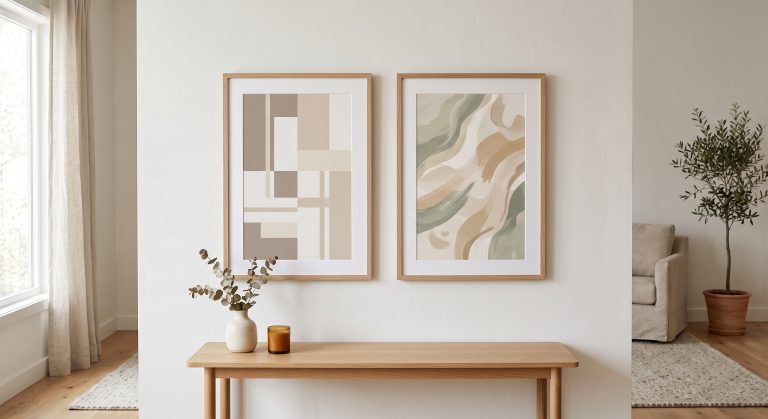
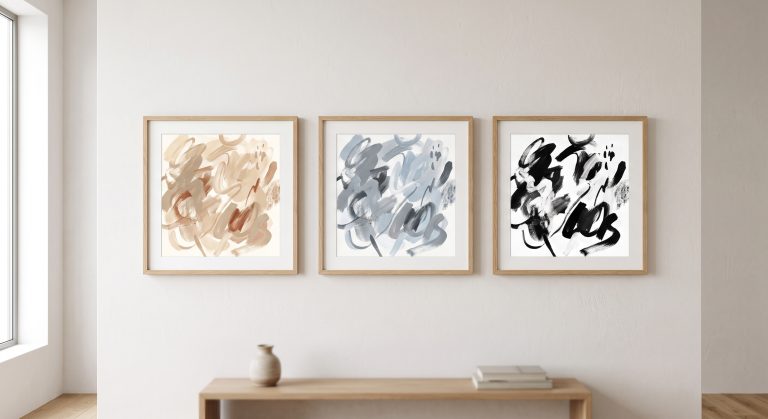
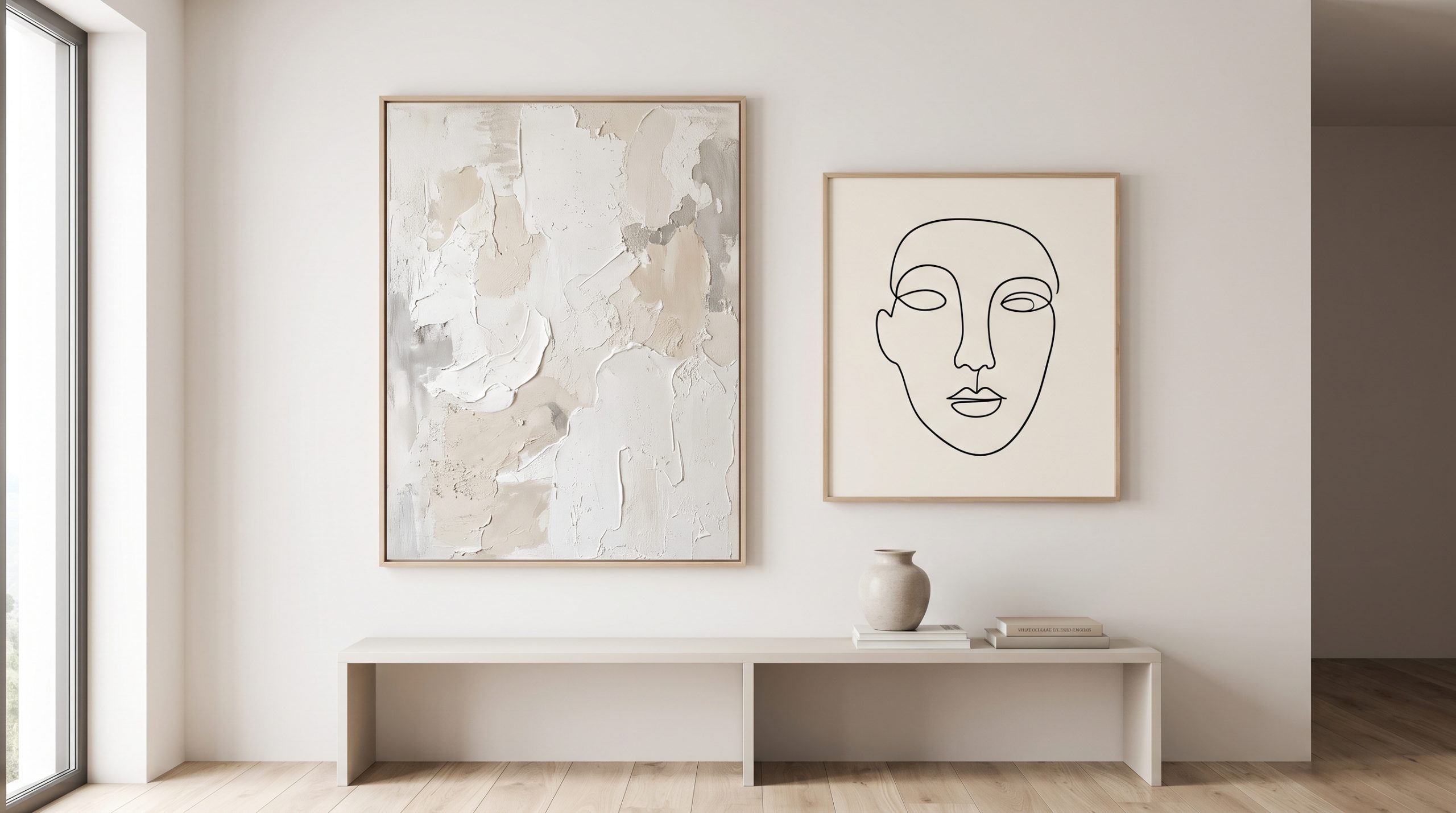
In homes, restaurants and hotels, the art people call “contemporary” is very often abstract, simply because abstraction suits calm, modern rooms. So the words drift together in everyday language.
“Contemporary” also describes a design style
In interior design, “contemporary” often means a current, clean-lined look. That is a decor term rather than an art-history term, and it does not mean the artwork must be abstract.
The art-history timeline overlaps
Abstraction emerged in the early twentieth century, and it is still being made now. So the same style label spans the whole modern and contemporary period.
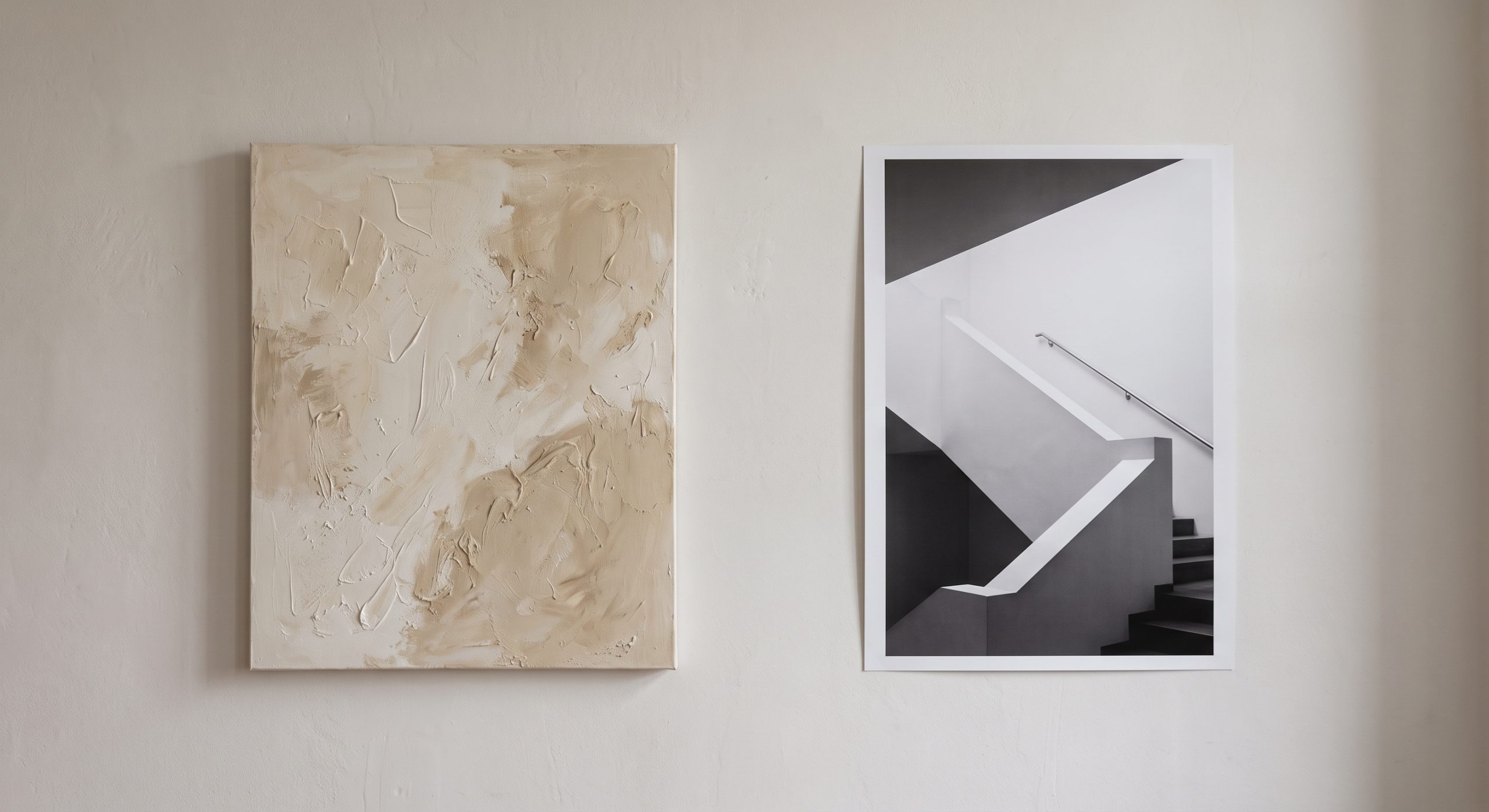
What About “Modern Art”?
“Modern art” is a third term people often mix in. In art history it usually refers to art made from roughly the 1860s to the 1970s, covering movements from Impressionism onwards. Abstract art is a major strand within it, but modern art also includes plenty of figurative work.
Like “contemporary”, it is a period label, not a style. In shops and online listings, however, “modern” is often used loosely to mean “not traditional”.
Why the Difference Matters When You’re Choosing Art
Being precise helps you find what you actually want.
- If you search “contemporary wall art”, you may see photography, figurative pieces and illustration as well as abstract work.
- If you search “abstract wall art”, you will see non-representational work, but it may range widely in age and quality.
- If you want calm, current, restrained work, combining terms such as “neutral abstract” or “minimalist abstract” is more useful than either label alone.
Once you know which type you want, our guide to the different types of abstract art helps you narrow further, and how colour changes the feeling of abstract art helps you choose a palette.
A Simple Way to Remember It
Abstract is a style. Contemporary is a timestamp.
A piece can carry both labels, one of them, or neither. Once you separate “how it looks” from “when it was made”, the terms stop tripping you up.
Final Thoughts
You do not need to be an art historian to use these words correctly. You only need to know what each one is describing.
When you next see “contemporary abstract art”, you will know it means a specific overlap: non-representational work from the present day. And when you see either term alone, you will know what it does and does not promise.