How Many Pieces Should Be in a Gallery Wall?
Two is a pair. Three is a story. Nine starts to become a wall in its own right. The number of pieces in a gallery wall changes more than the arrangement; it changes what the whole thing feels like to live with.
There is no universal right answer, but there is a reliable way to arrive at one for your own wall. This guide walks through it.
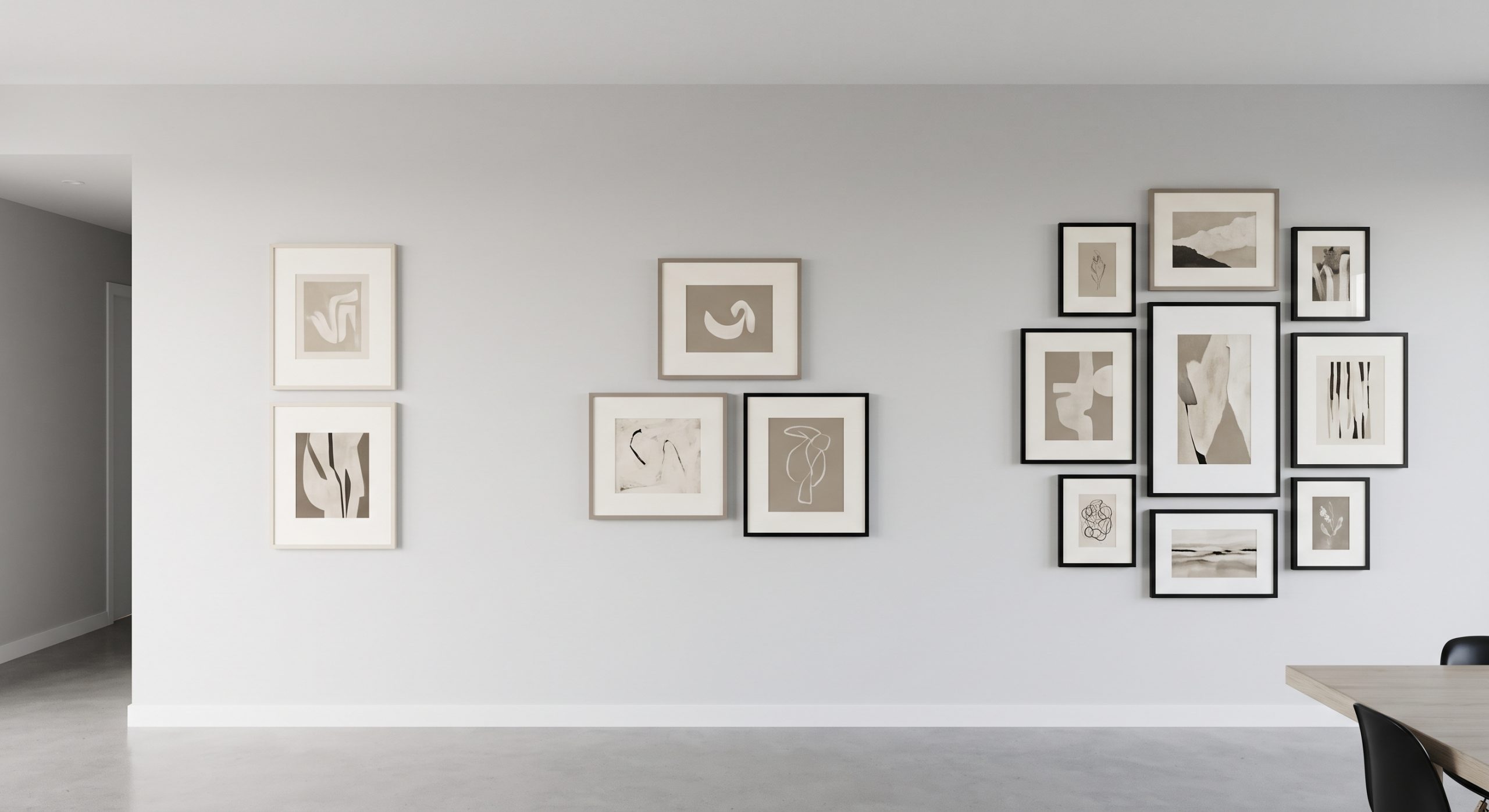
What Piece Count Actually Changes
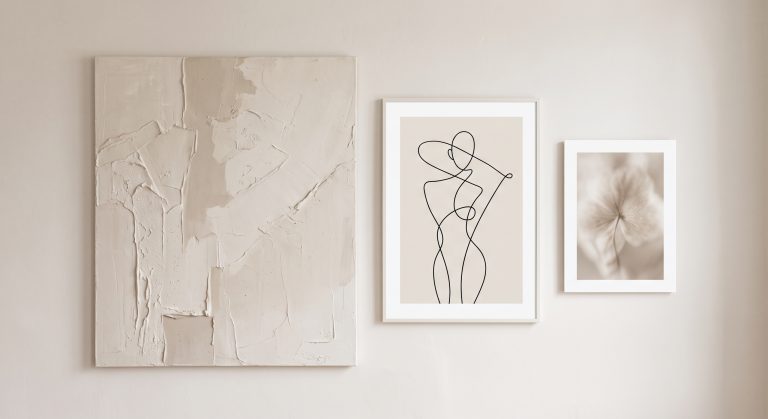
- Two or three pieces feel calm, deliberate and easy to balance. Each piece carries real weight, so quality matters more than quantity.
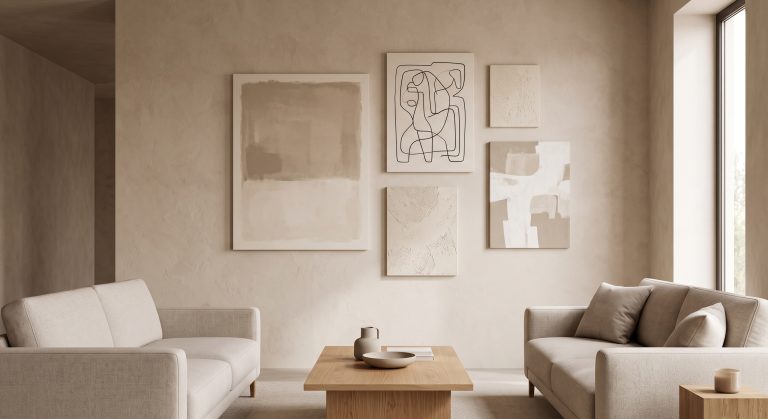
- Four to six pieces feel like a considered collection. There is room for an anchor and supporting pieces, and enough variety to stay interesting.
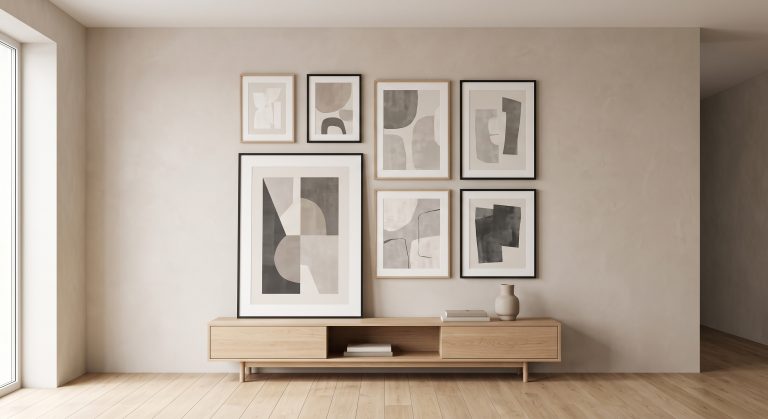
- Seven or more pieces start to feel like a dedicated gallery wall rather than a few hung pictures. They can carry real personality, but they need more discipline in spacing and palette to avoid feeling chaotic.
Let the Wall Decide the Range
Before choosing a number, measure the space. As a rough starting point, a gallery wall (including the gaps) works well when it spans roughly 60 to 75% of the available wall width, or matches the width of the furniture beneath it, following the same principle used for single artworks in how to choose abstract art for your home.
Once you know the total area to fill, the piece count follows from how large you want each piece to read, not the other way around.
Small Clusters: Two or Three Pieces
A pair or trio suits narrower walls, hallways, or spaces where you want art to support the room rather than dominate it.
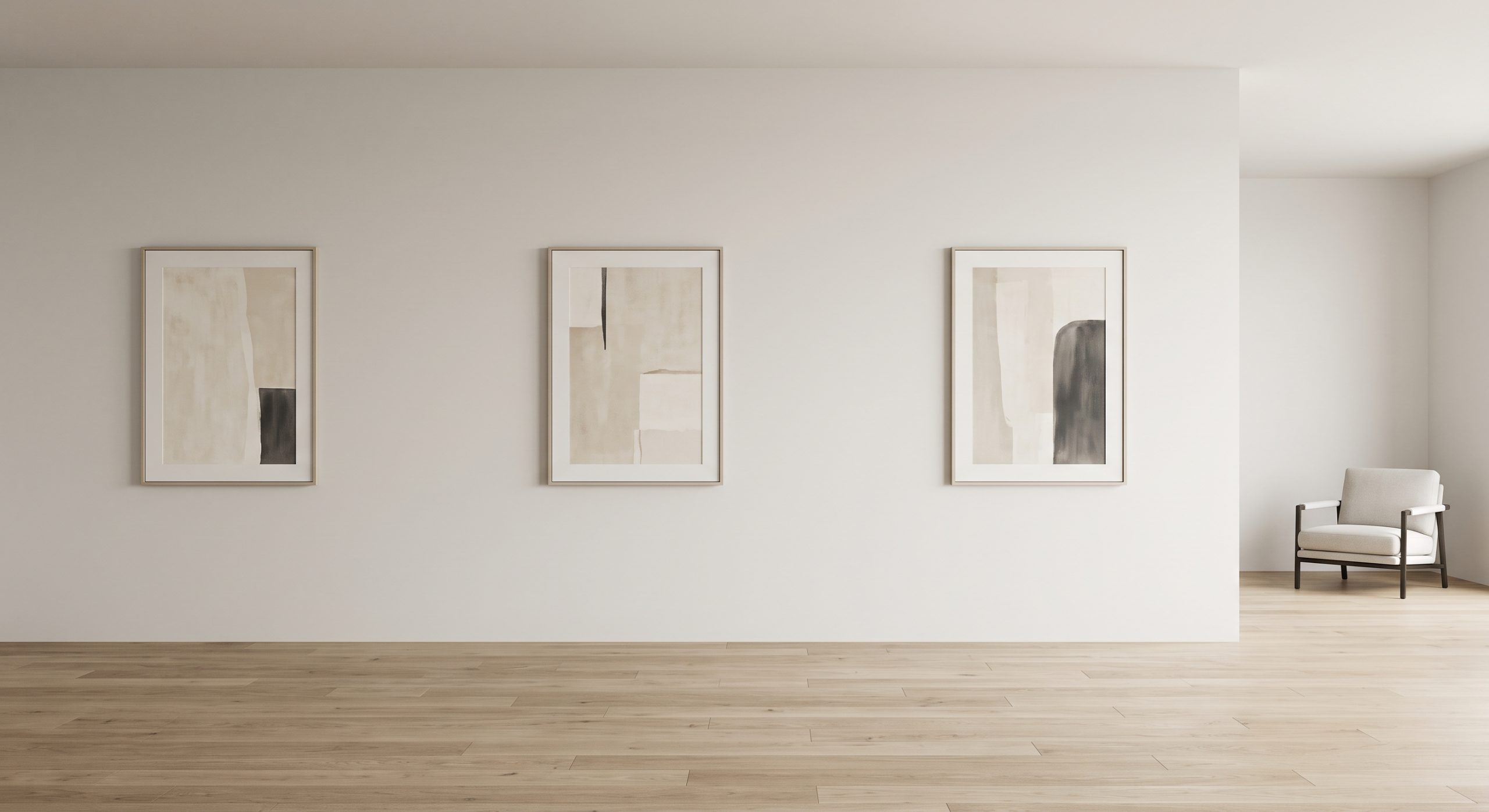
With so few pieces, each one is doing a lot of visual work, so quality and cohesion matter more than in a larger group. Leave generous space between pieces so each one is read individually rather than as a set.
Mid-Sized Groups: Four to Six Pieces
This is the most common range for a considered gallery wall above a sofa, bed or console. It is large enough to include a genuine anchor piece and two or three supporting works, but still manageable to plan and hang without a strict grid.
Larger Clusters: Seven or More Pieces
Bigger groups work well on large or awkward walls, staircases, and hallways where the wall itself is the main feature of the space.
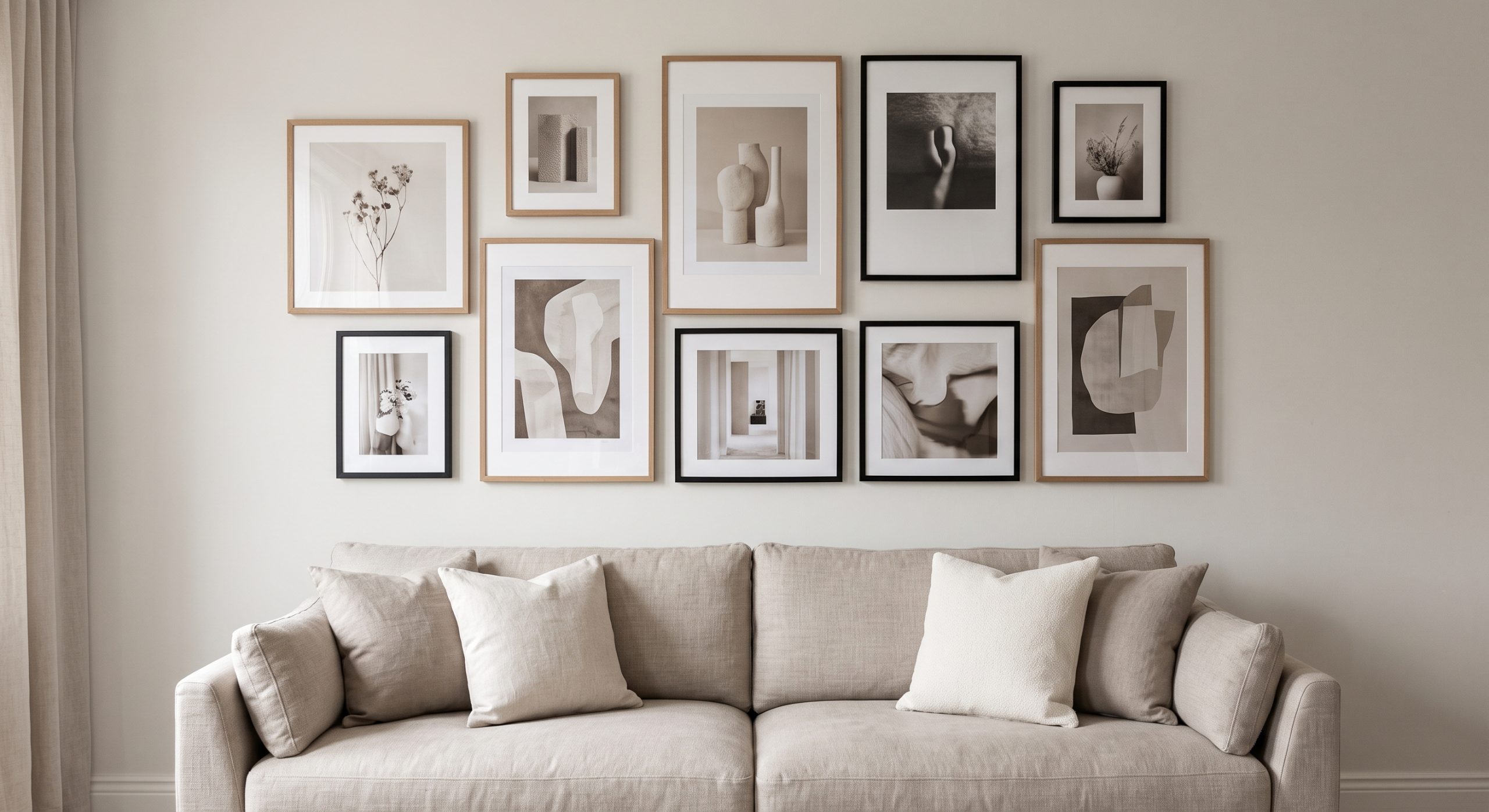
They need more discipline, not less: consistent spacing, a strongly unified palette (see gallery wall colour schemes that work), and usually a grid or near-grid structure to keep them from tipping into clutter.
Odd Numbers vs Even Numbers
Odd numbers of pieces (three, five, seven) tend to read as more dynamic and are easier to arrange asymmetrically. Even numbers suit a formal grid particularly well, since they divide neatly into rows and columns. Neither is a rule, but it is a useful default when you are stuck between two options.
A Simple Way to Decide
- Measure the wall or furniture width you are working with.
- Decide the mood: calm and spare, considered collection, or full statement wall.
- Choose a rough range: two to three, four to six, or seven-plus.
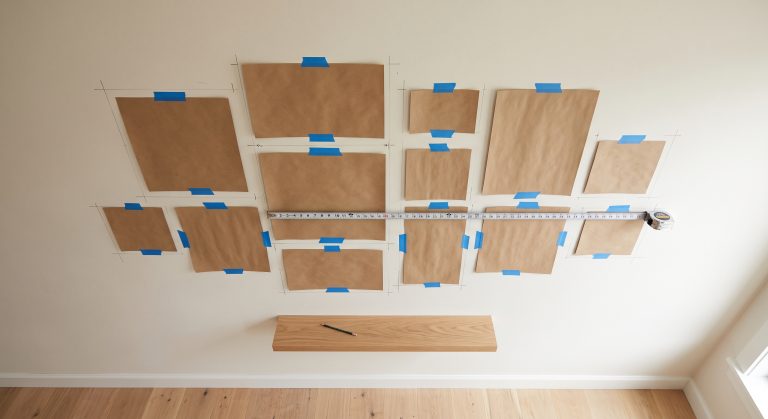
- Lay out paper templates at that count and adjust before committing. See how to plan a gallery wall layout.
- Add or remove one piece at a time rather than guessing the final number outright.
Common Mistakes
- Choosing a number before measuring the wall
- Cramming too many pieces into a small space
- Using too few pieces on a very large wall, so the group looks lost
- Treating piece count as fixed once chosen, rather than adjusting during layout
Final Thoughts
There is no single correct number of pieces for a gallery wall. There is a number that suits your wall, your room and the mood you want, and it is usually easier to find by testing with paper templates than by deciding on paper in advance.