Gallery Wall Ideas for a Modern Home
A single artwork makes a statement. A gallery wall makes an argument: that these particular pieces, together, tell you something about the person who lives here.
Done well, it looks effortless, as if it came together slowly over years. Done without a plan, it usually looks like several separate decisions that never agreed with each other. What makes a modern gallery wall work is a small set of choices made before a single nail goes in: a disciplined palette, consistent spacing, one clear anchor piece and restraint in the frames.
This guide gathers gallery wall ideas for a modern home: the choices that matter, the three main layout styles, and how to put a wall together with confidence. For choosing individual pieces first, see how to choose abstract art for your home.
What Makes a Gallery Wall Feel “Modern”
Modern gallery walls tend to share a few qualities, whatever their layout.
- A disciplined palette. Even a mix of abstract, photography and line art holds together when the colours agree. See how colour changes the feeling of abstract art.
- Consistent spacing. Even gaps read as intentional; uneven gaps read as accidental.
- A clear anchor. One larger or bolder piece for the eye to find first.
- Restraint in frames. One or two frame finishes, not five different ones.
- Breathing room. The wall around the group matters as much as the group itself.
Three Layout Styles
The grid
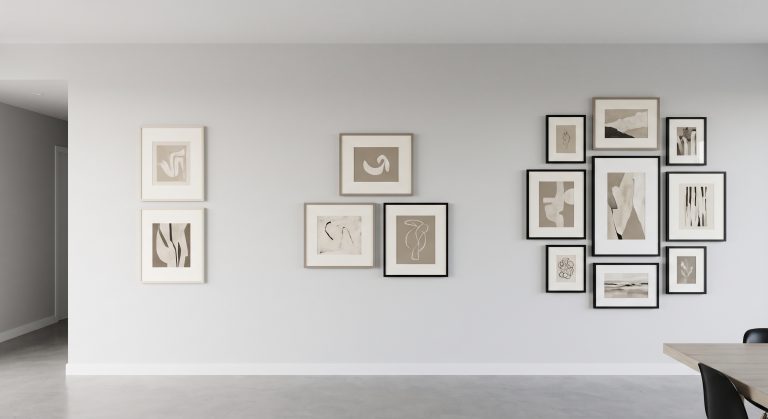
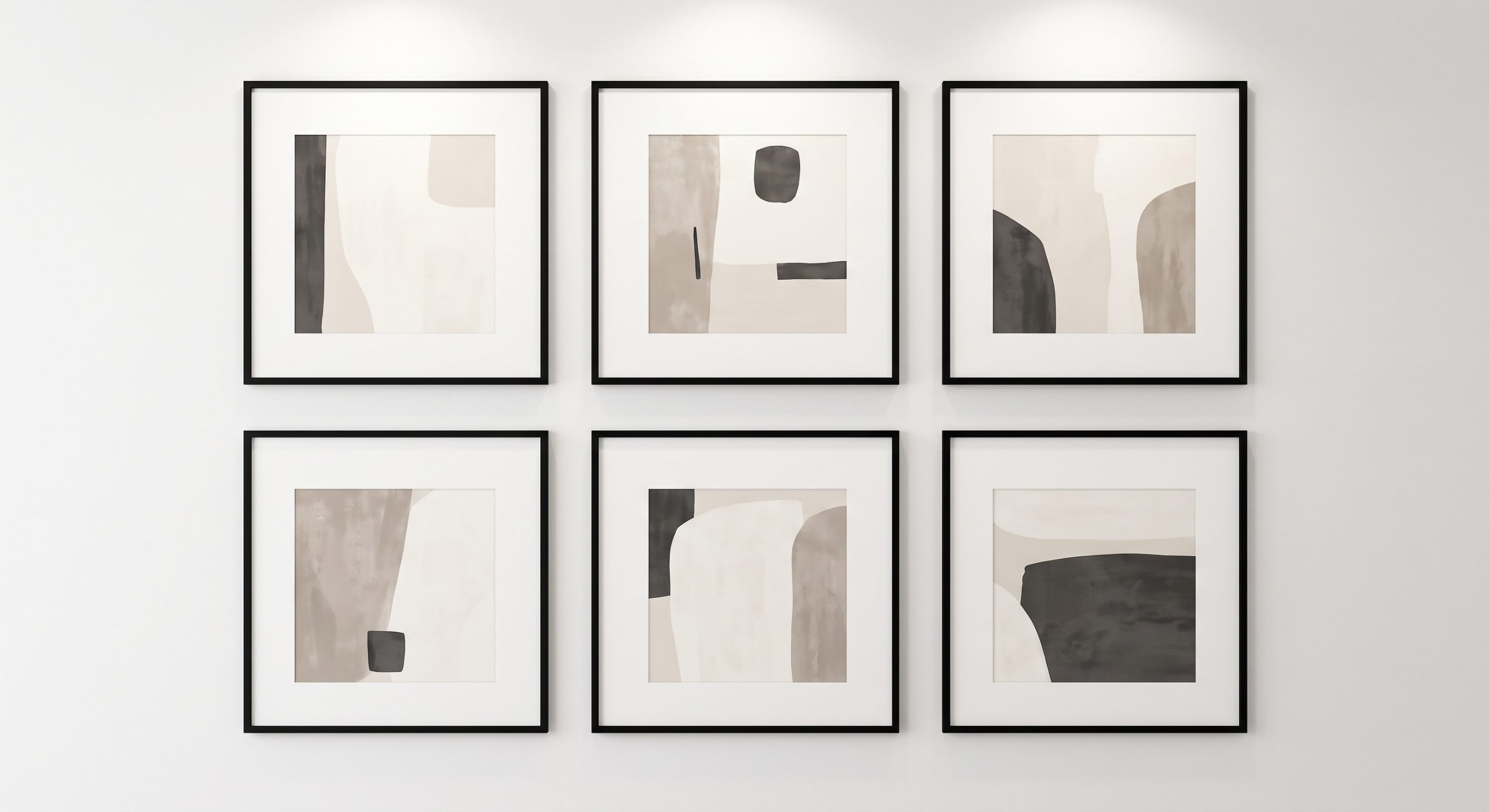
Identical or closely matched frame sizes, aligned edges, equal spacing. This is the most architectural option, crisp and graphic, and it suits clean, contemporary rooms. It is unforgiving of small errors, so precise measuring matters more here than in any other layout.
The salon hang
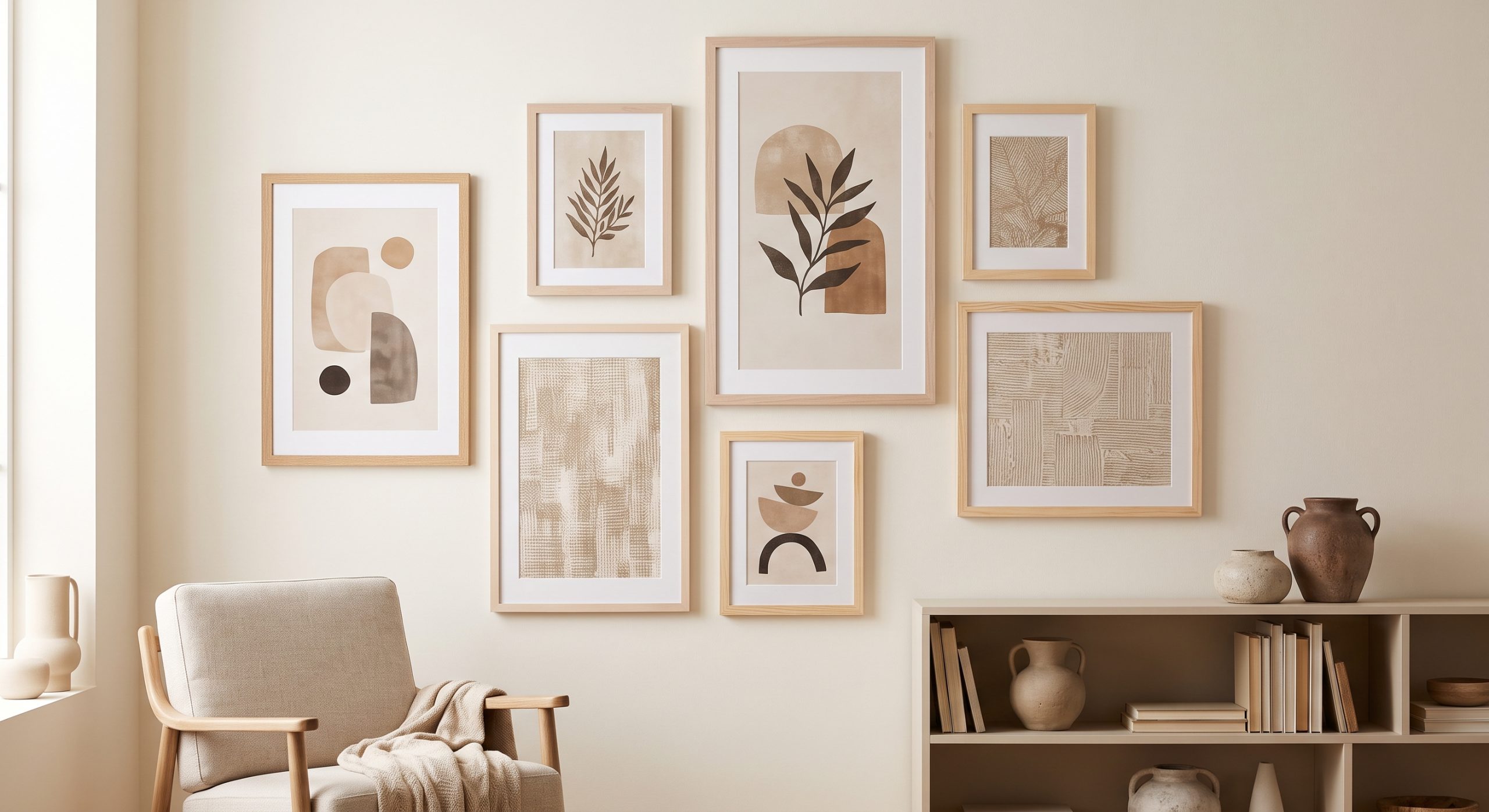
Mixed sizes, mixed frames, a denser and more layered arrangement, with pieces hung close together so the wall reads almost as one rich surface. This suits rooms that already feel collected and personal, and it hides small imperfections more easily than a grid.
The curated cluster
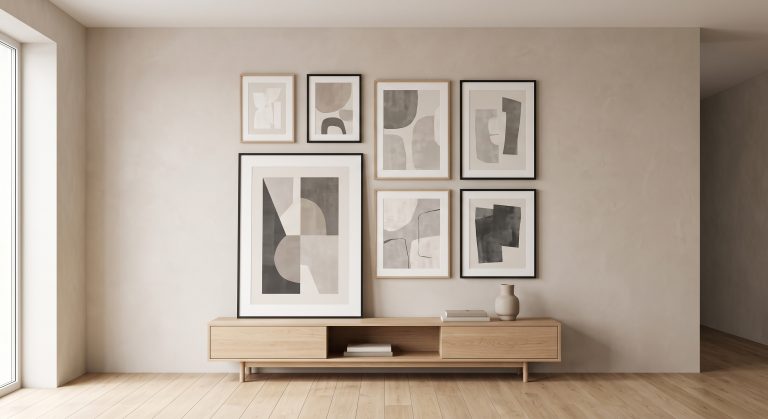
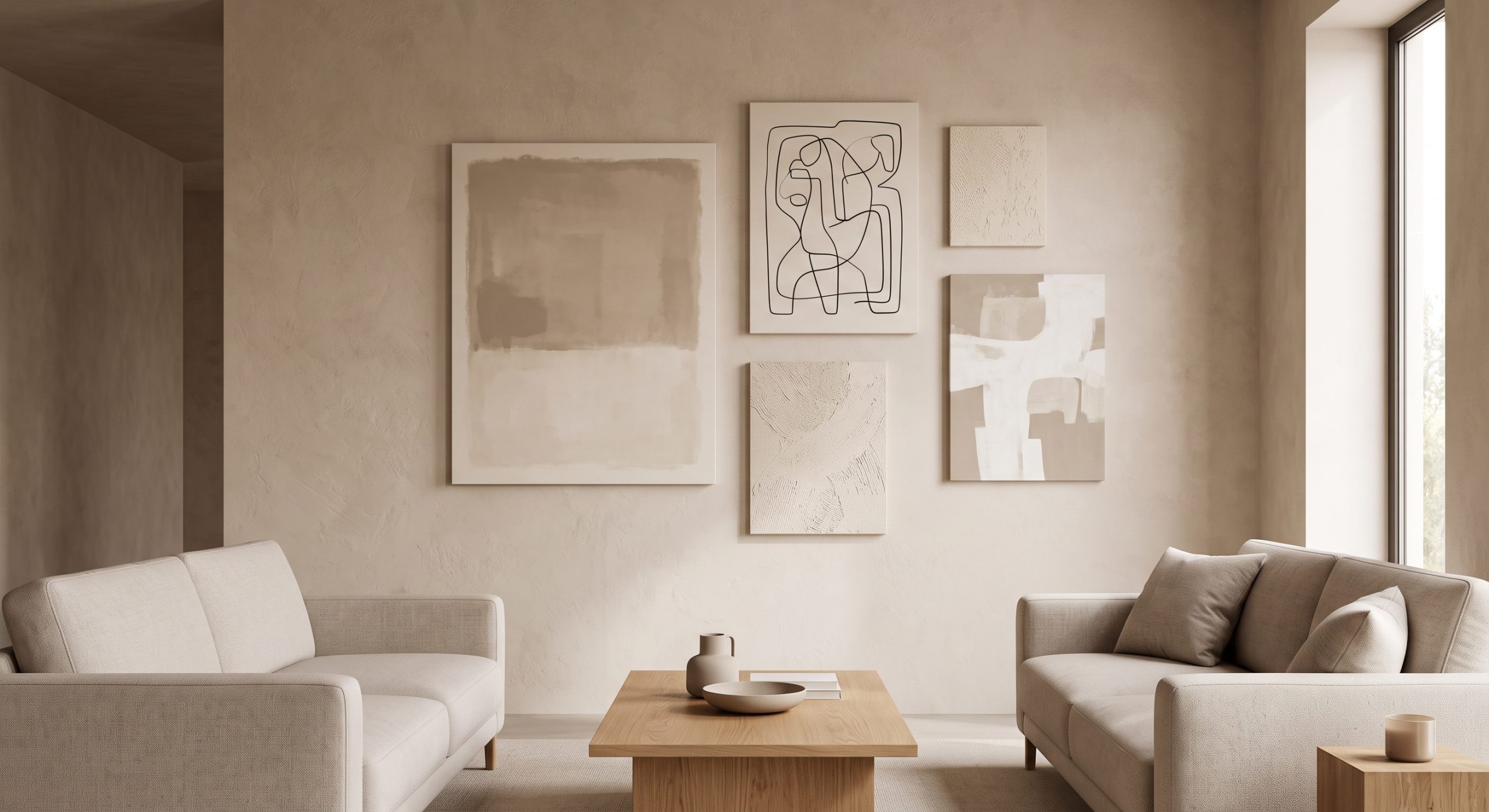
Somewhere between the two: three to six pieces, varied in size but carefully aligned along one edge (often the top or the centre line), with generous spacing. This is the most common modern approach, because it keeps the calm of a grid while allowing more personality.
Choosing What Goes On It
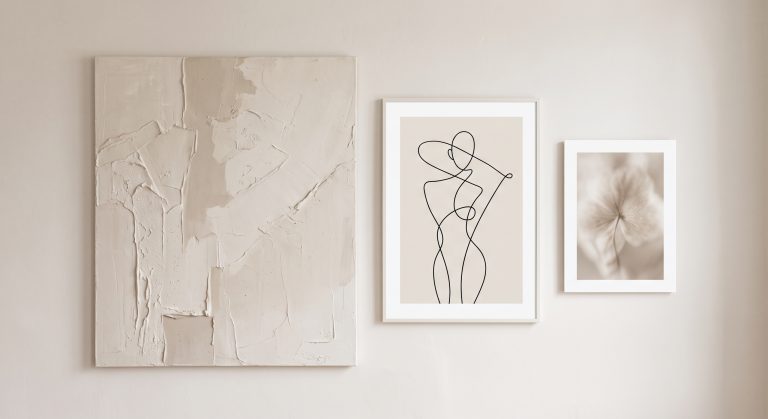
A strong modern gallery wall usually mixes formats rather than repeating one: an abstract piece, a line drawing, a photograph, perhaps something with the look of carved stone or plaster. Variety in format, held together by one palette, is what separates “curated” from “matching set”. Our guide to how to choose abstract art for your home covers palette and style decisions in more depth.
If you are building a neutral wall, the six pieces in our neutral abstract collection share one warm palette and a portrait format, so they group easily. Mixing the abstract pieces with the two landscape subjects, Quiet Dunes and Canyon Passage, adds variety, and printing one of them a size larger gives the cluster its anchor.
Planning Before You Hang
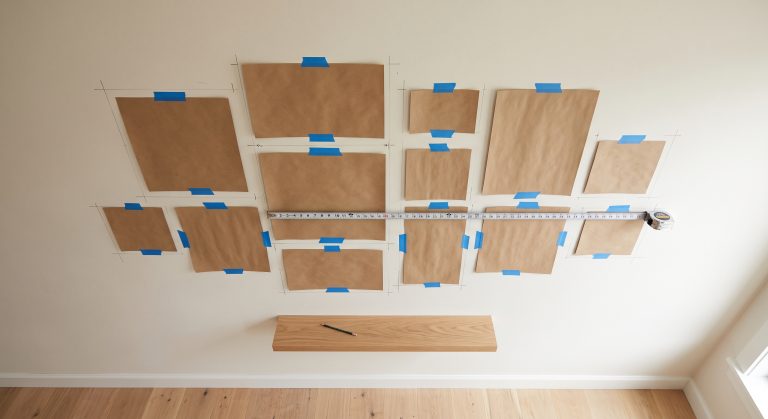
Cut paper templates to the size of each piece and tape them to the wall, moving them until the arrangement feels balanced. Live with them for a day or two if you can. It is slower than guessing, but it is the only reliable way to avoid a wall pocked with unnecessary holes. For the full process, including spacing rules and how to find your anchor piece, see how to plan a gallery wall layout.
How Many Pieces
There is no fixed number, and the right count depends on the wall and the room. See how many pieces should be in a gallery wall for a practical way to decide.
Colour Schemes That Hold a Wall Together
Because a gallery wall combines several pieces, colour is what makes them read as one group rather than several unrelated purchases. A single dominant palette, sometimes with one accent, is the most reliable approach. See gallery wall colour schemes that work.
Modern Gallery Walls in Neutral Interiors
Neutral tones are especially well suited to gallery walls, because the palette does most of the unifying work even when the formats vary widely. See neutral gallery wall ideas for that approach in detail, and what neutral wall art is for the underlying palette principles.
Once the wall is up, think about the evening. Several small matching picture lights, each sized to the piece below, keep a gallery wall glowing after dark; see what size picture light you need.
Common Mistakes
- Hanging the group too high, disconnected from furniture
- Mixing too many frame finishes at once
- No anchor piece, so the eye has nowhere to start
- Uneven spacing that reads as careless rather than relaxed
- Choosing pieces with no shared colour or tone
Final Thoughts
A modern gallery wall is not about owning more art. It is about a small number of good decisions: a disciplined palette, consistent spacing, one clear anchor, and enough restraint in the frames to let the art do the talking.
Get that structure right and a varied group of pieces has a far better chance of reading as one considered whole. The final test is always to step back, live with the paper templates for a day or two, and remove anything that does not earn its place. For the wider process of choosing and styling art, see the complete guide to choosing artwork for your home.